





 Subscribe


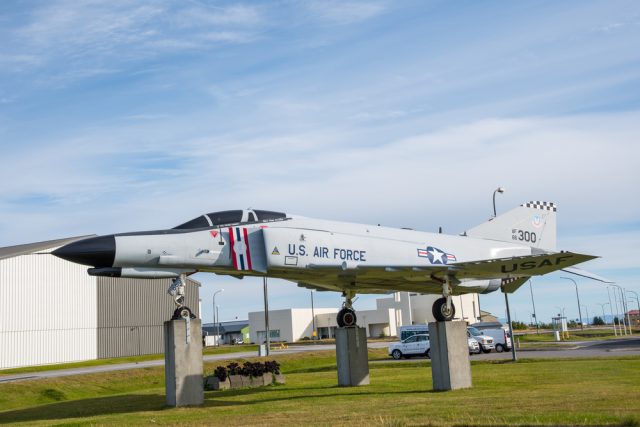
NATO’s only member without standing armed forces is strengthening national resilience as Russian pressure reshapes the North Atlantic and the Alliance asks more of every nation.
At Keflavík, the sounds of military readiness come from foreign aircraft. Belgian F-16s provide quick-reaction cover above the base. An American P-8A Poseidon scans the surrounding seas for submarines, while allied warships operate in the North Atlantic. Icelandic personnel keep the base, radar network and support system functioning, but there are no Icelandic soldiers on the ground. Iceland has none.
It is the detail that anchors the Telegraph’s report from the Northern Viking exercise. Iceland remains the only NATO member without an army, navy or air force. Yet the country is no longer behaving as though its lack of armed forces places it outside the strategic changes transforming Europe.
The exercise’s own programme says more than the spectacle does. Northern Viking, running from 22 August to 3 September and marking 75 years of the US-Iceland defence relationship, includes anti-submarine warfare, mine countermeasures, expeditionary construction, search and rescue, medical response and the protection of the sea lines passing through the Greenland-Iceland-United Kingdom gap. The United States Navy presents it as preparation for European allies to assume primary responsibility for deterrence and defence in the European theatre.
For Iceland, Northern Viking is part of a strategic awakening that has been gathering pace throughout 2026. For three quarters of a century the country has relied on geography and on the protection of friends. It is now asking what a contribution of its own should look like.
Cables and Submarines
Iceland’s military importance has never depended on the size of its population. It derives from its position in the middle of the North Atlantic. The GIUK gap is the maritime passage through which vessels from Russia’s Northern Fleet can reach the Atlantic, and through which North American reinforcements would have to travel towards Europe in a major conflict. Keflavík matters to the defence of a continent, not of an island.
The same geography now carries newer vulnerabilities. Iceland is connected to Europe and North America by a small number of submarine communications systems. Farice operates the FARICE-1, DANICE and IRIS routes, while Greenland Connect provides the western link. They form part of the physical infrastructure on which Iceland’s economy and communications depend, and their strategic value has grown as sabotage and other hybrid threats against undersea infrastructure have become a central concern for NATO governments.
NATO is rebuilding its awareness of the High North. Arctic Sentry was launched in February, and in June the Alliance began Task Force X-Arctic, an 18-month programme using networked uncrewed systems to improve persistent situational awareness across the Arctic and North Atlantic. Iceland is one of the first operating areas for that experimentation.
The old Icelandic security settlement must now function in this environment. Since 1951, a bilateral agreement has made the United States responsible for Iceland’s defence in the absence of national armed forces. American troops were permanently based at Keflavík until 2006; after their withdrawal, Iceland continued operating NATO radar installations, supporting allied deployments and making its territory available when required. Its contribution has always been real, even when it could not be measured in battalions or fighter squadrons.
A Defence Policy Without an Army
A small group of Icelanders campaigning for a national army has drawn the headlines. The state had already moved.
On 3 February, the Althingi approved Iceland’s first formal defence and security policy. Its stated objectives are to safeguard independence, sovereignty, democratic government, territorial integrity, citizens and critical infrastructure against military and comparable man-made threats. NATO membership and the 1951 agreement with the United States remain its two main pillars.
The rest of the document marks a change in emphasis. Parliament called for defence-related spending to rise year on year, for stronger domestic capabilities and civil preparedness, for more frequent exercises and clearer legislation, and for an institutional framework able to coordinate responsibility under democratic oversight.
The policy builds a national foundation beneath the allied guarantee, seeking through civilian institutions many of the effects normally produced by armed forces. The Icelandic Coast Guard already operates Keflavík Air Base, the Iceland Air Defence System and remote radar and communications sites, while providing host-nation support for allied forces.
There are limits to this model, and Icelanders are now debating where they lie. The founders of the Guardians of Iceland movement propose a standing force of 2,000 personnel, supported by a reserve and a much larger mobilisation structure. Government officials interviewed by the Telegraph remain unconvinced, preferring to build the required effects through civilian means. The proposal is not government policy and remains unpopular. But a question long treated as taboo is now being asked in public.
The Political Consequences of Insecurity
The security debate has also become entangled with Iceland’s long and unresolved relationship with the European Union. In February, RANE assessed that domestic political change and mounting North Atlantic security concerns were increasing the likelihood of a referendum on reopening accession negotiations, possibly as early as August. That forecast has proved accurate. On 29 August, Icelanders will decide whether negotiations should resume, although they are not yet voting on membership itself. The resolution adopted by the Althingi makes that distinction explicit.
RANE identified a convergence of pressures. Russia’s war against Ukraine restored the strategic importance of the North Atlantic and Arctic. Questions about Washington’s long-term reliability, sharpened by American rhetoric surrounding Greenland, encouraged some Icelandic policymakers to look towards the European Union for an additional source of political and economic stability. At the same time, the familiar issues of fishing rights, control of the national currency and democratic authority continue to make accession deeply contentious.
Security may strengthen the political case made by supporters of EU membership, but it does not settle the sovereignty question in their favour. The European Union can contribute to economic security, regulation, infrastructure investment and coordinated responses to hybrid threats. It is not the alliance that polices Icelandic airspace, tracks submarines in the GIUK gap or provides the ultimate guarantee of territorial defence. Those tasks rest with NATO, the United States and the other allied nations that supply the relevant forces.
The referendum and the defence policy belong in the same conversation, but they are not the same question. The first asks where Iceland should locate more of its political and economic decision-making. The second asks what Iceland itself must be capable of doing whatever the result on 29 August.
Article 3 Comes Before Article 5
European discussion of NATO is dominated by Article 5, the promise that an attack on one ally will be treated as an attack on all. Less attention is paid to Article 3. Under the North Atlantic Treaty, allies commit themselves, separately and jointly, to continuous self-help and mutual aid and to maintaining their individual as well as collective capacity to resist attack.
That is the clause that speaks to Iceland’s position. Collective defence is not an insurance policy purchased once through membership. It is a permanent relationship between national responsibility and allied solidarity. Iceland’s strategic location, radar network, Coast Guard, bases and host-nation support already contribute materially to NATO. A country that enables allied forces to monitor and defend the GIUK gap cannot fairly be dismissed as irrelevant, or simply accused of free-riding.
The changing threat environment nevertheless requires the contribution to evolve. A sovereign nation must be able to maintain government, protect essential communications, receive and sustain allied forces, understand activity around its territory and preserve enough national capacity to act during the interval before reinforcements arrive. Whether Iceland ultimately needs a conventional military, a voluntary territorial reserve or a more heavily equipped civil-defence structure is a decision for Icelanders.
The new NATO investment benchmark adopted at The Hague reinforces this principle. Allies committed to spend 5 per cent of GDP on defence and security-related requirements by 2035: at least 3.5 per cent for core defence and up to 1.5 per cent for critical infrastructure, networks, civil preparedness, resilience, innovation and the defence industrial base. In the Hague Summit Declaration, resilience is counted as part of military strength.
Sovereignty as Responsibility
Here the Icelandic case takes on a conservative meaning. The ECR Party’s Reykjavik Declaration describes a Europe of independent nations working together for mutual gain while retaining their identity and integrity. Independence in such a system cannot consist solely of resisting powers transferred to supranational institutions. It also requires the capacity to discharge the duties that sovereignty imposes.
For a country of Iceland’s size, those duties need not produce a miniature version of a major European military. Subsidiarity applies to security as it does to government: capabilities should be built at the level where they can be exercised effectively. In Iceland this could mean stronger maritime surveillance, cyber defence, infrastructure protection, trained reserves, continuity planning and a greater ability to support allied deployments. What matters is that the nation keeps ownership of the decisions and the institutions on which its survival could depend.
Northern Viking makes the argument visible. Foreign aircraft and ships supply the combat power Iceland lacks. They still fly from Icelandic runways and rely on Icelanders to keep the base working. The alliance works when those two forms of strength reinforce each other.
Iceland is not about to abandon its political traditions. It has dropped the assumption that distance is a defence and that an allied guarantee can stand in for national preparedness. When the one NATO member with no armed forces reaches that conclusion, the rest of Europe has lost its excuse for the peace dividend. Sovereignty survives through cooperation; cooperation is credible only when each nation carries its share.