





 Subscribe


There is a Europe that is ageing. We read it in the statistics, in demographic projections, in pension budgets. But there is something else we should learn to see: what older people continue to do for European society.
Because an older person is not simply someone who receives a pension, uses healthcare services or needs assistance. They are often also someone who supports families, looks after grandchildren, helps their children, consumes, travels, purchases services and continues, in ways different from traditional employment, to participate in economic and social life.
They are a part of Europe’s wealth that largely remains invisible.
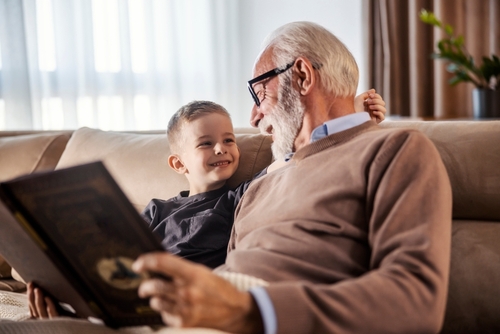
Think of an ordinary scene. Two parents work. A child needs to be taken to school, someone has to prepare lunch, take them to sports practice, stay with them when they are ill. Often, that someone is a grandparent. They do not receive a salary, send an invoice or appear in productivity statistics. And yet their work enables the parents to work, reduces family costs and makes a concrete contribution to the family’s stability.
According to Eurofound, around 45% of the European Union’s population provides some form of unpaid care. And in countries where the family retains a stronger central role, the contribution of grandparents can be even more significant: in Italy, Greece and Cyprus, for example, grandparents take part in caring for more than a quarter of children between one and two years old for at least ten hours a week.
This is economics, even if we do not call it that.
There is, in fact, an enormous amount of work that holds families together without passing through the market. In this informal economy, older people occupy a decisive place: they help raise children, provide financial support to their children and, when they can, transfer resources to the next generation.
Even pensions, often described exclusively as an item of public expenditure, are income that flows back into the economy: it is spent in shops, restaurants, on transport, cultural activities, travel and services.
The European Commission currently estimates the European Silver Economy at around €5.7 trillion, following growth of approximately 5% per year between 2015 and 2025. It is a market that includes healthcare, tourism, transport, food, technology, education and personal services.
But reducing everything to consumption would be another mistake.
The value of older people is, above all, relational. In many families, they are the ones who provide a point of stability when their children’s lives become more uncertain. They offer time when time is scarce, experience when decisions are difficult, and a presence when distances become burdensome.
And above all, they transmit.
A family does not pass on its values only through formal education. It transmits them through repeated gestures, stories, habits and everyday responsibilities. A child who grows up alongside a grandparent may receive, almost without realising it, through anecdotes, proverbs and nursery rhymes, an understanding of work, sacrifice, keeping one’s word, caring for others and respecting one’s own history.
In this sense, older people are living mechanisms of intergenerational transmission.
They do not transmit memories alone. They transmit principles and ways of seeing the world.
And it is precisely this function that we risk losing when we regard old age merely as a phase of increasing dependence.
Naturally, speaking of the value of older people does not mean ignoring illness, loneliness or dependency. It means, however, rejecting the equation between old age and passivity.
A man or woman does not stop contributing to society on the day they stop working. Their contribution simply takes a different form.
For this reason, Europe should promote not only a longer old age, but a more active, independent and up-to-date one.
An older person who continues to learn is an older person who continues to participate.
The culture of lifelong learning should become a natural part of ageing policies: courses, universities of the third age, digital skills, languages, culture, new technologies and vocational training for those who wish to continue working. Not to force older people to remain productive at all costs, but to give them the opportunity to remain curious, independent and connected to their time.
The European Commission considers lifelong learning and the acquisition of new skills important tools for keeping older people active in the labour market and in society, alongside their digital inclusion.
This represents an important cultural change. For too long, we have imagined life as a rigid sequence: first you study, then you work, and finally you retire. But increasing life expectancy makes this division into watertight compartments less and less convincing.
One can continue learning after the age of sixty. One can continue to travel, work, teach, participate, build relationships and even acquire entirely new skills.
Longevity, then, should not simply add years to life. It should add life to those years.
This perspective takes on particular significance in a Europe facing a demographic crisis. As births decline and the working-age population gradually contracts, family networks become more valuable and, at the same time, more fragile. Smaller families, children living far from home, both parents working: all of this makes the spontaneous solidarity that could once be taken for granted increasingly difficult.
In this context, family solidarity is not a remnant of the past. It is a resource for the future.
And this is where the issue of older people takes on a distinctly conservative dimension.
A conservative view of society should not limit itself to asking how much it costs to support an ageing population. It should also ask how much value an older generation creates when it remains integrated into the family, the community and the economy.
Because conserving does not simply mean defending what belongs to the past. It means recognising the value of institutions and bonds that have demonstrated their ability to hold a society together.
The family is one of these institutions. Reciprocity between generations is one of these forms of solidarity. The transmission of experience is one of these forms of wealth.
For centuries, social life was built around a simple idea: receiving something from the previous generation, building during one’s own lifetime, and handing something on to the next generation. Modernity has made this chain more complex, but it has not made it any less necessary.
On the contrary, in a demographically fragile society, breaking it can become dangerous.
Older people, then, are not simply those who need to be supported by the young. They are also those who, very often, support the young. They are not merely recipients of solidarity: they are also its protagonists.
Their contribution is economic, but also educational, emotional and cultural. They preserve family stories, traditions, skills and memories. And if they remain active, curious and open to change, they can pass on the past without becoming prisoners of the past.
Europe needs more young people, more children, and families that can afford to have children. But precisely because it faces this challenge, it cannot afford to regard longevity solely as a problem.
It must recognise the wealth it already possesses.
Millions of men and women who, after a lifetime of work, continue to travel, consume, help, care for others, learn, pass on memories and hold their families together.
A wealth that does not always appear in the balance sheets.
Work that is not paid.
A presence that does not make the news.
And yet, without those presences, many European families would discover just how fragile the society we have built really is.
Older people are not on the margins of the Europe to come. They are part of its foundations: guardians of memory, supporters of the present and, when they remain active and open to the world, companions on the journey towards the future.