





 Subscribe


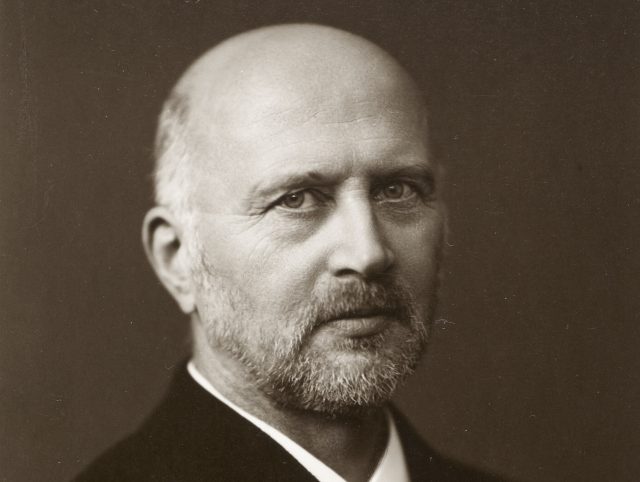
At the Danish Freedom Summit in Copenhagen, jointly organised on 19 September 2026 by Students for Liberty Denmark and Liberal Alliance Youth, I was invited to speak about Conservative-Liberal Thought in the Nordic Countries: An Anthology, published earlier this year by the Brussels think tank New Direction and selected and edited by me. The book is 468 pages, with my introduction spanning 240 pages. In my speech in Copenhagen, I focused on the Danish conservative-liberal thinkers who contributed to the book. One of them was the economist Jens Warming (1873–1939), who made important but largely unknown contributions to his discipline.
Fisheries Economics
Most economists believe that the foundations of fisheries economics were laid in two papers by H. Scott Gordon in 1954 and Anthony Scott in 1955. But as the Icelandic economist Ólafur Björnsson told Gordon and Scott at a FAO conference on fisheries in Rome in 1956, Warming, his teacher at the University of Copenhagen, had presented an identical analysis in two papers. In a 1911 paper, he assumed that fish were harvested in two fishing grounds of different fertility and that access to the grounds was open. He then showed that the more fertile fishing ground would be over-utilised. In general, fishing effort would increase until no profit could be made, meaning the resource’s potential rent would be dissipated through excessive effort. Warming correctly identified the problem, as did Gordon and Scott later: open access. The two fishing grounds were not priced according to their different fertility. Warming therefore proposed access fees for fishing grounds.
The Case of the Eel Traps
In a 1931 paper, Warming returned to the problem, but in a different context. In Denmark, eels are harvested in coastal traps. The right to lay eel traps traditionally belonged to coastal farmers, but they often rented this right to fishermen, who were now demanding its abolition, i.e., open access. Warming argued, against the fishermen, that the private right to lay eel traps was economically efficient because it limited access and priced it at its real value. He now supported another solution to the open-access problem: maintaining private property rights rather than imposing access fees.
Welfare Economics
Welfare economics is another sub-discipline of economics. Arthur C. Pigou is usually regarded as its pioneer; in his Economics of Welfare (1920), he identified several non-optimal outcomes of market transactions. One example closely resembled Warming’s tale of the two fishing grounds. Two roads connected two cities: one narrow but good, the other wide but bumpy. Pigou showed that traffic would not be allocated efficiently between the roads. Too much traffic would go on the better road: its superior quality would be used up by congestion. To solve this problem, he proposed a toll on the better road to reflect its superior quality. But it was soon pointed out that Pigou had overlooked the possibility that both roads would be privately owned. If so, their owners would price them according to their different qualities. The point is that non-optimal outcomes of market transactions can often be solved by defining property rights to resources. This was precisely Warming’s insight in the eel-trap case. Indeed, he can be thought of as a pioneer in welfare economics, presenting the same analysis as Pigou, but before Pigou.
Other Contributions
Warming’s two papers might also be considered contributions to one school of economics and two more of its sub-disciplines. The school in question is free market environmentalism, as presented by Terry Anderson, Donald Leal, and Gary Libecap, which seeks to protect the environment by defining property rights to scarce resources, including not only fish stocks and oil wells but also forests, rhinos, elephants, rivers and lakes. One sub-discipline is Harold Demsetz’s economics of property rights, which analyses property rights as tools for reducing transaction costs. The other sub-discipline is Elinor Ostrom’s economics of institutions, which analyses the various ways communities have developed to overcome the ‘tragedy of the commons’ (the over-utilisation of resources resulting from open access). The eel traps are clearly one such institution.