





 Subscribe


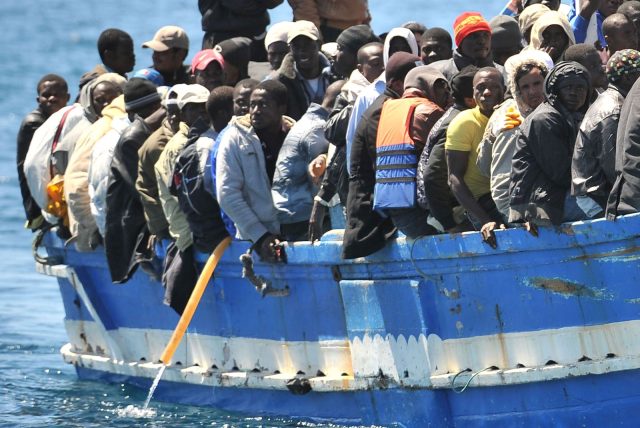
Europe’s migration policy is entering a new phase. In her State of the Union address on September 16, European Commission President Ursula von der Leyen announced a new European Emergency Response Framework designed to give EU member states greater powers to respond quickly when the bloc’s external borders come under exceptional pressure or when migration flows are deliberately organised and used as a tool of political pressure.
Ceuta puts EU border security back in the spotlight
The announcement follows the recent crisis in Ceuta, which has once again placed the security of Europe’s external borders at the centre of the EU political debate.
According to the European Commission, the events of the summer showed that the tools currently available are not always sufficient to deal with sudden and exceptional situations at the EU’s external borders.
Under the proposed framework, member states would be granted greater flexibility from ordinary procedures in strictly defined circumstances and for limited periods.
Von der Leyen accompanied the announcement with a clear political message: protecting Europe’s external borders is a European responsibility, not simply a task for those member states most exposed to migration pressure.
Stronger Frontex and faster migrant returns
The European Commission also plans to strengthen Frontex, speed up the return of people who have no legal right to remain in the European Union, and improve early-warning systems, including through closer cooperation with non-EU countries.
The approach is gaining support among a growing section of the European Parliament. The EU return regulation adopted in 2026 has already introduced more harmonised procedures, stronger cooperation between member states and the possibility of developing return facilities in third countries.
The European Conservatives and Reformists (ECR) have identified stronger external borders, effective returns and closer cooperation with partner countries among their main migration priorities.
From emergency management to migration control
The challenge now is to turn political commitments into operational capacity.
According to the European Commission, irregular crossings of the EU’s external borders have declined over the past two years. However, sudden crises such as the one in Ceuta demonstrate how quickly the situation at Europe’s borders can change.
The debate is therefore no longer only about managing arrivals. It is increasingly about preventing migration crises, strengthening external borders and making return policies effective and credible.
Europe appears to be moving towards a migration model in which solidarity between member states and effective border control are expected to go hand in hand.
Without the ability to manage who enters the European Union and determine who has the right to remain, any common European migration policy risks existing only on paper.