


 Subscribe


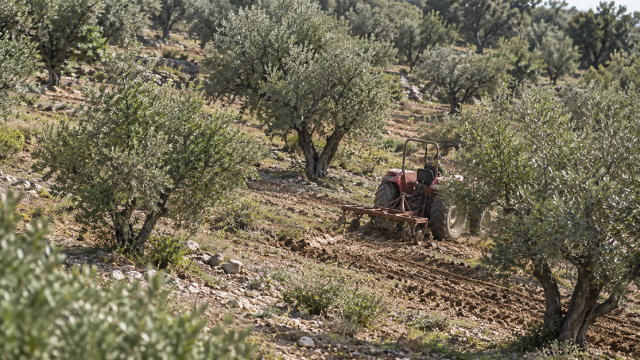
At SIAT 2026, Italian machinery and development programmes highlight a Mediterranean partnership focused on food security, water resilience and shared prosperity.
Italy’s presence at SIAT 2026 in Tunis carries a message extending well beyond the exhibition floor: agricultural cooperation is becoming a central pillar of its relationship with Tunisia. Combining machinery, technical expertise and development initiatives, the Italian pavilion presents a practical vision of partnership at a time when producing food efficiently requires increasingly careful management of resources.
At the opening of the Salon International de l’Investissement Agricole et de la Technologie, Italian Ambassador Alessandro Prunas accompanied Tunisian Agriculture Minister Ezzeddine Ben Cheikh and Senegalese counterpart Cheikhou Oumar Ba on a visit to the pavilion. Senegal’s participation as guest of honour added a wider African dimension to an event rooted in Mediterranean cooperation.
Coordinated by the Italian Trade Agency’s Tunis office, the embassy’s commercial section, in collaboration with FederUnacoma, Italy’s agricultural machinery manufacturers’ federation, the pavilion occupies 126 square metres. It is the largest national exhibition space at the fair, giving visible substance to Rome’s ambition to remain a leading partner in Tunisia’s agricultural modernisation.
Yet size alone is not the strongest argument for Italy’s relevance. More compelling is the combination of commercial capacity and institutional continuity. Agricultural equipment becomes more useful when accompanied by training, maintenance, financing and knowledge of local production conditions. This is where a sustained partnership can deliver more than an isolated machinery sale.
The embassy places this cooperation within the Mattei Plan, Italy’s framework for engagement with African partners. At SIAT, that broader strategy acquires a concrete agricultural expression through business relationships and initiatives including TANIT, ADAPT, Bio-territories and a credit line supporting Tunisia’s private sector.
Among these instruments, ADAPT illustrates how Italian implementation can connect European funding with local priorities. Financed by the European Union and implemented by the Italian Agency for Development Cooperation, AICS, in partnership with the World Food Programme, it supports sustainable agriculture and artisanal fisheries. Its expanded programme budget totals approximately €70 million, including additional support for cereals.
That distinction matters: the initiative is European in financing and Italian in implementation, with Tunisian development needs at its centre. Its investment component seeks to encourage greener private production, while related activities connect producers with markets and school meals. The approach recognises that agricultural resilience depends on functioning value chains as much as on equipment.
Bio-territories offer a complementary perspective. According to AICS the current initiative builds on earlier preparatory work to promote organic agriculture through territorially organised development. The preceding phase involved CIHEAM Bari and Tunisia’s Directorate General of Organic Agriculture. This brings an Italian centre of Mediterranean agronomic expertise into a framework shaped around Tunisian institutions and production areas.
The practical implications are significant. Better irrigation management, appropriate mechanisation and improved processing can help farmers use inputs more efficiently and retain greater value from their harvests. These are potential benefits, however, rather than automatic outcomes: technology must suit farm sizes, available skills and realistic operating budgets.
For Italy, the commercial opportunity is closely linked to credibility. Suppliers that provide dependable servicing and adaptable solutions can build relationships that outlast a trade fair. For Tunisia, the strongest partnerships will be those that strengthen local businesses, develop technical capabilities and improve access to productive investment.
Senegal’s presence also suggests scope for exchanging experience beyond the bilateral relationship, although the pavilion visit itself should not be mistaken for a new agreement. Its immediate importance lies in bringing decision makers and agricultural operators into direct contact.
Ultimately, Italy’s advantage at SIAT is its ability to connect industrial knowhow with cooperation on shared agricultural challenges. If exhibition contacts translate into accessible technology and durable local capacity, this Mediterranean partnership can become a convincing example of how Italian enterprise contributes to African agricultural development. The real measure of success will be progress on Tunisian farms themselves.
Alessandro Fiorentino