





 Subscribe


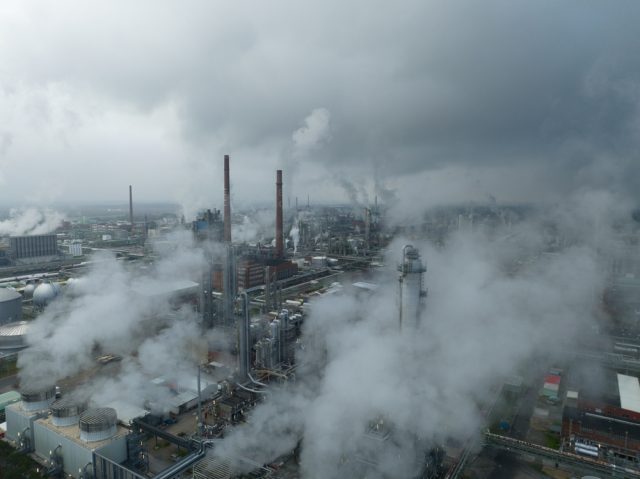
A few years ago, a story like this would probably have remained buried somewhere inside the business pages.
A foreign industrial group buys a factory in Britain. Competitors complain. Lawyers discuss tariffs, trade rules and market access. Brussels opens a file, perhaps launches an investigation, and the issue disappears into the machinery of European regulation.
Today, the atmosphere is completely different.
According to Euronews, several European chemical producers have asked the European Commission to examine the possible consequences of a Chinese company attempting to acquire industrial assets in the United Kingdom. On paper, the matter concerns the chemical sector. Politically, however, it touches a much more sensitive nerve inside Europe: the growing suspicion that the continent has become dangerously naïve about industrial power.
What changed is not simply the global economy. What changed is Europe’s perception of vulnerability.
For most of the last thirty years, many European governments approached economics with a remarkably optimistic assumption: if markets became sufficiently interconnected, geopolitical tensions would gradually lose importance. Trade was supposed to soften rivalries. Industrial integration was supposed to make conflict irrational and cooperation profitable.
That belief shaped an entire generation of European policymaking.
Factories moved abroad. Production chains stretched across continents. Governments became comfortable depending on external suppliers for energy, industrial components and strategic materials. Efficiency mattered more than proximity. Cost mattered more than control.
Then reality intervened.
First came the pandemic, which exposed how fragile long-distance production networks could become during moments of emergency. Suddenly, European governments discovered that basic medical equipment, industrial components and critical supplies were no longer easily accessible when global logistics stopped functioning normally.
Then came the war in Ukraine.
The energy shock that followed Russia’s invasion forced Europe into an uncomfortable realisation: dependence can become political pressure very quickly. What previously looked like ordinary commercial interdependence suddenly appeared far more dangerous once geopolitical confrontation returned to the continent.
At the same time, tensions between Western countries and China intensified. Questions surrounding industrial subsidies, technological competition and strategic influence moved from specialist discussions into mainstream politics.
This broader context explains why industrial acquisitions now trigger reactions that would have seemed exaggerated only a decade ago.
The current debate surrounding Chinese investment in Britain is not really about a single factory. Nor is it only about one industrial sector. It is about uncertainty. European governments increasingly fear that they entered an age of geopolitical competition while still thinking with the economic assumptions of the 1990s.
Brexit complicates this picture even further.
When Britain formally left the European Union, political separation became clear. Economic separation, however, remained far more ambiguous. Supply chains still cross the Channel. Industrial production inside Britain continues interacting with continental markets. Commercial integration survived Brexit far more than many expected.
This creates grey areas that now make European industries nervous.
If a company based outside Europe acquires manufacturing capacity in Britain, where exactly does the border of Europe’s industrial space begin and end? Politically, the answer is no longer as obvious as it once seemed.
The anxiety visible in Brussels today reflects a deeper transformation inside European politics itself.
For years, industrial policy was often treated as secondary compared to financial regulation, trade liberalisation and environmental targets. Manufacturing decline in certain regions was frequently accepted as an inevitable consequence of globalisation.
Now the tone has changed.
Across Europe, governments suddenly speak about factories, raw materials, semiconductors, industrial relocation and supply chains with a language that would once have sounded unusually strategic. Terms such as “economic security” and “industrial sovereignty” appear constantly in speeches and official documents because policymakers increasingly fear losing control over sectors considered essential during periods of instability.
This does not mean Europe is abandoning free trade or preparing for economic isolation. The continent remains deeply dependent on global commerce. European prosperity itself was built on openness.
But openness looks very different once governments start worrying about dependence.
That is the real significance of the current controversy.
The dispute itself may eventually fade from the headlines. Another acquisition attempt will emerge elsewhere. Another investigation may follow. Yet the political instinct driving these reactions is unlikely to disappear.
Europe is slowly rediscovering something it spent years trying to forget: industrial capacity is not only about economics. It is also about power, political freedom and the ability to withstand pressure during moments of international tension.
And once governments begin thinking in those terms again, even an apparently obscure dispute inside the chemical industry starts looking far more important than it first appeared.