





 Subscribe


For decades, Europe chose cheap energy over security because Europeans treated energy sources as a commodity. When the gas tap was turned off, the old continent discovered that dependence is not just an economic problem, but also a security issue, because the energy crisis we are going through has completely changed the rules of the game. For the average person, gas came through the pipeline, electricity was turned on at the flick of a switch, and bills, although sometimes a little steep, seemed a natural part of modern life.
The idea that energy could become a security issue, comparable to defense or foreign policy, seemed exaggerated, if not alarmist, a few years ago. However, the study “Securing Supply: Rethinking Energy in a Changing Europe” shows how dramatically this perception has changed and how unprepared the European continent was for the moment when energy became a geopolitical weapon. Russia’s invasion of Ukraine, which began in February 2022, was a real electric shock for the entire European continent. In just one winter, Europe discovered that its energy dependence is not only an economic problem, but an existential one. The gas pipelines anchored deep in the heart of Russia were long considered symbols of cooperation and interdependence, but unfortunately, they turned into instruments of political pressure overnight. European governments panicked when prices skyrocketed and citizens began to question whether their security could still be guaranteed in a world where energy is increasingly used as a means of blackmail.
The study conducted by the ECR Party starts from a simple but uncomfortable observation, namely that the European energy model, built on the idea of a free market, economic efficiency, and international cooperation, has systematically ignored geopolitical risks. For decades, European countries have preferred cheaper energy without asking themselves seriously enough what might happen if the supplier became hostile. The Russian Federation was seen by European leaders as a difficult but predictable partner, but reality has proven otherwise.
Before the outbreak of the Ukrainian conflict, most countries in Central and Eastern Europe (many of which were part of the former Soviet bloc) were heavily dependent on Russian gas. This dependence was not only technical but also political, because long-term commercial commitments, infrastructure built in a single direction, and the lack of alternatives created a structural vulnerability. When gas supplies were reduced or even stopped (see the case of the Nord Stream pipeline), the economic effects were immediately felt, not only in industry but also in the homes of every European citizen. Thus, the word “energy” suddenly became a daily topic of discussion, and energy security entered the vocabulary of public discourse.
From the free market to the protective state
One of the most interesting aspects of the study “Securing Supply: Rethinking Energy in a Changing Europe” is how it describes the paradigm shift in European energy policy. Whereas previously the emphasis was on liberalizing the energy market, competition, and minimizing the role of the state as an active player in the market, the energy crisis has forced a spectacular return to public intervention. To prevent social collapse, governments were forced to cap prices, subsidize bills for both companies and the population, nationalize or bail out energy companies, and intervene directly in the market. This return of the state was a necessity, not the result of ideology. The study clearly shows that, in times of deep crisis, the market alone cannot ensure security of supply because the logic of profit conflicts directly with the need for stability. Governments were therefore forced to choose between free market dogma and protecting their citizens, and in almost all cases, the choice was clear.
However, this massive intervention by governments raises difficult questions about what the future holds. How sustainable is a model in which the state becomes the ultimate guarantor of citizens’ energy security? How can consumers be protected without discouraging investment? And, perhaps most importantly, how can Europe avoid repeating the same mistake by replacing one dependency with another?
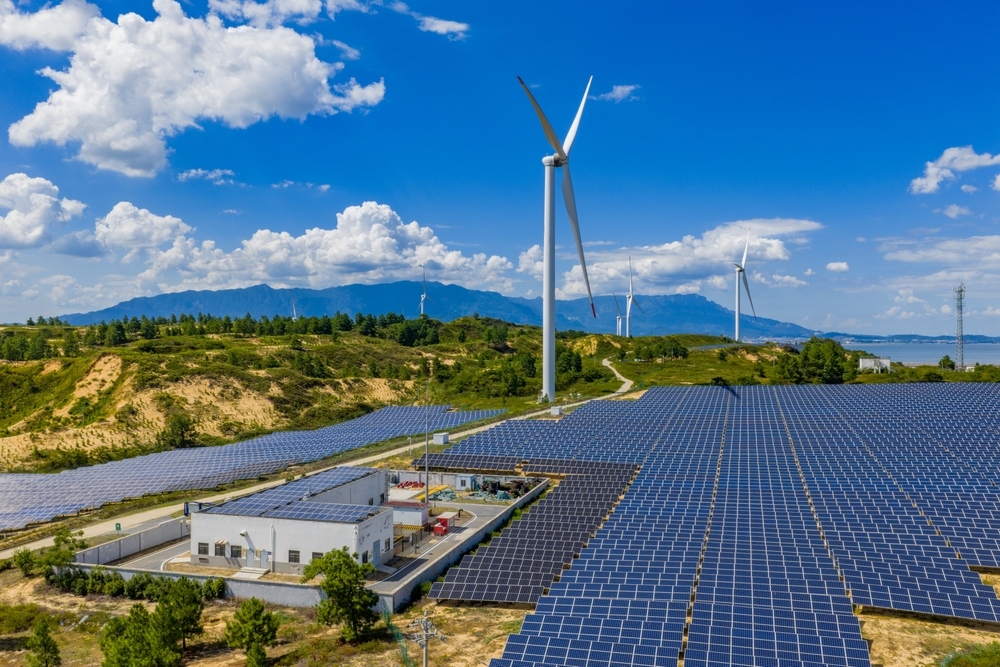
“Securing Supply: Rethinking Energy in a Changing Europe” emphasizes that diversifying energy sources has become an absolute priority for all European governments. EU imports of liquefied natural gas, the development of renewable energy projects, and investments in infrastructure and interconnection are presented not as ecological or economic options, but as elements of national security. In this context, green energy is no longer just a project for the future; green energy is a strategic necessity. At the same time, research warns us that the energy transition is not without risks because dependence on new technologies, critical raw materials (most of which are mined on other continents), and global supply chains (see the dependence of European countries on technology imported from Asian countries, a technology with much lower production costs) can create different but equally dangerous vulnerabilities. Europe risks replacing its dependence on cheap Russian gas with a dependence on rare metals or Asian production of green technologies. What we must learn from this crisis is that energy security cannot be built on a single miracle solution.
The invisible cost of energy – who is actually paying for the crisis?
The study “Securing Supply: Rethinking Energy in a Changing Europe” insists, beyond graphs, strategies, and public policies, on the social dimension of the energy crisis that Europe is going through. We must admit that this increase in energy prices is not an abstract phenomenon; it is a phenomenon that directly affects people’s daily lives. Increasingly high bills have forced millions of Europeans to make painful choices. They have had to choose between paying their heating bills or buying food, between prioritizing electricity payments or using their money for other basic needs. From this perspective, we can say that energy has become not only a security issue, but also one of social justice.
Research also shows that the impact of the energy crisis has been unevenly distributed, with low-income households, poorly insulated buildings, and less developed regions being disproportionately affected. In many cases, government support policies have been insufficient or poorly targeted, leaving vulnerable segments of the population exposed, and this reality risks fueling social discontent and undermining public support for the energy transition. The study also warns that without an approach that combines energy security with social equity, European policies risk losing their legitimacy. Therefore, a transition that is perceived by citizens as unfair can generate opposition, populism, and political instability because energy, which was once a technical issue, is now becoming a major factor of social polarization.
Another invisible cost of the crisis is the erosion of trust that arises when citizens feel that the state is reacting chaotically or sometimes belatedly, that government measures are incoherent, or that the burden is distributed unfairly, because citizens’ trust in state institutions declines. The study suggests that this loss of trust among ordinary citizens may have long-term consequences and may affect both energy policy and the ability of states to manage possible future crises.
A safer Europe or a more cautious Europe?
Ultimately, “Securing Supply: Rethinking Energy in a Changing Europe” offers us neither simple solutions nor easy promises. The central message of the study, conducted in mid-December 2025, is that Europe is at a turning point and that the energy crisis we are experiencing has revealed deep vulnerabilities but has also created a rare opportunity to fundamentally rethink the relationship between energy, security, and civil society.
It seems that Europe has learned the painful lesson of its dependence on Russian gas, but it remains to be seen whether it will have the political will to build a truly resilient energy system. We all agree that this requires massive investment (both financial and human resources), good cooperation between EU member states, acceptance of higher costs in the short term, and, perhaps most difficult of all, honesty on the part of the state towards its citizens. One thing is crystal clear: energy security does not come for free; protection comes at a price and can no longer be treated as a mere consumer good. Energy is and will remain a critical infrastructure, a geopolitical tool, and a factor of social cohesion, and how Europe manages this reality will influence not only the economy and the environment, but also political stability and citizens’ confidence in the European project. If we were to draw a clear conclusion from the study, we could say that in a Europe where certainties are crumbling one by one, energy has become a test of political maturity, and energy security is not built only with pipelines, wind farms, and solar panels, but with trust, solidarity, and long-term vision. When we discuss the major issue of energy security, we are not just talking about having light and heat in our homes, but about a society’s ability to protect itself, adapt, and remain united.