





 Subscribe


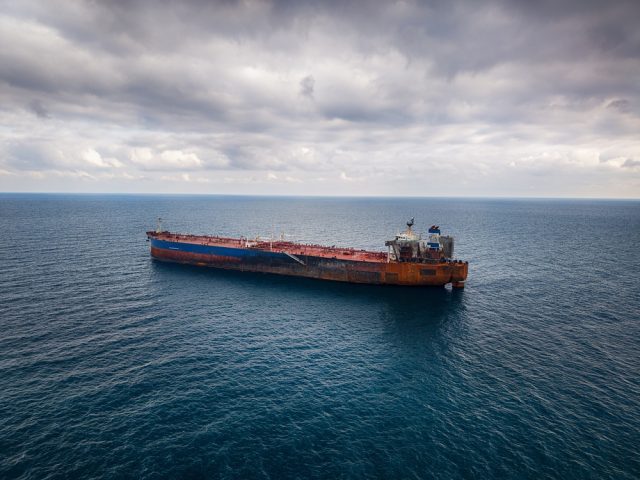
The European Union’s plan to introduce a permanent ban on Russian oil imports has suffered a significant delay, highlighting the complexity of contemporary energy dynamics. The European Commission, while confirming its intention to proceed along this strategic line, has decided to postpone the formal presentation of the proposal, without specifying a new deadline. This decision comes in a highly unstable international context, in which geopolitical variables directly impact the continent’s energy security. The postponement does not represent a change in policy direction, but rather a contingent response to market conditions, made particularly critical by oil price trends. The primary concern is Brent crude, which has remained steadily above the $100 per barrel threshold, signaling continued pressure on European economies.
THE IMPACT OF THE MIDDLE EAST ON ENERGY MARKETS
One of the key factors behind the European decision is the evolving crisis in the Middle East. The military operations conducted by the United States and Israel against Iran have contributed to the destabilization of global energy markets, generating a climate of uncertainty that is directly impacting commodity prices. Of particular significance is the closure of the Strait of Hormuz, a strategic transit point for global oil and gas. This event has reduced the flow of energy supplies, accentuating price volatility and making it more difficult for the European Union to plan structural interventions in the short term. Despite this, some statements by US President Donald Trump regarding the possibility of starting talks with Tehran have temporarily eased market pressure, causing a slight decline in the price of Brent crude.
US DECISIONS AND EUROPEAN REACTIONS
An additional layer of complexity arises from the United States’ decision to ease sanctions on Russian oil, aimed at containing price increases. This decision has raised concerns among European countries, which fear an inconsistency in Western strategies toward Russia. The EU therefore finds itself having to balance different needs: on the one hand, the need to maintain a policy consistent with the sanctions imposed after Russia’s invasion of Ukraine; on the other, the management of a highly unstable energy market, where every decision can have immediate repercussions on costs for citizens and businesses.
INTER-UNION DIVISIONS
The postponement of the proposal also comes amidst tensions within the European Union, particularly with Hungary and Slovakia. These two countries are the only Member States that continue to import Russian oil thanks to a derogation still in force. Their position is linked to their heavy dependence on the Druzhba pipeline. Budapest and Bratislava have already expressed opposition to European energy policies and raised the possibility of resorting to legal measures should a permanent ban be introduced.
EUROPE’S ENERGY DILEMMA
The proposed permanent ban on Russian oil is part of the REPowerEU plan, which aims to reduce the EU’s energy dependence on external supplies, particularly those from Russia. Unlike traditional sanctions, this instrument would be adopted by qualified majority, thus limiting the possibility of veto by individual member states. The goal is to make the process of reducing dependence on Russian energy sources structural, overcoming current exceptions and building a more resilient system. The current situation highlights a structural dilemma for the European Union, which was already clearly evident after Russia’s invasion of Ukraine in 2022. The rise in energy prices, which reached critical levels that year, continues to be a source of concern for citizens and governments. Dependence on third countries for energy supplies remains a source of vulnerability, further exacerbated by tensions in the Middle East. In this scenario, every political decision must be balanced against the need to ensure economic stability, energy security, and geopolitical coherence. The postponement of the ban on Russian oil therefore appears to be a decision dictated by the need to manage a complex transition phase, in which strategic ambitions must necessarily take into account market conditions and a constantly evolving international context.