





 Subscribe


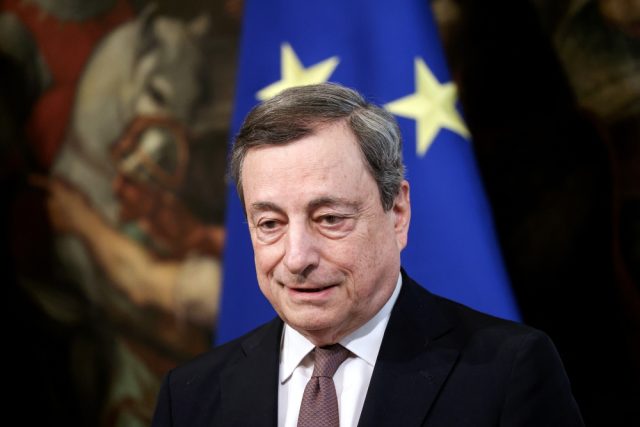
In his speech in Aachen on the occasion of the awarding of the Charlemagne Prize, Mario Draghi outlined a broad and systemic understanding of the challenges facing the European Union in the new international context. The speech, developed from a political, economic, and strategic perspective, offered a reflection on the progressive weakening of the post-war equilibrium that had supported European integration and the need to redefine the continental integration model. According to Draghi, the current historical phase is characterized by growing pressure on the European continent. However, this crisis situation also represents an opportunity: external difficulties are in fact leading Europeans to rediscover their common interests and a new willingness to cooperate.
ECONOMIC SHOCKS AND THE RETURN OF EUROPEAN VULNERABILITY
In his speech, Draghi highlighted how Europe has been hit by a continuous sequence of external shocks since 2020. The effects of the pandemic were compounded by trade tariffs imposed by the United States, the conflict in the Middle East, and the consequences for global supply chains. Particular attention was paid to the economic effects of the energy crisis and the impact of instability in the Strait of Hormuz, considered a strategic hub for global trade. These factors come at a time when the European Union requires extraordinary investments. Draghi noted that the annual need for strategic spending, initially estimated at around €800 billion, would rise to nearly €1.2 trillion annually due to increased defense spending. Economic growth is therefore described as an indispensable condition for supporting the energy transition, the continent’s security, technological innovation, and the aging population.
THE CRISIS OF THE EUROPEAN ECONOMIC MODEL
Draghi argued that Europe had built a highly open economy without truly completing its internal market. The integration of capital markets, energy networks, and various economic sectors remained incomplete, resulting in a fragmented and vulnerable system. The former President of the European Central Bank observed that the Union had entrusted markets with functions that would normally require a common political authority, without however guaranteeing those markets a truly continental scale. This asymmetry would have fostered dependence on foreign demand and global production chains. Europe would therefore be much more exposed to fluctuations in international trade policies.
STRATEGIC DEPENDENCIES AND TECHNOLOGICAL LAPSE
The issue of Europe’s strategic dependencies was also addressed in the speech. One of the main critical issues identified concerns Europe’s lag in the technological and digital sectors. Since 2019, the productivity gap between Europe and the United States has widened significantly, primarily due to America’s increased digitalization and the strength of the US technology sector. Draghi attributed crucial importance to the development of artificial intelligence, which he described as the most significant technological transformation of the next decade. According to OECD estimates cited in the speech, approximately half of future productivity growth could depend on the spread of AI. However, Europe is reportedly investing much less than the United States and China in data centers, semiconductors, energy infrastructure, and computing capacity.
FREE TRADE AND INDUSTRIAL POLICY
While defending the principle of free trade, Draghi argued that economic openness can no longer be Europe’s only response to global transformations. New trade agreements, while useful, would not be sufficient to compensate for the structural weaknesses of the European economy. The former prime minister observed that the European debate is polarizing between two approaches: on the one hand, maintaining an open model based on international rules; on the other, a return to a more interventionist industrial policy. According to Draghi, both strategies are insufficient if not accompanied by full European economic integration. In his argument, strengthening the single market should go hand in hand with a common industrial policy capable of supporting strategic sectors such as defense, semiconductors, and clean technologies. The concept of “Made in Europe” is presented as a tool for leveraging European domestic demand to support European industries.
EUROPEAN DEFENSE AND RELATIONS WITH THE UNITED STATES
Another central theme of the speech was the changing relationship between Europe and the United States. Draghi stated that American protection can no longer be taken for granted in the same terms as in the post-World War II era. This transformation would force Europe to strengthen its strategic autonomy. The former ECB president argued that greater European responsibility for defense should not be interpreted as a weakening of NATO, but as a potential strengthening of the transatlantic alliance through more balanced relations.
PRAGMATIC FEDERALISM AND THE FUTURE OF THE UNION
In the closing section of his speech, Draghi proposed the concept of “pragmatic federalism.” The idea is to allow countries most open to integration to move more rapidly in strategic sectors such as energy, technology, and defense, without necessarily waiting for the unanimous consent of the twenty-seven member states. According to this approach, Europe should focus on concrete tools and results verifiable by citizens, thus strengthening the democratic legitimacy of the European project. The challenge for the EU, according to Draghi, now consists in transforming the current crisis into a new phase of political, economic, and strategic integration.