





 Subscribe


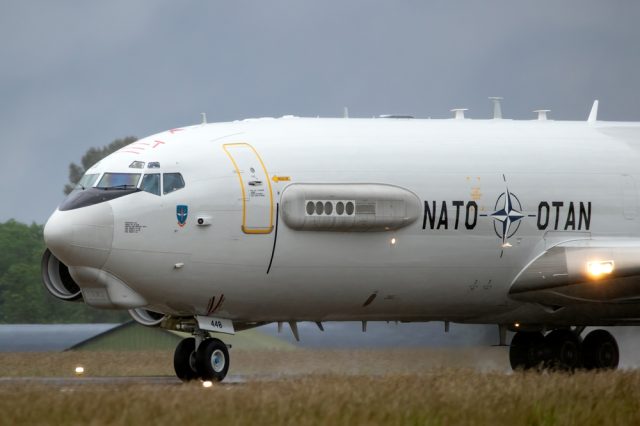
For much of the post-Cold War era, European security was understood through a relatively familiar set of concepts: territorial integrity, conventional deterrence, collective defence. The possibility of large-scale conflict on the continent had receded so far from public consciousness that entire generations of policymakers grew up treating war as something that happened elsewhere. Russia’s full-scale invasion of Ukraine in February 2022 shattered that assumption with brutal clarity. Yet even as Europe scrambled to respond — rearming, reimposing sanctions, reinforcing its eastern flank — a subtler and in some ways more unsettling transformation was already underway. Alongside the visible violence of missiles, trenches and destroyed cities, a parallel conflict was taking shape in the invisible infrastructure of modern life: the satellite signals that guide aircraft, coordinate logistics and synchronise financial systems; the electromagnetic frequencies on which civilian and military communications alike depend. This is the domain where Russia’s war has begun to produce effects far beyond Ukraine’s borders, reaching into NATO airspace, disrupting civilian navigation and forcing governments to confront threats for which existing legal and military frameworks were never designed. Understanding this shift is essential for grasping what European security in the twenty-first century will actually require.
When residents of Vilnius received emergency alerts ordering them to seek shelter, many assumed the worst. Flights were suspended. Public authorities activated emergency procedures. Lithuania’s president and prime minister were moved to protected locations. For a few hours, a NATO capital experienced something that until recently seemed almost unimaginable: the sensation of being directly exposed to the war raging hundreds of miles away in Ukraine.
The incident quickly attracted international attention because it highlighted a growing security challenge on NATO’s eastern flank. Yet focusing only on the drone alert itself risks missing the larger strategic picture. What Europe is witnessing is not merely a series of isolated incursions. It is the emergence of a new battlefield in which electronic warfare, satellite navigation interference, drone technology and strategic ambiguity increasingly overlap. The war in Ukraine is no longer confined to trenches, missile strikes or conventional military operations — it is progressively extending into the electromagnetic domain that underpins modern European societies.
The Invisible Battlefield
According to reporting by The Telegraph, Russia has increasingly used GPS jamming and spoofing techniques to interfere with Ukrainian drones, in some cases allegedly redirecting them toward NATO airspace rather than simply destroying them. Whether the immediate objective is disruption, confusion or political pressure, the implications are significant.
Modern drones rely heavily on satellite navigation. If a GPS receiver is overwhelmed by electronic interference or deceived by false positioning signals, the aircraft may lose orientation, alter course or even become uncontrollable. The broader phenomenon is no longer disputed.
The European Union Aviation Safety Agency (EASA) has repeatedly warned about a sharp increase in Global Navigation Satellite System (GNSS) interference since the beginning of Russia’s full-scale invasion of Ukraine in February 2022. According to the agency, jamming and spoofing incidents have affected areas surrounding the Baltic Sea, the Black Sea, the Arctic and other regions close to active geopolitical tensions. What was once considered a niche military capability has become a recurring feature of the European security environment.
From Ukraine to NATO Territory
The significance of recent incidents lies not only in the technical disruption itself but in their political consequences. Lithuania’s alert demonstrated how quickly uncertainty can spread when authorities are confronted with unidentified aerial objects and disrupted situational awareness.
The challenge for NATO is that such events often remain below the threshold traditionally associated with armed aggression. No missile strikes a government building. No formal declaration of hostilities occurs. No conventional attack takes place. Yet political leaders are forced into shelters, airspace restrictions are imposed, emergency procedures are activated and public anxiety increases.
This ambiguity is precisely what makes hybrid threats so effective. European governments are increasingly confronted with actions that create strategic effects without triggering the legal and political mechanisms designed for conventional warfare. The result is a growing grey zone between peace and war.
Romania and the New Eastern Front
Among NATO’s eastern members, Romania occupies a particularly important position in this evolving security landscape. Its strategic relevance has expanded dramatically since 2022: it has become one of the Alliance’s most important Black Sea states, a logistical hub supporting Ukraine and a critical component of NATO’s eastern defence posture. At the same time, its geographical position exposes it directly to the consequences of the conflict.
The broader lesson emerging from incidents across Eastern Europe is that geography alone no longer defines vulnerability. In the twentieth century, strategic depth was measured in kilometres. In the twenty-first century, vulnerability increasingly depends on the resilience of communications networks, navigation systems, digital infrastructure and electromagnetic capabilities.
A drone does not need to intentionally target a NATO country to generate political consequences inside NATO territory. Electronic warfare allows military actions to produce cross-border effects that are difficult to classify, attribute and deter. This reality is forcing policymakers to rethink traditional assumptions about territorial defence.
The Kaliningrad Factor
Security analysts have long pointed to Kaliningrad as one of the most heavily militarised regions in Europe. Located between Poland and Lithuania, the Russian enclave occupies a strategic position at the centre of the Baltic security architecture. Multiple studies and monitoring projects have identified the region as a persistent source of GNSS disruption affecting both military and civilian navigation systems throughout the Baltic area, and commercial aviation has increasingly encountered such interference.
The implications extend far beyond military operations. Modern economies depend on precise positioning, navigation and timing systems — civil aviation, maritime transport, logistics networks, telecommunications infrastructure and emergency services all rely on technologies that can potentially be degraded through electronic interference. This means that future security crises may not begin with explosions. They may begin with navigation failures.
A Warning for Europe
Recent events suggest that Europe is entering an era in which resilience must be understood more broadly than conventional military strength. The debate over defence spending remains important, as does the expansion of industrial production for ammunition, missiles and air-defence systems. Yet the growing prevalence of jamming and spoofing demonstrates that military preparedness alone is insufficient.
A modern security strategy must also include resilient satellite-navigation capabilities, anti-spoofing technologies, hardened communications infrastructure, electronic warfare defences and improved coordination between military and civilian authorities. The challenge is particularly acute because the same technologies targeted in wartime are deeply embedded in everyday civilian life. A disruption that affects a drone today could affect commercial aviation, maritime traffic or emergency services tomorrow.
The Security Doctrine Europe Needs
The fundamental lesson of the Ukraine war may not be that Europe needs more weapons. It may be that Europe needs a broader understanding of sovereignty itself. For decades, European security debates focused primarily on territory, borders and conventional deterrence — those elements remain essential, but the emerging battlefield increasingly includes satellites, data networks, navigation signals and invisible electromagnetic infrastructure.
The states most exposed to Russian pressure understand this reality particularly well. From the Baltic region to the Black Sea, the distinction between frontline and rear area is becoming progressively blurred. What happens in the skies above Ukraine can now produce consequences hundreds of miles away inside NATO territory. The eastern flank is therefore not merely a geographical concept — it is an electronic one.
Europe’s next security challenge may not arrive in the form of tanks crossing a border. It may arrive as a manipulated signal, a disrupted network or a drone that no longer knows where it is. And that is precisely why the debate about defence can no longer be limited to military hardware alone. The future of European security will depend not only on protecting borders, but on defending the invisible systems that make modern sovereignty possible.