





 Subscribe


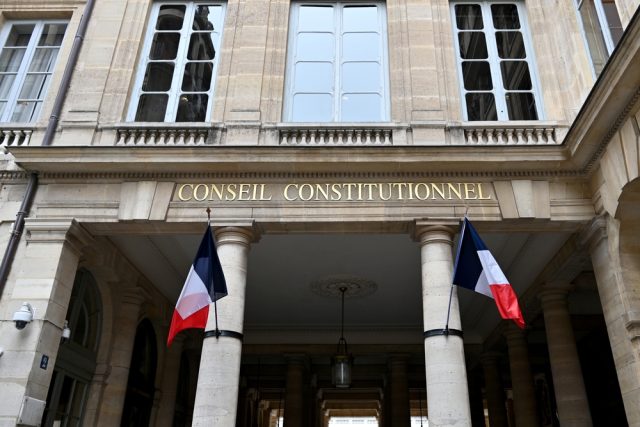
On July 21, a very large majority of French lawmakers passed a law that would have banned minors under the age of 15 from having access to social media – to the applause of President Emmanuel Macron and the elites advocating for stricter control and limiting individual freedoms. But what was praised as a major step toward protecting children from the harmful effects of the digital realm would crumble after only a few weeks.
On August 14, the Constitutional Council of France ruled that this regulation, starting with its very first article, violates freedom of expression and communication, as well as the fundamental right to privacy. These are precisely the same criticisms that opponents of this regulation have brought against it during the last months. The huge expectations that France would be the first EU country to adopt such a revolutionary measure were quickly shattered.
If the law passed by the French parliament had gone into effect, children under the age of 15 would have been prohibited, starting September, from opening accounts on certain major social media platforms, and existing accounts belonging to those who did not meet the age requirement would have been closed by the end of this year. In addition, the social networks would have been required to implement a mechanism to verify the age of every single user, including adults.
This law, fiercely supported by Macron, would have shifted all responsibility to social media platforms through that bureaucratic system for verifying users’ ages. Simply put, if you are over 15, you are free to continue using social media. If you are under 15, access is strictly prohibited. But France constitutional authority strongly disagreed.
The Constitutional Council ruled that a ban of such severity is “neither appropriate, nor necessary, nor proportionate.” The implementation of such a wide-ranging measure – requiring all users to prove their age, overly simplistic and restrictive – would have resulted in abusing certain fundamental freedoms and rights. According to the constitutional authority, the law would not have actually provided any guarantee regarding the protection of the right to privacy. Yes, the right to privacy – that “whim” of those who “stubbornly” place freedom above everything else. Such a ban would have been a “disproportionate” measure, ruled the Constitutional Council, which held up a mirror to a bureaucratic monster that is intensifying its efforts to increase control over individuals and undermine their rights and freedoms.
To ensure that this generation does not lose its childhood or compromise its future through excessive exposure to screens, it is essential to restore real relationships and the natural hierarchy between adults and children. In fact, it is a matter of putting things back on their natural course. The primary responsibility has always belonged – and will continue to belong – to parents, no matter what the zealous progressive propagandists may claim, as they do not defend what they claim to defend. It is the same pseudo-elite that speaks about “protecting children” when it comes to social media, yet turns a blind eye or applauds enthusiastically when it comes to ideologies aimed at premature sexualization, the relativization of the child’s own identity, or the undermining of parental authority and the essential role of parents – all in the name of “children’s rights.”
This decision by France’s Constitutional Council has blocked, at least for a while, the entry into force of an anti-democratic, toxic, and oppressive law. Macron’s reaction, however, is symptomatic. It didn’t take long for him to announce that the government would work on a new draft – that is, a slightly tweaked version of the same legislation – to be speedily adopted in the first half of next year.
As long as there is no genuine public debate regarding the consequences of such a restrictive regulation, as long as there is no real discussion about the danger of increasing pressure on society, the assault on freedom of expression, and the normalization of mass surveillance, any such measure will be met with a profound lack of trust. Or it will suffer the same fate as the law rejected by the French constitutional authority, should it violate once again rights and freedoms. And rightly so. A state that seeks to replace parents and their responsibility for own children is a totalitarian state.