





 Subscribe


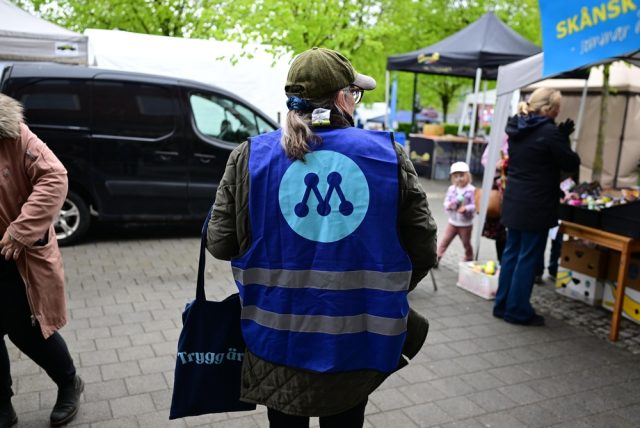
In Sweden, the leading centre-right party the Moderates have attempted to differentiate themselves from the nationalist Sweden Democrats in increasingly bizarre ways, ever since they have unwillingly been lumped together due to their governing agreement struck in 2022. This “liberal conservative” party, while trying to atone for its responsibility for the mass migration crisis of the 2010s, is still jerking unpredictably to the left on many cultural issues, where they sense that the politically tenable position is. It is frequently on the topic of sexual minority politics that the Moderates are straying from the script as contributing to the conservative rebirth in Sweden, but lately, a new pattern has emerged; female supremacy.
That is not an accusation to issue lightly. But some of the promises from the Moderates as of late have called the party’s adherence to traditional Western rule of law into question. Are men and women equal before the law, or are one of them more equal than the other?
The Moderates are on a quest to attempt to win over female voters. This has been part of the party’s electoral strategy since the last election, when they lost the middle class urban female voters to the Social Democrats. As is typical of liberal centre-right parties, they are navigating a very unfamiliar political landscape, bordered by socialists and third worldists on the left and national conservatives on the right, and have found that their traditional compass is useless. Thus, previously unthinkable divisive populism about women’s situations is mistaken for bold political innovation. The party’s legacy of very liberal feminism, not nearly as scrutinised as its previously liberal immigration policy, contributes to this movement.
The following strange positions in this vein have been taken by the party in the last year;
- A goal of zero (!) murders of women in Sweden.
- Recognising “femicide” as a distinct type of premeditated homicide, and punishing it with life imprisonment – much harsher than common murder.
- Preventively imprisoning men with a supposed potential for committing violent crimes against women, based on a risk model.
- Using women’s supposedly particular vulnerability to justify criminalising highly subjective “psychological abuse”.
- Supporting the export of Sweden’s controversial consent law into EU legislation, which places the burden of proof on the defendant in rape accusations.
The criticism toward these expressions of the Moderates’ strange label of feminism is not in any way an attempt to disparage the particular challenges that women have in Sweden. Matter of fact is, women are, as the Moderates’ and most left-wing feminists have identified, more vulnerable than men in contemporary Western Europe, including Sweden. Invariably however, this is the result of mass immigration and an unwillingness to address cultural conflicts between (mostly, but not only) Islamic values and Western values. The prevalence of sexual violence and abuse suffered by women in today’s Sweden is not mitigated by over-regulating and micro-managing the relationship between the two genders, as both the left wing and the liberal feminist hold-outs in the centre-right tends to do.
A breakdown of the Moderates’ baffling proposals on this topic shows that the party is losing its sight of traditional Western justice in its ideological confusion.
“Vision Zero” on murdered women
Most reasonable and balanced legal philosophies agree that eradicating an entire category of crime, especially as broad as murder, is a Sisyphean task. That the Moderates have made it one of the landmarks of their law and order politics calls into question both the party’s sincerity on the issues of criminality, since it is practically unachievable, but also their competence. Do they genuinely believe that they will, without establishing a complete and utter police state with mass surveillance, effectively prohibit every instance of a man enacting deadly violence upon a woman?
Some of the tools to totally protect the life of every single woman in Sweden are police campaigns to identify and dedicate resources to individual supposedly high-risk men across the country. This may not automatically be a bad thing, admittedly. Depending on the reliability of the methods to identify would-be perpetrators, the implications for citizen integrity and privacy may be very mild and acceptable. But in the worst case scenario, a programme like this could be a path to authority overreach. Considering the highly politicised nature of gender relations in modern Western culture, there are valid concerns that it is the latter that this police activity will develop into. Conservatives ought to be wary.
That the Moderates are choosing to pursue a ridiculous zero-vision goal like this raises questions about why other types of crimes do not get this kind of attention. What is it that makes the murder of women a larger concern than any other violent crime? The annual number of murders of men has hovered between two and four times as high as the women murder tally for decades. The murder rate of women has been largely constant since at least 2011, according to official statistics. Despite this, the Moderates are leaning into a crisis-like rhetoric, contributing to a quite overblown narrative that there is a female murder epidemic.
Now, to the party’s credit, this has not detracted from their ability to adequately address rampant organised crime. The infamous crime wave that shook Sweden from the mid-2010s into the 2020s has over the course of 2025 and 2026 come under control, with a sharp decline in burglaries, shootings and bombings. But that should not give the Moderates free reins to lose track of what is right and sensible when it comes to protecting the life and property of Swedish citizens. An ideological focus on particular types of crimes will inevitably lead to legislation that does more harm than good, when common sense is overshadowed by bombastic feminist talking points.
“Femicide” – worse than murder
One of the highly questionable products of this thinking is the introduction of a new ruling for murder, if the victim is a woman. “Femicide” will soon enter the Swedish legal vocabulary if the party has its say, promises the minister of justice. It will be punished twice as hard as a mere common homicide.
A generous interpretation of this proposal is that it will apply specifically to cases where outspoken misogyny has been an aggravating factor, which limits its applicability to the point where it is in practice a symbolic legislation only. The number of indisputably misogynist-ideological murders in Sweden in the last decade can probably be counted on one hand, if that.
The question then, however, is did the party wish to signal that it does not take the principle of equality before the law seriously? In official communication, there has been no mention of recognising violence against men as an aggravating factor. A blanket offensive against gender-based hate crime would adhere to traditional western justice, but this simply does not.
Despite the claimed good intentions (if interpreted generously), a law such as this would undermine the legitimacy of Swedish justice if practised to its natural conclusions. Due to the extant biases in the Swedish court system, in academia, and in the legal profession, a systematic partiality is bound to arise against male defendants, if there is a female victim.
To name one example of this left-leaning partiality, Swedish prosecutors may invoke “hate crime” as an aggravating factor in criminal cases where there is an expressed ethnic tension involved. But the track record shows that nobody has ever been convicted of a hate crime against Swedes despite clear-cut cases, whereas the number of hate crimes against other groups is large enough to be used in political debates about perceived racial injustice in Swedish society.
What complicates this issue especially, but in truth all of the Moderates’ gender-based policies, is that this is the same party that, against the will of its governing partners the Christian Democrats and the Sweden Democrats, successfully introduced a liberalised gender identity legislation in 2024. This controversial decision, which stands out as one of the gravest disappointments in the Tidö government for those who voted for a return to conservatism, allows children as young as 16 years old to change their legal gender, and removes the previous requirements for a psychological “gender dysphoria” diagnosis. In practice, this is a party, and by extension a government, that has enshrined a view on gender that is based on emotions, and has done away with all pretenses of anchoring so-called gender transitioning to science and evidence.
For all this obsession with women and their particular situation in Sweden, the Moderates seem quite shaky on the core question; what is a woman? How can there be femicide if a woman is a self-identified category? How can women be categorically more deserving of protection if it’s as easy for the authorities to recognise you as a woman as it is to change your name?
Pre-emptive imprisonment of men
Far-reaching law enforcement is in vogue in Sweden, with many measures to surveil and neutralise dangerous, but not yet convicted, elements being passed either into law or proposed by parties. Mainly, these measures have been targeting organised crime and gangs, where there is much public support for extending the reach of the law far beyond what Swedes are used to.
This has enabled the Moderates to extend arguably arbitrary measures against would-be perpetrators of violence against women as well. In late August, the party proposed imprisoning “high-risk” men, where violence against women has been predicted. Yes, that would be a ‘Minority Report’-esque system presented by a self-proclaimed liberal conservative party.
The problem with this is of course that it supposes that the methods to identify said would-be perpetrators is infallible. In reality, the academic and vocational fields that would be suitable to identify these risks, such as psychology, are frequently politicised. There is a politically charged push from feminists and other ideologically infused voices in academia and other public positions to villainise traditional masculinity and to promote (and maintain) the feminisation of power in Western society.
We see already across the West that men are disadvantaged in custody procedures, due to the cultural-ideological biases in the judiciary. We see that concern over the sanctity of life in the face of radical family planning ideology is demonised as pure evil misogyny. We see that we have supposedly right-wing parties that are willing to risk due process for citizens, just to satisfy the feminist hegemony of the day.
The bureaucracy of today simply does not have the legitimacy to suspend the freedom of citizens without discernable and indisputable cause.
Psychological abuse as a new category of crime
Earlier in 2026, the Moderates enacted, together with the rest of the Tidö coalition, a criminalisation of “psychological abuse”, which includes insults, mockery, derogatory comments, but also controlling behaviour and threats. Repeated instances of the above will be punishable by law with up to four years in prison.
Some caveats must be admitted with this legislation, since it was not only a Moderate product, and it does not explicitly aim to protect women against men. The nature of the criminalised acts is however very easily contextualised to ideas of female vulnerability, and it is obvious that this new law is the brain child of the same feminist hegemony as previously described, and the ‘bourgeois’ reaction to immigrated honour violence. The latter has been used to resuscitate the relevance of feminism on the right, and is often combined with criticism of immigration or of Islam.
The problem with the law lies therefore not in criminalising controlling behaviour (such as surveilling online conversations, locations and social relationships) and threats, but in the ambiguity of “insults, mockery, and derogatory comments”. Does this mean that casual exchanges between spouses with elements of any of the above are supposed to be perceived as serious crimes? This is obviously open for abuse, and may serve to worsen already crumbling relationships into litigation that may land somebody in jail, when the only thing that was necessary was a divorce.
The issue also comes down to how stringent the evidence standards will be. How likely will it be that a recurrence of verbal insults or belittling behaviour will be recorded for a court to review? Individual instances of these now criminalised acts can be taken out of context if viewed on a video or heard on a sound recording. Much of this can be done in bad faith, as we know that vindictive men and women may for example bring false criminal accusations against each other in their dispute. Many rape cases are contested on these grounds, and psychological abuse runs the risk of being turned into a weapon.
Fundamentally, legislating against subjective experiences such as “insults, mockery, and derogatory comments” is an authoritarian overreach, since there is subtlety and context awareness to human verbality that the law is far too blunt to accommodate. That these elements were included in a proposal that at least partly attempts to address a serious issue in some communities (controlling behaviour) speaks of how a good thing may get corrupted by ideological tunnel vision. For the Moderates, it seems to have been more important to use this new law as a feminist vehicle for political self-glorification, rather than making sure that we have dependable legislation for Swedish citizens.
Exporting Sweden’s controversial consent law into Europe
Sweden has a much-debated consent law, enacted in 2018 by the Social Democratic government, that has been criticised domestically by constitutional instances and the legal community for placing the burden of proof on the defendant in cases of rape. The law demands proof of consent as opposed to proof of violence or coercion in sexual activities, meaning a person can get prosecuted for rape based on a mere claim of non-consentuality from the other party, even well after the act itself. In a word against word situation, the supposed victim has priority.
Many expert opinions and politicians have rallied against this law, which they deem undermines fundamental aspects of due process, and which essentially predates on communication errors in intimate situations. Especially young and inexperienced men are prone to fall into life-destroying legal battles after less-than-ideal relationships, and this has given rise to a movement by the families of men deemed wrongfully convicted of rape.
The critics also argue that a mere prosecution for rape is enough to destroy a person’s social life and career possibilities, even if it results in a dismissal. The law is thus able to be easily weaponised by vindictive persons against their former partners, which is how some of the families describe their sons’ convictions.
There exists an ongoing debate about this law that has received the attention of national politicians and which permeates into academia and mainstream legal publications. Despite this, the Moderates are committing to defending the law, and even exporting it to the rest of the EU. In early 2026, the European Parliament passed a proposal to introduce an EU-wide law of consent, based largely on the Swedish legislation. The Moderates, belonging to the EPP group in the European Parliament, and the Swedish Social Democrats were some of the most vocal proponents of this reform. Both parties harshly attacked the nationalist and Eurosceptic Sweden Democrats for voting no to the EU repeating the same mistake as Sweden did in 2018. The argument from the Sweden Democrats was in line with the common evaluation of the Swedish consent law as per the opinions of the Swedish riksdag’s audit council, the court authorities, and the Swedish lawyer association.
So what is the reason for the Moderate stubbornness regarding the law? It should go against their ideological reflexes, and it isn’t particularly controversial or fringe to point out the obvious flaws with it, and safeguard the rule of law for everybody – including men, who are already quite disadvantaged in the courtroom.
Perhaps in this particular situation, in the lawless zone that is the hinterlands between domestic and EU policymaking, it can be attributed to the whims of individual members of the European Parliament. The faction that represents the Moderates in Brussels are known for their much more socially liberal positions that frequently run counter to the image their party is trying to uphold at home. But with that said, as has been outlined in this article, there is much to be desired with the so-called liberal conservative party that currently governs Sweden, and is seeking four more years at the helm.
Is the Moderate plan working?
The issue of having lost the middle class urban female vote has been haunting the Moderates like a spectre ever since they “won” the election in 2022. So far, no polls indicate that they have attracted them back with their decidedly progressive feminist and anti-conservative proposals.
The obsession with supposedly pro-woman politics is nourished not only from strategic election campaigning. As in Brussels, parts of the Moderate party’s executive organisation is evidently still in the grips of a socially liberal and progressive faction. Likely the same faction that opened the borders of Sweden to asylum seekers, that slashed the integrity of the domestic labour market, and set Sweden on the path towards suffocating political correctness mixed with multicultural anarchy that was continued by the Social Democrats. This is a party that is with the one hand trying to convince Swedish conservatives that it has changed its ways, and with the other hand appealing to an obsolete brand of liberalism.
And in the end, neither women nor men will win.