





 Subscribe


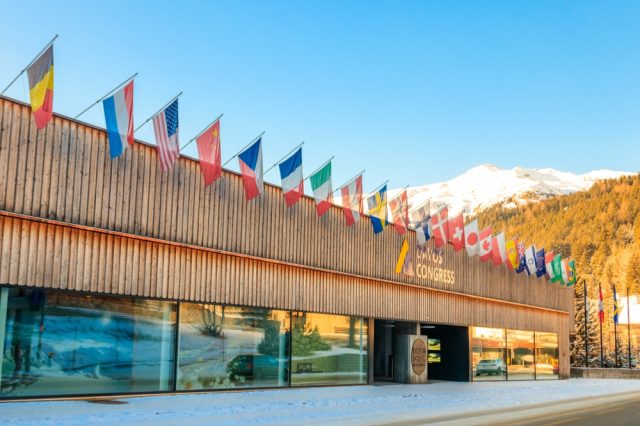
The 2026 edition of the World Economic Forum, taking place in Davos from January 19 to 23, confirms its position as one of the most important events in contemporary global governance. Now in its fifty-sixth year, the Forum continues to represent a key point of convergence for political, economic, and business leaders, strengthening over time its central role well beyond the economic dimension. This year’s theme, centered on dialogue as a guiding principle, reflects the widespread awareness of the need for multilateral instruments in a historical moment characterized by growing geopolitical fractures and a redefinition of international balances.
EUROPE AT A STRATEGIC CROSSROADS
The Forum is taking place at a particularly delicate moment for Europe, which is called upon to confront crucial choices regarding transatlantic relations, its economic model, and the structure of its collective security. The US administration’s initiatives are helping to redefine the global order, forcing European partners to rethink their role and degree of strategic autonomy. In this context, Davos becomes a privileged space for discussion on issues that directly affect the continent’s stability.
THE PRESENCE OF THE US PRESIDENT IS A KEY ELEMENT
The participation of US President Donald Trump, expected midweek, is particularly significant. His return to Davos after six years represents an importante political and symbolic step, as it reaffirms the centrality of the United States in global decision-making processes. The presence of the White House leader lends the summit additional weight, transforming it into a potentially decisive platform for addressing major international crises.
DOMESTIC AGENDA AND MESSAGES TO EUROPE
In his speech, Trump is expected to primarily address domestic policy issues, related to economic difficulties and cost-of-living affordability for American citizens. The intention is to present new initiatives to reduce housing costs and reaffirm an economic agenda that, according to the administration, has allowed the United States to lead global growth.
THE GREENLAND CRISIS AND TRANSATLANTIC TENSIONS
One of the most sensitive issues concerns Washington’s recent pressure on Denmark regarding control of Greenland, accompanied by the threat of tariff measures against some European NATO allies. The deployment of European military personnel to the island has highlighted the gravity of the situation, sparking widespread alarm among European governments. Several European states have jointly expressed concern that such initiatives could trigger a downward spiral and jeopardize transatlantic relations, considered a cornerstone of the post-war order. Other actors, such as the NATO Secretary General, have instead sought to promote de-escalation through dialogue.
UKRAINE, THE MIDDLE EAST, AND NEW DIPLOMATIC INITIATIVES
The conflict between Russia and Ukraine is another central theme of the summit. Ukrainian President Volodymyr Zelensky is attending in person with the aim of meeting with Trump and obtaining new security guarantees ahead of a possible ceasefire, a perspective also shared by G7 leaders. The large US delegation, which includes key figures in the negotiations, fuels the possibility of an agreement that could be formalized in Davos. At the same time, the idea of a dedicated Gaza Peace Council, promoted by Trump and funded through significant contributions earmarked for the reconstruction of the area, is emerging. This initiative has already attracted support but has drawn criticism for its potential intent to create an alternative to existing multilateral bodies.
OTHER CRISES AND THE ROLE OF THE UNITED STATES
The future of Venezuela, following the US military intervention that led to the removal of Nicolás Maduro, and the situation in Iran, marked by internal tensions and last-minute military decisions, complete a picture of strong American engagement. The presence of the Iranian Foreign Minister in Davos suggests the possibility of informal talks, confirming the Forum’s role as a space for parallel diplomacy.
DAVOS AS A DECISIVE HUB
Historically ambivalent toward Trump, Davos could prove crucial for his global ambitions and for the United States’ attempt to reassert itself as the leader of the free world. In a Europe grappling with fragile economic growth, a persistent threat in the East, and doubts about its ability to defend itself autonomously, the American president’s presence lends the summit extraordinary importance, making it a key moment for the future of international relations.