





 Subscribe


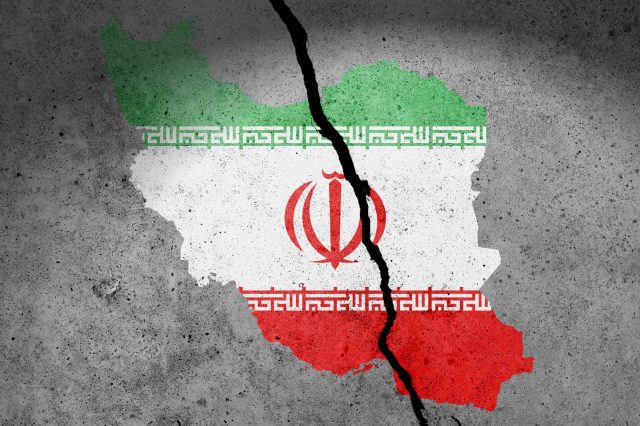
Tehran, Tel Aviv, Washington: three capitals that since Saturday, 28 February 2026 have been living by a calendar of sirens, military communiqués, and damage assessments. The war between Iran and the United States, with Israel fully involved, is no longer a think-tank hypothesis: it is an operational reality, with raids following one another and retaliatory strikes probing for new cracks along the arc from the Gulf to the eastern Mediterranean.
It is a conflict with deep roots—fed by the spiral of the nuclear file, failed deterrence, sanctions, and “shadow war”—yet in a matter of days it has produced two political facts likely to reshape the region: the start of the joint U.S.–Israeli offensive (which Washington calls Operation Epic Fury) and, above all, the death of Supreme Leader Ali Khamenei, a blow that for Tehran is both a symbolic decapitation and an institutional trauma.
The steps that led to open confrontation
To understand today, you have to read what came before. This conflict was not born in 48 hours: it is the result of years of managed escalation that is no longer managed. On one side, the United States and Israel gradually raised the alert level over Iran’s program and over the network of militias and proxies seen as Tehran’s “armed arm”; on the other, Iran asserted its right to self-defense, interpreting sanctions and covert operations as an undeclared war. In recent months, diplomacy has looked like a set: meetings, mediations, statements of principle. But the outcome has been mutual hardening. The turning point came when Washington and Jerusalem decided that the deterrence window was closing and that the only way to reopen it was a massive operation—fast, spectacular, “exemplary.” And so, on 28 February, the first strikes began.
From 28 February to today: a chronicle of a widening war
The night of 28 February inaugurated a cycle that continues to this day: waves of raids, an Iranian response, new waves. International sources describe multiple strikes on military and infrastructural targets, in a pattern alternating high-precision operations with saturation attacks using drones and missiles. The “military” dimension is only one part of the story. The other, deeper dimension is political: the offensive was immediately read—and partly claimed—as an action aimed not only at degrading warfighting capabilities, but at pushing Iran toward a change of power. This is where the war fuses with Trump’s messaging: a message to the regime and, above all, a direct message to the Iranian people.
Trump’s words: “military operation” and a call to revolt
In the video announcing the start of “major combat operations,” Donald Trump frames the narrative along two tracks.
The strategic track: the operation is presented as necessary to prevent Iran from consolidating capabilities deemed unacceptable by Washington (nuclear and missiles), and as a response to a threat that—according to the American account—could no longer be contained by diplomacy alone.
The political track: Trump speaks to Iran not only as an “external enemy,” but as a society that—in his view—can and must overthrow the religious leadership. It is the most controversial part of the speech, because it shifts the implicit objective from deterrence and security to regime change.
In broad terms, Trump urges Iranians to seize the moment: the structure of power has been struck, the leadership is wobbling, now would be the time for an internal turning point. But there is one sentence that has become the pivot of the message and must be quoted verbatim, because it sets the American political line on what comes next: “Now is the time to seize control of your destiny and to unleash the prosperous and glorious future that is close within your reach.”
Khamenei’s death: a crater at the heart of the Islamic Republic
If the 28 February attack is the military watershed, the death of Ali Khamenei is the historical watershed. Reconstructions converge: the Supreme Leader was killed in the early stages of the strike campaign. For Tehran, it is a blow of almost “constitutional” magnitude: the Islamic Republic is a system with institutions, yes, but also with a leadership that in practice represents continuity, legitimization, and discipline over the apparatuses.
It does not automatically mean collapse. It means a vacuum. And a vacuum, in a securitized regime, is filled by the strongest apparatuses. This is where the Pasdaran (IRGC) come in, the central structure of the regime’s internal and external projection of power: not merely a “guard,” but a politico-military backbone, with economic networks, intelligence, territorial control—and, above all—arms.
An Iran split in three: celebration abroad, silence at home, militant mourning
The reaction to Khamenei’s death has put three different Irans on stage.
First Iran: the diaspora and external opposition. Outside the country, in Iranian communities across Europe and America, some have celebrated. For many, Khamenei is the symbol of decades of repression and of a theocratic power perceived as illegitimate. Images of toasts and pre-revolution flags, amplified on social media, tell a desire: that this may be the beginning of the end.
Second Iran: the country that stays quiet. Inside Iran, the picture is more opaque. Silence is not consent: it is fear. Fear of retaliation, fear of being identified, fear that every word becomes evidence. In a war underway—and with apparatuses on high alert—prudence can become the only form of survival.
Third Iran: the regime’s street. It exists, and it has been visible. There have been demonstrations of grief and anger, pro-regime mobilizations, despair over the Leader’s death, calls for revenge. A part of the country—militant, ideological, often embedded in religious and security networks—reacts as a besieged system would: by closing ranks and demanding toughness.
This tripartition is the key to reading the phase now opening: Iran is not a uniform bloc. It is a mosaic in which a majority may be hostile to the regime, but an armed minority can still impose its line.
The political fact no one can dodge: the majority against the regime, but power is armed
Saying that “many Iranians are against the ayatollahs’ regime” is not a leap: it is an evidence layered through years of protests and repression. But turning that evidence into a conclusion (“therefore the regime falls immediately”) is the logical jump Trump—politically—encourages, while reality on the ground makes it unlikely.
Because the Islamic Republic does not survive on consent alone: it survives on organized coercion. The Pasdaran are not a decorative structure; they are the axis around which internal security, social control, management of dissent, and crisis response revolve. And they are armed. Imagining an immediate regime change, without additional factors—mass defections, decisive fractures within the apparatuses, or an external involvement far heavier—is extremely complicated.
In other words: the call to revolt can be an effective slogan, but it is not enough to dismantle an apparatus with weapons, chains of command, and a survival culture.
The front shifts to the Mediterranean: the drone on the British base in Cyprus
The most direct signal for Europe—and not only for London—comes from Cyprus. On the night between 1 and 2 March, a drone struck the RAF base at Akrotiri, causing limited damage and no casualties, according to initial reconstructions. Sources and analyses point to a Shahed-type aircraft and to Hezbollah as a possible operational channel—that is, an Iranian proxy.
The point is not only material damage. The point is geography: for the first time in this crisis, a piece of the Western posture in the eastern Mediterranean has been hit. And the British response—assessments of new naval assets and strengthened anti-drone protection—suggests it is not viewed as an isolated incident, but as a repeatable threat.
“Today” is not an epilogue: it is still full escalation
As of 3 March 2026, operations continue. Sources describe a conflict that could last weeks and that risks generating retaliation even beyond the traditional theater, especially in cyberspace and through proxy networks.
And this is where Khamenei’s death becomes a double fuse: inside Iran it may produce succession struggles; outside, it may accelerate revenge. A U.S. assessment cites the risk of new Iranian actions and actions by its allies, with Homeland Security attention also oriented toward possible activity in the digital domain.
Where is Europe? And above all: what does it want to be?
At this point the question is not a rhetorical exercise: it is a geopolitical statement of fact. What is it doing—concretely—to have impact? What role does it want to play in a conflict that touches energy security, routes, terrorism risk, migration, and even British bases in the Mediterranean?
For now, Europe’s trajectory looks like the usual one: statements, calls for de-escalation, communiqués invoking international law. All necessary, of course. But insufficient if the conflict hardens into a long war, capable of redrawing regional balances and dragging the West into a season of diffuse retaliation. Europe’s absence is not only military (and it would be naïve to think the EU can act like Washington). It is a strategic absence: the inability to turn shared interests into a shared line, and a shared line into political leverage.
Meanwhile, history moves fast: Trump speaks to Iranians as if power were already on the brink; Iran divides between those who celebrate, those who stay silent out of fear, and those who mourn and mobilize for the regime; the Pasdaran remain the armed fulcrum; and the conflict shows that no regional border is truly impermeable. If the stakes are the security of the Mediterranean and the stability of the Near East, then Europe will have to decide whether it wants to remain a “responsible spectator” or finally become an actor. Because one thing is certain: in this war, whoever stays at the window does not remain neutral. They remain irrelevant.