





 Subscribe


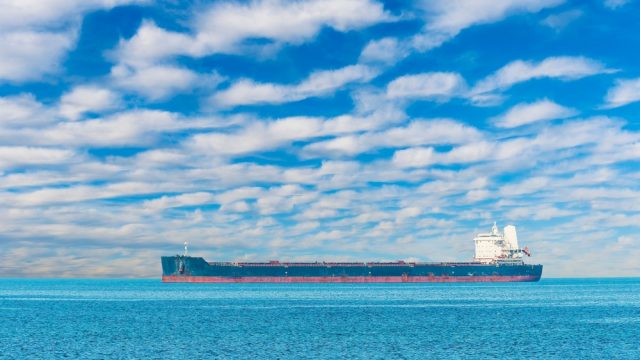
There is a warfront that escapes the cameras’ lenses, with no cities in ruins or trenches visible on radar. Yet the outcome of this silent clash is as vital as the offensives in the mud of Donbass. The battle is being fought on the blue routes of the globe, where Russia’s so-called “shadow fleet” — an imposing and murky web of merchant ships — provides Moscow with the financial oxygen it needs to sustain its invasion of Ukraine, undermining the international sanctions system.
In the last few hours, the United Kingdom has broken the deadlock. As reported by the BBC, London has chosen to abandon the diplomacy of mere proclamations and “blacklists” in favour of a strategy of active deterrence. This is a paradigm shift: the use of legal and military force to enforce compliance with the rules. This move not only challenges the Kremlin, but also starkly exposes the European Union’s chronic inability to translate law into action.
The anatomy of an energy ghost
More than an official extension of the Russian state, the shadow fleet is a financial and logistical ecosystem that thrives in the loopholes of international law. We are talking about hundreds of oil tankers, often on the verge of structural collapse, which share some unmistakable traits:
- Flag deception: Use of fictitious or convenient shipping registers to evade jurisdiction.
- Chameleon identities: Constant changes of name and corporate structure to make traceability futile.
- Technological blindness: Systematic switching off of AIS transponders during loading and unloading manoeuvres.
- Modern pirates: Transhipment of crude oil on the high seas to conceal the real origin of the product.
These “zombie ships” represent Putin’s financial lifeline, allowing Russian crude oil to flow to Asian and African markets, effectively neutralising the price cap set by the G7.
The London doctrine: from rule to practice
The British government’s decision is not a knee-jerk reaction, but the culmination of a strategy that combines maritime law and operational capability. London has in fact reinforced its legislative framework to legitimise the boarding and seizure of ships suspected of violating the embargo, even in international waters, provided they operate outside the guarantees provided for in the treaties.
According to rumours in The Times, Downing Street has already simulated the use of elite units such as the Special Boat Service for targeted interventions. The political message is drastic: a sanction without coercive instruments is merely a suggestion that the enemy can afford to ignore.
When a ship becomes “stateless”
At the heart of the British challenge is a sophisticated legal insight. International law requires that every ship be linked to a state, fly a legitimate flag and comply with transparent safety criteria. When these links are severed or falsified, the ship loses its “sovereign protection” and becomes, in effect, stateless.
A stateless ship has no legal shield against inspection. It is on this legal loophole that London builds its legitimacy: intervening against the shadow fleet is not an act of piracy, but the muscular application of rules that Europe has so far preferred to cite only in academic seminars.
The dead end in Brussels
While London prepares for action, the European Union continues on the path of punitive bureaucracy. On 18 December, the EU Council added 41 vessels to its list of restrictions, bringing the total to around 600. The measures include a ban on port calls and a block on insurance services, but the real impact remains limited.
Faced with American seizures and British mobilisation, the European Commission has chosen the path of disengagement, declaring that “it is not for the EU to judge its international partners”. This response sums up the drama of the Union: the ability to produce excellent rules combined with a total refusal to enforce them.
The cost of hesitation: security and ecology
Europe’s inability to act has devastating geopolitical and environmental consequences. Much of the shadow fleet’s movements take place in the Mediterranean, a semi-enclosed sea where an accident caused by a dilapidated and uninsured oil tanker would instantly turn into an economic catastrophe for coastal states, from tourism to fishing.
Furthermore, the continued existence of these ships distorts the energy market. European citizens pay the political price of sanctions (higher energy costs and inflation), but the strategic benefit of these sacrifices is diluted by a Russia that continues to export undisturbed through grey channels.
Truth and sovereignty
The issue of the shadow fleet goes beyond oil: it is a test of the very nature of sovereignty. On the one hand, there are nations such as the United Kingdom and the United States, which interpret power in the classical sense: those who set the rules must be prepared to defend them with operational risk. On the other hand, there is the European Union, a regulatory power that systematically delegates deterrence to its allies.
As long as Russia can count on this maritime umbilical cord, any sanctions will remain a superficial wound. London has decided to strike at the root of the flows. Europe, on the other hand, is standing by and watching. But in the theatre of geopolitics, indecision is never neutrality: it is an abdication that history usually makes you pay dearly for.