





 Subscribe


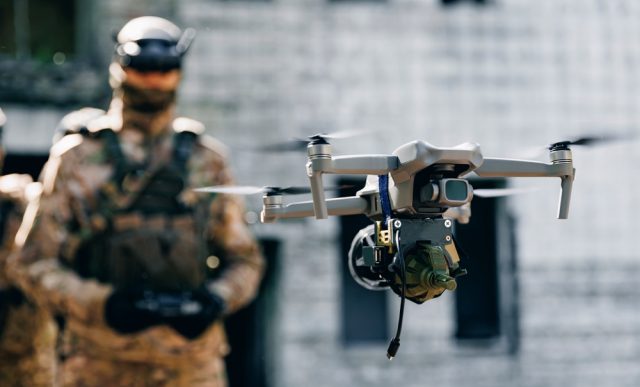
Kyiv’s decision to open controlled arms exports marks a strategic shift: Ukraine is no longer only asking for protection, but offering Europe a battlefield-tested model of deterrence, industry and sovereignty.
Ukraine’s announcement that it will begin opening arms exports through so-called “Drone Deals” should not be read as a simple commercial decision. It is a strategic signal. After more than four years of full-scale war, Kyiv is attempting to convert its most painful advantage — battlefield experience — into diplomatic weight, industrial capital and long-term security relevance.
President Volodymyr Zelensky has made clear that the opening will be selective and controlled. Ukrainian forces will retain priority over domestic production, and only surplus capacity will be available for export. Countries cooperating with Russia will be excluded, with Ukraine’s Foreign Ministry, intelligence services and Security Service tasked with identifying states to which exports should be prohibited. The purpose is evident: Ukraine wants to monetise and internationalise its defence innovation without allowing its technologies to fall into Russian hands .
For Europeans, the deeper meaning is this: Ukraine is trying to move from being a recipient of security to becoming a provider of security. That transformation matters for the future of European defence.
The war has shown that modern military power is no longer measured only by tanks, aircraft and high-end missile systems. It is also measured by the ability to produce cheaply, adapt quickly and replace losses at industrial speed. Ukraine’s drone sector has developed under the harshest possible conditions: constant Russian pressure, electronic warfare, missile strikes, battlefield attrition and urgent operational feedback from the front. This has produced an ecosystem that is imperfect, exposed and under strain, but unusually responsive.
Reuters reports that Zelensky has used Ukraine’s drone expertise to strengthen diplomatic ties with partners in the Middle East and Europe, while analysts note that Kyiv is presenting itself as an asset rather than a liability at a time when American support appears less predictable . That point should not be underestimated. Europe can no longer build its security architecture on the assumption that Washington will always fill every gap, supply every system and absorb every strategic shock.
A serious European defence policy must therefore draw three lessons from the Ukrainian case.
First, defence industrial capacity is not a bureaucratic category. It is sovereignty. A continent that cannot produce ammunition, drones, air-defence components and electronic-warfare systems at scale cannot credibly defend its borders or its interests. Ukraine’s experience shows that wartime innovation depends not only on laboratories, but on thousands of engineers, small manufacturers and battlefield operators connected in a rapid feedback loop.
Second, Europe must stop treating Ukraine only as a theatre of war and begin treating it as a defence-industrial partner. Ukrainian manufacturers say they possess spare capacity, while Zelensky has spoken of surplus production in some weapons categories reaching 50% . If properly controlled, joint production, licensing, training and technological exchange with European allies could strengthen both Ukraine’s resilience and Europe’s deterrence.
Third, the drone revolution is not a niche issue. It is now central to land warfare, air defence, maritime security and infrastructure protection. The Kyiv Independent’s reporting on Ukraine’s low-cost mid-range drones shows the logic clearly: inexpensive systems, produced at speed, can exhaust enemy air defences and alter the economics of war . Europe’s adversaries understand this. Europe must understand it too.
A conservative reading of this development begins with realism. Peace is not preserved by declarations, but by credible strength. The defence of Europe cannot be outsourced indefinitely, nor can it be built on dependency, regulatory slowness and industrial fragmentation. National sovereignty, alliance cooperation and technological competitiveness are not opposing principles; in defence, they reinforce one another.
Ukraine’s “Drone Deals” are therefore more than an export mechanism. They are a test of whether Europe is capable of learning from war while war is still reshaping the continent. Kyiv is offering something rare: systems, methods and expertise tested against the Russian military in real conditions. Europe should not romanticise this. Ukraine still faces export-control risks, production constraints and the danger of overpromising. But it would be strategically negligent to ignore the opportunity.
The future European defence base will not be built only in Paris, Berlin, Rome or Warsaw. It may also be built with Kyiv, Kharkiv, Dnipro and Lviv. If Europe wants sovereignty, it must invest in those who are already defending it.