





 Subscribe


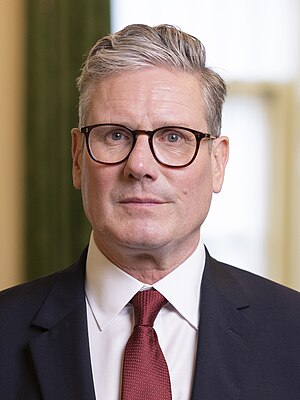
British Prime Minister Keir Starmer resigns. He is the sixth prime minister in England in 10 years to be forced to resign early.
It has almost become a tradition in the tradition-heavy United Kingdom that prime ministers are thrown out by their own parties. It has mainly been Tory leaders who have been forced to leave office, but now also a Labour leader.
Keir Starmer is said to be the most unpopular prime minister Britain has had in a very long time. He has put forward several unpopular proposals that he has since been forced to withdraw. He has had difficulty maintaining a clear line in politics. Starmer has also been pressured by Labour’s falling opinion polls, while the Greens are taking voters to the left and Reform UK is taking voters to the right. No one believes that Labour will repeat the success of 2024, when Labour was able to take advantage of the dissatisfaction with the many messy years with the Tories. Starmer was given the chance to govern Britain instead of the Tories. After two years, he is being forced out by his own party.
Brexit has also made the UK economy vulnerable. And as pandemics, wars in Europe and the Middle East, and international economic unrest due to Donald Trump’s tariff policies have all contributed to dampening economic activity and growth, the British economy, like that of many other countries, has slowed.
Raising taxes while cutting welfare, like Keir Starmer, is a politically difficult equation. Entrepreneurs, farmers and ordinary income earners do not appreciate the tax increases. At the same time, all the left-wing voters who expect substantial investments in the welfare system can also express their dissatisfaction. No one was satisfied.
In addition, the long-standing illegal immigration has created bitterness among large parts of the British working class. The differences of opinion about migration and about what many see as the Islamization of parts of British society are and have been stressful for the country. The riots that broke out after Britons fell victim to migrant violence have revealed the deep frustration with migration policy that exists in broad sections of the population. The debate has been heated about high-profile acts of violence but also about systematic rapes of young British girls by men with a primarily Pakistani background.
Now, Labour politician Andy Burnham is expected to take over. He is said to be more left-wing in his thinking than Keir Starmer, and perhaps this is timely given that there is a wave of radicalization going on across the Western world through the left.
From a conservative perspective, however, it is difficult to see what a new and perhaps more left-wing Labour leader will be able to achieve.
It is obvious that Britain needs patience, peace and quiet above all. The country needs to rely on its great traditions in entrepreneurship, finance and hard work. Market economy and capitalism have solved far more problems throughout history than socialism and command economy. But at the same time, the British need to ensure that as many as possible of their own population can feel that they are getting an economic boost. For some reason, the modern market economy tends to reinforce differences in income and wealth. This is a challenge for the political forces that still believe in the market economy and capitalism. The alternative to income differences cannot be socialism. Because then we will all just become poorer.
But British politicians must also take control of immigration. In an opinion poll presented on June 16, the immigration-critical Reform UK was clearly the largest party with 24 percent of voters behind it. Both Labour and the Conservatives were on 19 percent. And it is the failed migration policy that explains this support for Reform UK. Nothing else.
So what can a new Labour leader achieve that Keir Starmer couldn’t? Not much unless he seriously breaks with the expectations of his own voters and invests in market economic reforms and seriously tackles illegal immigration.