





 Subscribe



Despite the ongoing crisis in the Persian Gulf, Europe’s sky remains just as busy as they were a month ago when the conflict between the U.S. and Iran erupted. At a pace that has become almost invisible through normality, tens of thousands of aircraft crisscross the European Union’s airspace daily to connect capitals, outlying regions, industrial centers, and tourist destinations. This air transport industry operates with Swiss-watch precision, with punctual schedules, optimized routes, and constant flows of passengers and cargo. Unfortunately, beneath this image of stability, a deep rift is looming—one that has nothing to do with technology or human resources, but with something far simpler and, precisely for that reason, far more dangerous: access to fuel.
Signs of a potential kerosene crisis that could hit European airlines can no longer be ignored or dismissed as mere stock market speculation. They come at a time when the European Union’s dependence on energy imports is already well known, and geopolitical tensions in the Persian Gulf (a key production and transit area) are becoming increasingly difficult to predict. In particular, the vulnerability of the aviation fuel supply chain becomes evident when analyzing consumption patterns and supply sources. European countries do not produce enough jet fuel to sustain their air traffic on their own and rely, to a significant extent, on imports from the Gulf region, an area that has been at war since the 28th of February. This dependence turns any major disruption (such as the ongoing military conflict in Iran, a logistical bottleneck, or economic sanctions) into a direct threat to the functioning of the entire European aviation system.
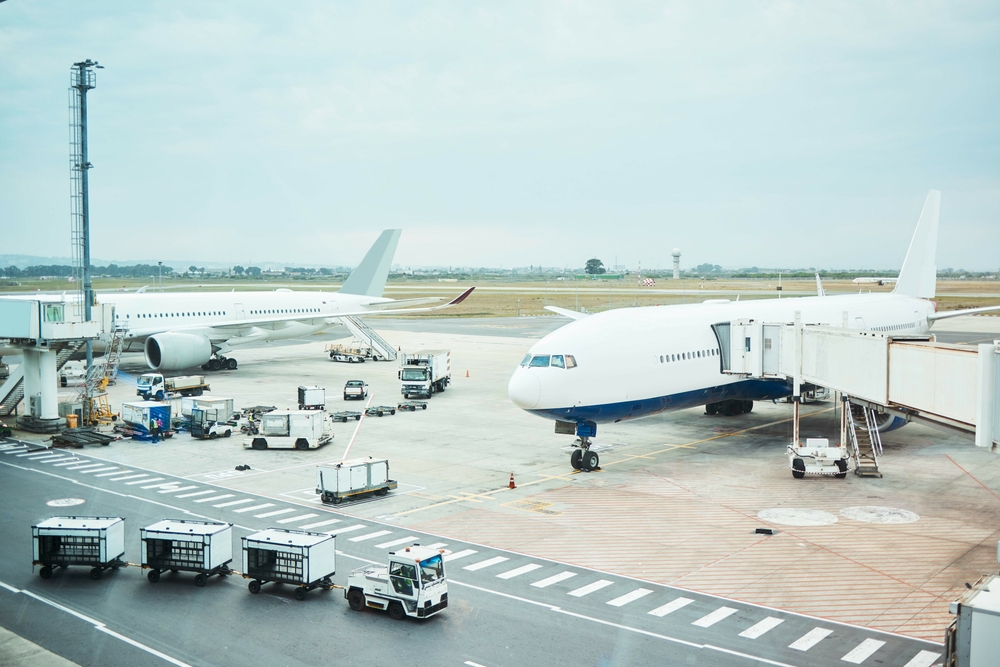
To understand the scale of the problem posed by a blockade of the Strait of Hormuz, we need to look at the overall figures. European civil aviation consumes, on average, between five and six million tons of jet fuel each month. During peak periods, as holiday traffic intensifies in the summer months when many charter flights to tourist destinations are added, this jet fuel consumption increases significantly. At the same time, the number of commercial flights in the European Union typically ranges between 800,000 and 900,000 per month, which amounts to over 25,000 flights daily.
Each of these flights represents not just a journey, but a piece of a complex economic puzzle involving passenger transport, industrial logistics, services, and international trade. However, this mechanism operates on the basis of an extremely fragile balance. The aviation sector does not have dedicated strategic kerosene reserves at the European level, as other energy sectors do. Although member states are required to maintain oil stocks for approximately 90 days, these reserves are not necessarily tailored to the specific needs of aviation. The distribution of these oil stocks is uneven, and access to them is not uniformly guaranteed for all airports or airlines. In practice, the system operates on the basis of continuous supply flows, with limited stocks at each airport.
The Geopolitics of a Dangerous Dependency
This reality becomes all the more sensitive when viewed within the current geopolitical landscape. The Strait of Hormuz, which connects the Persian Gulf to the Gulf of Oman, a transit point seemingly far from Europe, yet just 2,300 kilometers in a straight line from Cyprus (the nearest EU country) is in fact a vital link for the functioning of European aviation. Approximately one-fifth of the world’s oil transits this narrow route, and any blockage (whether temporary, as is currently the case) sends shockwaves throughout the global economy. In Europe’s case, the impact is amplified by the lack of quick alternatives and the limited capacity to substitute oil imports.
Unfortunately, over the past 20–30 years, the European Union has indirectly chosen to outsource part of its energy security. Although there are many refineries in Europe, they cannot fully meet market demand, and many of them are already operating at maximum capacity. The differences between countries are significant because some nations have robust infrastructure and even export fuel, while others rely heavily on imports; this divide makes a coordinated response difficult in crisis situations. History provides enough examples to temper any optimism. Let us recall what happened during the oil crisis of the 1970s, when it was demonstrated how quickly geopolitical tension can turn into a global economic shock. The embargo imposed at that time led to exponential price increases, rationing of consumption, and a chain of economic recessions. More recently, fluctuations in the energy market amid the conflict in the Middle East or the war in Ukraine have shown that energy dependencies are not just an economic issue, but also a strategic one. The major difference from the past, however, lies in the level of interconnectivity of today’s economy. While air travel was limited in the 1970s, today it is essential to the daily functioning of the global economy and, by extension, the European economy. Consequently, a kerosene crisis would not merely have localized effects but would reverberate throughout the entire European economic system.
When the shortage becomes systemic and the domino effect on the economy
Initially, the kerosene crisis manifests itself discreetly, through delays, schedule adjustments, or even flight cancellations. Some routes are temporarily suspended, as Lufthansa and KLM recently did, and operators try to protect their margins in an increasingly unpredictable environment. As stocks decline, fuel prices rise and supply remains uncertain, so these adjustments could become permanent. Smaller airports, already at a logistical disadvantage, are feeling the first effects, receiving fuel late or in insufficient quantities. Airlines, faced with a lack of predictability, are beginning to operate defensively. The additional refueling of aircraft at departure airports (a practice already observed) has become the norm, creating a vicious cycle of higher consumption, additional pressure on supplies, and an acceleration of shortages. At the same time, fuel suppliers are shortening their planning horizons and refusing to offer long-term guarantees, making it nearly impossible to establish stable flight schedules. In this climate of uncertainty, the relationship between airlines and passengers is changing profoundly. The price of an airline ticket is no longer a fixed product but becomes a variable dependent on fuel market trends. Price surcharges, already tentatively introduced by some airlines, are becoming widespread.
As the crisis deepens, its effects quickly extend beyond the aviation industry. The tourism sector is among the first to be affected, as destinations that depend almost exclusively on air travel (islands, remote regions, or cities without fast rail alternatives) may experience dramatic declines in visitor numbers. Hotels, restaurants, travel agencies, and the entire local economy are feeling the impact. Air cargo transport, vital for the rapid delivery of high-value or time-sensitive goods, is also affected. Industries such as pharmaceuticals, electronics, or automotive, which depend on fast logistics chains, anticipate possible delays and additional costs; this is precisely why any disruption to air transport can trigger a cascade of bottlenecks. The workforce may also be affected, as millions of jobs depend directly or indirectly on aviation. From airline and airport staff to employees in tourism and logistics, the entire system is a domino effect, as reduced activity inevitably leads to layoffs, unemployment, and social pressure. Furthermore, professional mobility (an essential element of the European labor market) may be limited, affecting even sectors not directly linked to aviation.
The extreme scenario: a near-collapse of civil aviation
If disruptions persist (European aviation fuel stocks are projected to last for another 6 weeks) and kerosene supplies are not restored, the European Union risks an extreme scenario, bordering on a near-collapse of civil aviation. In such a situation, commercial flights will be reduced to a minimum, reserved almost exclusively for essential routes; major hubs will operate at reduced capacity; and regional airports will become temporarily inoperable. Air travel risks becoming a privilege, not the norm. Prices will rise exponentially, and access to air travel risks being limited by economic or strategic criteria. EU member states will intervene to prioritize certain categories of flights, and the free market will be largely suspended. The economic effects for member states would be profound in this scenario. International trade could slow down, tourism would enter a severe crisis, and confidence in the stability of the economic system would be undermined. In the long term, such a crisis could accelerate major structural transformations, ranging from the reconfiguration of supply chains to the rethinking of mobility in Europe. At the same time, the pressure to diversify energy sources and develop alternatives to kerosene would become immense. However, these solutions cannot be implemented overnight because aviation remains, at least for the moment, almost entirely dependent on fossil fuels.
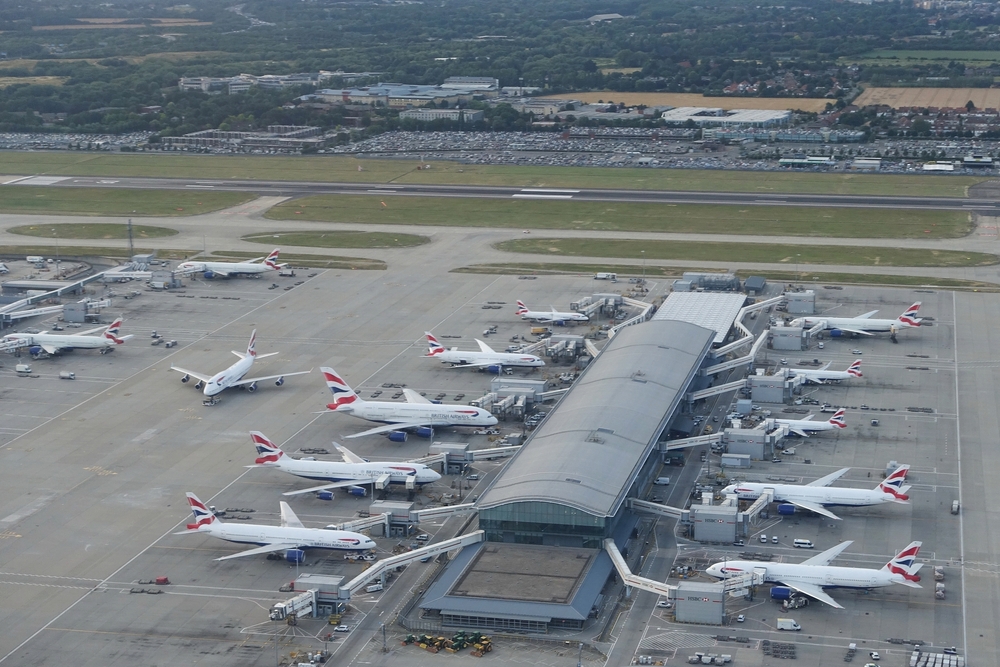
The looming potential kerosene crisis set to hit Europe is not just a supply issue, but a wake-up call regarding the fragility of a system we take for granted. In a world where mobility is essential, dependence on external resources becomes a strategic vulnerability. If this shortfall materializes, the consequences will be felt not only at airports but throughout the entire economic and social structure of the European Union. According to energy experts, Romania could become a major supplier of jet fuel for all of Europe. Dumitru Chisăliță, director of the Intelligent Energy Association, believes that Romania has the opportunity to become a key strategic hub for supplying jet fuel to the southeastern part of the continent. The kerosene shortage across the European Union, caused primarily by dependence on imports from the Middle East—where the U.S. is currently enforcing a blockade on the Strait of Hormuz—and by disruptions in supply chains, represents a major problem for all member states attempting to adjust their domestic aviation fuel production. According to representatives of the Smart Energy Association, Romania is seen as a potential regional supply source, but realizing this potential depends on the adoption of clear strategic decisions and effective coordination of European energy policies. Regarding the direction of the refining industry and Romania’s role in the European market, the organization’s president, Dumitru Chisăliță, believes that recent changes offer a real opportunity, but there is a risk that this will be missed in the absence of a coherent vision. Recently, Dumitru Chisăliță noted that Romania has previously missed important opportunities to play a significant role in European decision-making, thereby reducing its influence in the energy sector and limiting itself to the status of a Black Sea gas exporter. In his view, the current situation could repeat the same scenario, given that the kerosene shortage at the European Union level creates a new strategic opportunity for Romania. Currently, Romanian authorities are analyzing the possibility of directing refineries primarily toward increasing diesel production for the domestic market, given the need to ensure fuel supply security in the agricultural sector. However, the expert emphasizes that Europe’s problem is not a lack of oil, but the inefficient distribution of refined kerosene. The Romanian authorities’ analysis proposes, as an alternative, redirecting part of the refining capacity toward kerosene production for the European Union market, while maintaining and even increasing diesel production for domestic consumption, depending on existing technological capabilities. Such an approach could create a beneficial balance from both an economic and strategic standpoint. In this case, the idea of a broader repositioning of Romania within the European Union also takes shape, by strengthening its role in regional energy security. Chisăliță emphasizes that, although Romania cannot solve the problem of kerosene shortages across Europe on its own, it could become a key element for the stability of the continent’s southeast. In the absence of concrete action, however, there is a risk that this opportunity will be lost once again, not due to a lack of resources, but due to a lack of political will.