





 Subscribe


A few days ago, I argued for trade and strategic realism— that Europe needs to break out of its regulatory isolation and embrace trade on its own terms. The EU–Mercosur trade agreement represented a compass in the middle of such storm yet it now stands at a crossroads. European farmers are rightfully concerned, Brussels is hedging, and a multi-colour coalition of populists —not just the Greens— are erupting in opposition. A loud voice in striking contrast with what this agreement represents: Europe’s last real chance to claim a seat at the global economic table as a free-trade bloc. One of the utmost strategic importance.
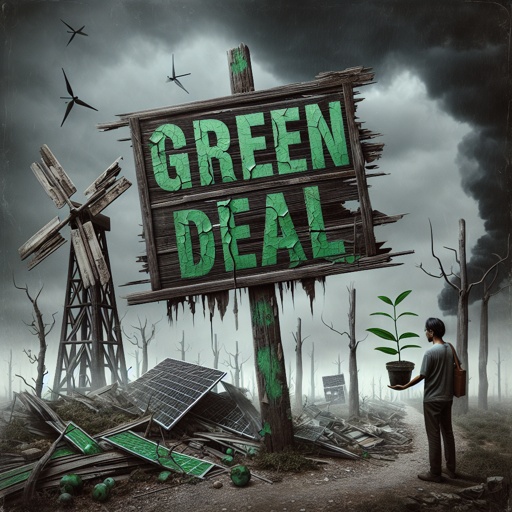
The hysteria over toxic imports and unfollowed environmental standards is understandable, though irrelevant insofar as South American products will be subject to the same standards as those made in the EU. Moreover, such frenzy should not distract us from the real debate. Namely, that in an era of intense systemic competition between global powers, Europe ought to cease the masochistic activity of self-imposing the most stringent regulatory regime in the world —the Green Deal. Especially while others play by entirely different rules.
The Global Economy Does Not Run on Green Deals
It is remarkable that neither of the two superpowers of our century —the United States and China— operate under anything approaching the European Green Deal. Washington’s energy policy has swung between subsidies and sanctions, but it has never imposed a continent-wide, economy-wide set of regulatory strictures that handicap its own producers. China, for its part, pursues growth with heavy state direction, exports fossil-fuel intensive commodities, and builds infrastructure across continents with near-zero environmental conditionalities.
Even second-tier economic powers —such as Brazil or India— do not constrain themselves to European regulatory standards. They pursue industrialisation, export markets and strategic autonomy, often placing economic growth above ideological commitments to decarbonisation.
In light of this reality, why should Europeans voluntarily tie their own hands?
A Partnership of Equals
The EU–Mercosur agreement should not be reduced to a debate about cattle numbers or pesticide limits. It is the most consequential trade relationship Europe has negotiated in decades, and it must be understood as part of Europe’s broader geopolitical strategy.
Mercosur —comprising Argentina, Brazil, Paraguay, Uruguay and now Bolivia— remains Latin America’s largest regional bloc. This is not some distant, disconnected trading partner; it is part of Europe’s Atlantic neighbourhood. As a Spaniard —and as Europeans generally— we should respectfully reject the notion that the Americas are the exclusive “sphere” of any other power, including the U.S.. If Europe has historical, cultural and economic ties to the Western Hemisphere, then the Atlantic must remain a space of shared influence, not spheres dominated exclusively by Washington or Beijing.
Europe’s relationship with the Americas must be a genuine partnership of equals, not a subordinate role in which South American nations wait passively while the world’s largest economies divide influence and opportunity among themselves. If Europe intends to compete on those terms, it would be wiser not to play at all —as we are no match. Our strength does not lie in mimicking superpower coercion, but in offering something different: a balanced, rules-based partnership grounded in reciprocity and long-term integration. Today, several leading South American economies are actively seeking a closer alliance with Europe. As they reach out to us, Europe should have the confidence — and the strategic clarity — to reach back.
Competition in the Global Market
As mentioned in my earlier piece, the timing of the Mercosur agreement is no accident. As China’s economic footprint in Latin America has expanded —with trade exceeding half a trillion dollars and investment swelling into the hundreds of billions— the South American bloc has sought alternative partners to avoid overdependence on Beijing. At the same time, recent American administrations have wielded tariffs, sanctions and political influence campaigns that make clear that U.S. policy is not benevolent by default, but that it too seeks to pursue its own national interest —as it should.
This global context has helped accelerate Mercosur’s willingness to engage with Europe on a more equal basis — not as an ideological appendage, but as a strategic partner. For Europe, this opportunity cannot be wasted. If we shrink from participation, China and the United States will happily fill the vacuum —with their priorities, not ours.
Why Green Skepticism Misses the Point
Green critics argue that the agreement will undermine climate commitments, accelerate deforestation and expose European farmers to unfair competition. Yet blocking the deal would not forestall environmental degradation or reduce global emissions. It would merely redirect Mercosur’s trade toward markets that lack environmental standards altogether.
We cannot pretend that environmental protection is served by disengagement. Global emissions are a function of total production and consumption —not where the border line is drawn. Nor should trade policy be subordinate to internal regulatory fashions that are not shared by our principal competitors. Europe’s Green Deal remains an expensive and ideologically driven experiment. It is not a universal law. It is not a blueprint adopted by the United States, China, Brazil, India or any emerging economic pole. In a world of fierce competition, regulatory self-flagellation is a recipe for strategic irrelevance.
The Strategic Logic of Mercosur
The EU–Mercosur agreement may be imperfect. Its environmental enforcement mechanisms could be stronger, and its dispute resolution procedures more binding. But perfection should not be the enemy of sound strategy —especially when the alternative is strategic disengagement and its subsequent isolation.
This deal represents a deliberate diversification of Europe’s trade relationships at a time when global supply chains are increasingly weaponised and contested. It reinforces Europe’s historical and civilisational ties with a region that shares many of its legal, cultural and economic foundations, while offering a necessary counterweight to both Chinese economic dominance and U.S. unilateralism in the Western Hemisphere. Above all, it marks a step towards restoring Europe’s role as a meaningful free-trade pole in the global economy, rather than confining it to the role of a self-imposed regulatory ghetto.
Europe at a Strategic Crossroads
Europe faces a clear choice: continue retreating behind the fortress of the Green Deal and regulatory maximalism —clinging to the fiction that regulation is, by itself, a source of competitive advantage— or embrace trade partnerships that restore leverage, relevance and mutually beneficial growth. May those be with South America or with India, which seems to be Von der Leyen’s latest crusade.
The EU–Mercosur agreement forces this choice —and that is precisely why it is worth defending. Not because it is perfect, but because strategic realism in an age of competition is not a betrayal of values —it is their defence.
Blocking the deal on ideological grounds or false macroeconomic impact predictions would be an abdication of Europe’s global role. Seeing it come into effect, and then removing our self-imposed barriers to be competitive, would be the decision of a continent that understands its history and looks at the future.