





 Subscribe


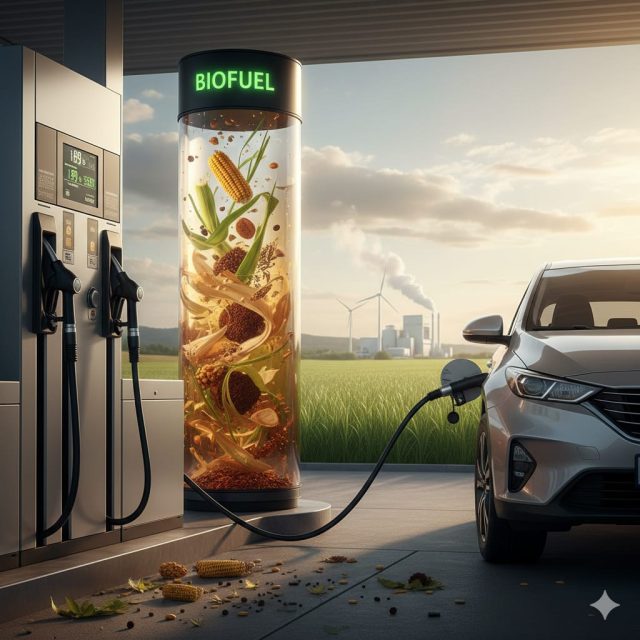
Europe’s partial U-turn on first-generation biofuels exposes deeper flaws in its transport and energy strategy
The European Union is quietly acknowledging a major miscalculation in its energy and transport policy: the role assigned to biofuels, particularly those of the first generation. By launching a public consultation on a new delegated act aimed at reducing the contribution of biofuels that compete with food production for land use, Brussels is effectively admitting that its earlier optimism was misplaced. Yet while this revision is a necessary step, it risks being insufficient if the EU fails to critically reassess not only first-generation biofuels, but also those of the second generation, which remain neither truly efficient nor genuinely sustainable.
The proposed change concerns Commission Delegated Regulation (EU) 2019/807, with the explicit goal of introducing a pathway to gradually reduce the contribution of biofuels, bioliquids, and biomass fuels associated with a high risk of indirect land-use change (ILUC) to the EU’s renewable energy targets. Even this technical formulation reveals how uneven and uncertain the EU’s transport decarbonization trajectory still is.
On the one hand, in December 2025 the Commission revised its stance on the ban on internal combustion engine vehicles—covering petrol, diesel, methane, and LPG—and an ad hoc derogation for biofuels is expected within the current semester. On the other hand, the same Commission is now implicitly acknowledging that its strategy on biofuels has been flawed, especially regarding first-generation biofuels derived from food crops such as corn, sugarcane, soy, and rapeseed. These crops are used to produce bioethanol (from sugars and starches) and biodiesel (from vegetable oils and animal fats), and for years they were promoted as a green alternative to fossil fuels.
Concerns raised long ago by environmental NGOs and sector experts have proven well founded. First-generation biofuels have directly competed with food production, diverting fertile land away from agriculture aimed at feeding populations. The expansion of palm oil plantations, corn fields, and sugar beet cultivation has been particularly controversial, with significant social and environmental consequences. In response, the European Commission launched a public consultation on 21 January to revise the existing framework, with stakeholders invited to submit observations by 18 February 2026.
The consultation precedes the adoption of a new delegated act that will update both the methodology and the underlying data used to assess ILUC risks. Once the consultation period ends, the act will be swiftly adopted by the Commission and become operational, marking a decisive shift in policy. The draft under discussion introduces stricter criteria for crops deemed most at risk and sets a clear endpoint: by 2030, first-generation biofuels are expected to be phased out entirely.
The Commission’s own draft acknowledges that “the examination of data on feedstock expansion has shown that the pattern of expansion of relevant food and feed crop production, as well as productivity factors, has changed.” While officials stress that the document does not formally represent the Commission’s final position, it is evident that Directive (EU) 2018/2001—which imposed limits on high-ILUC-risk biofuels—was based on overly optimistic assumptions. The belief that industrial biofuel production would not cannibalize agriculture has simply not held up in practice.
This is not the first attempt at correction. Directive (EU) 2023/2413 already required the Commission to periodically review certification criteria and update the regulatory framework in light of new scientific evidence. The current proposal is thus part of a longer, gradual retreat from earlier policy choices.
Does this mean the problem is now solved by shifting focus to second-generation biofuels? Not quite. These fuels, produced from non-food biomass such as agricultural residues, forestry waste, used cooking oils, and organic waste, are often portrayed as a safer alternative. Even Brazil, long a global champion of first-generation biofuels, is moving in this direction. However, doubts persist.
Second-generation biofuels involve complex production chains with many actors, increasing costs and complicating oversight. Their environmental benefits are often modest and largely indirect, and the risk of indirect competition with food production has not been fully eliminated. Despite years of research and promotion, they remain a questionable solution.
Before the EU finds itself admitting another strategic error, it would be wiser to rethink its reliance on biofuels altogether. Across all generations—including the much-hyped but never fully realized third generation based on algae—biofuels have repeatedly failed to prove themselves efficient or sustainable at scale. Increasingly, they appear to be “false solutions,” diverting attention and resources from options that already exist to make transport cleaner, cheaper, and more energy-autonomous for Europe. But that, as the saying goes, is another story.
Alessandro Fiorentino