





 Subscribe


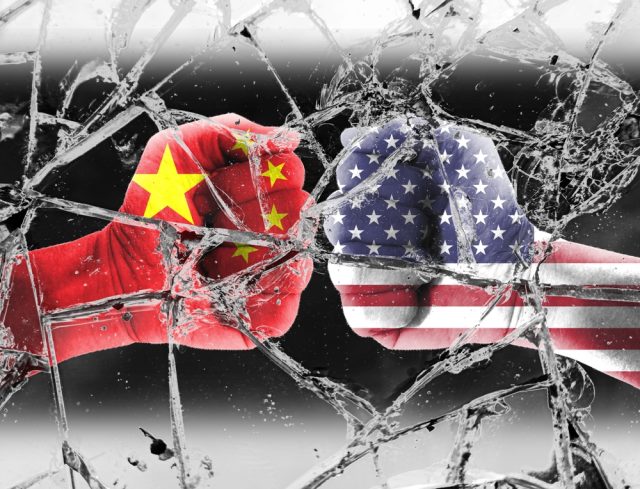
The Beijing summit was not designed with Europe in mind. When Trump and Xi finished their two days of meetings on May 15, the communiqués, the trade announcements, and the carefully staged displays of bilateral amity were addressed to Washington, Beijing, and their respective domestic constituencies. Europe registered, in the architecture of that encounter, as an absence. Not an oversight — a structural condition. And understanding why that condition exists, and what it demands, is now the most urgent task in European strategic thinking.
The summit’s deepest revelation was not about any specific deal or diplomatic formulation. It was about the kind of world being built around Europe while Europe deliberates. It is a world organised by imperial logic — by the capacity of vast, coherent blocs to control what others need and to convert that control into political terms. America commands the architecture of global finance, the cutting edge of military technology, and the standards that govern the digital economy. China commands the material flows on which modern industry depends, the manufacturing scale that no rival currently matches, and a strategic patience that has been vindicated repeatedly in recent years. Both powers negotiate from strength, set agendas rather than respond to them, and expect accommodation from those without comparable leverage. Europe, which constructed its entire post-war identity around replacing precisely this logic with rules, institutions, and pooled sovereignty, now confronts the fact that its two most important external relationships are both governed by powers that have moved on from the order Europe built. The question this poses is not comfortable, but it is clear: does Europe develop the attributes of an imperial bloc — coherent, capable, strategically self-directed — or does it accept the role of a well-governed dependency?
Squeezed From Both Sides
The instinct in many European capitals, when confronted with this question, is to frame it primarily as a response to Chinese ambition. That framing is incomplete and increasingly misleading. The pressures bearing down on European strategic autonomy originate as much in Washington as in Beijing, and in some respects the American contribution has been the more destabilising, because it has undermined assumptions that European security architecture was built upon.
The record of the past two years reads as a sustained demonstration of American unreliability toward its closest partners. Tariff barriers erected against European exports without consultation or differentiation between allies and adversaries. Public questioning of whether the United States would honour its collective defence obligations to NATO members who failed arbitrary spending benchmarks. Pressure on Ukraine that treated European territorial security as a negotiating variable in a wider American strategic calculation. A military campaign against Iran, with profound consequences for European energy markets, launched without meaningful allied input. And finally, the Beijing summit itself — in which the United States conducted the most consequential diplomacy of the current period in complete isolation from European interests or preferences.
Beijing has pursued European division with patience and sophistication over many years. Washington has pursued it clumsily and apparently without full awareness of what it was doing — but the practical consequences for European cohesion have been remarkably similar. The summit sharpened a question that has been forming for several years across European capitals: whether an alliance built on assumptions of American reliability can continue to function as the primary organising principle of European security when those assumptions are no longer warranted. Nobody raises this question eagerly. The depth of trans-Atlantic cultural, historical, and institutional connection is real. But the willingness to treat that connection as a substitute for strategic self-sufficiency has become, unmistakably, a liability.
The Imperial Logic of Supply Chains
Beijing arrived at the summit with a decisive material advantage that the preceding months had done nothing to diminish. China’s grip on the processing and refining of critical minerals — the inputs without which modern defence systems cannot be built, clean energy infrastructure cannot be deployed, and digital technology cannot function — was not merely a background feature of the bilateral relationship. It was an active instrument of leverage, demonstrated conclusively during the 2025 tariff confrontation when the threat of restricting rare earth and magnet flows produced American concessions that months of tariff escalation had failed to secure. The principle established was elementary and important: control over necessities is more durable than control over financial flows, because necessities cannot be substituted quickly regardless of how much money is available.
Europe’s exposure to this dynamic is, if anything, more acute than America’s. The continent has committed simultaneously to rearmament on a scale not seen since the Cold War, to a digital transformation requiring enormous semiconductor throughput, and to an energy transition demanding vast quantities of lithium, cobalt, neodymium, and polysilicon. The overwhelming majority of the processing capacity for all of these materials passes through Chinese facilities at some point. The EU’s legislative framework for addressing this dependency sets admirable targets for domestic sourcing and recycling, but the industrial reality lags the political ambition by years and the investment required dwarfs what has so far been committed.
Compounding the difficulty is that American policy offers no genuine path to shared relief. The investment incentives Washington deployed to rebuild domestic industrial capacity were calibrated to maximise American competitive advantage, not to strengthen the collective resilience of the Western alliance. European firms found themselves disadvantaged by American policy even as American rhetoric called for allied solidarity. The imperial logic operates symmetrically: both Washington and Beijing prioritise their own supply security and manage allied dependencies as secondary considerations. A Europe serious about sovereignty must internalise the same logic and act accordingly — investing collectively, at the scale the challenge demands, and treating material security as a dimension of defence rather than a branch of industrial policy.
Reconsidering China
For much of the past decade, European policy toward China was less an independent strategic judgment than a derivative of trans-Atlantic consensus. The decisions to exclude Chinese technology from sensitive infrastructure, to tighten investment screening, to align with American export control regimes — these drew their political coherence largely from the fact that Washington was leading and European governments could present their positions as part of a broader allied posture rather than as choices made on purely European terms. The domestic economic costs of this alignment were real but manageable as long as the alliance providing the political cover remained credible.
That political cover is now threadbare. As American strategy becomes less predictable and more explicitly self-interested, European governments face the question of whether their China policy actually reflects European interests or whether it has been, in effect, outsourced to an ally whose interests increasingly diverge from their own. This is not an invitation to disregard the genuine concerns that informed the earlier consensus. Chinese economic coercion is real and has been used against European states. The human rights situation is not a fabrication. The ambitions Beijing harbours regarding Taiwan carry implications for the international norms on which European security ultimately depends. None of this disappears because American leadership has become less reliable.
What changes is the basis on which Europe engages with all of it. A strategically autonomous Europe — one that has accepted the necessity of thinking and acting in terms of its own interests rather than as an extension of American foreign policy — will need to construct its China policy from first principles. That means drawing sharper distinctions between domains where Chinese engagement creates genuine security risks and domains where pragmatic accommodation serves European interests. The former category is real and significant: defence-adjacent technology, critical infrastructure, military supply chains. But the latter is also real: climate cooperation, clean energy trade, agricultural exchange, scientific collaboration. Treating the entire relationship as defined by its most adversarial dimension, because Washington prefers that framing, is not strategic clarity. It is strategic dependency wearing the costume of principle.
Taiwan, Iran, and the Cost of Outsourcing
The summit’s Taiwan dimension was most eloquent in what it omitted. Beijing’s communications were explicit and forceful — Taiwan was described as the issue on which the entire bilateral relationship ultimately turns, and Chinese officials had signalled in advance that movement on Taiwan was effectively the entrance fee for broader Chinese cooperation. Washington’s post-summit readouts contained no mention of Taiwan whatsoever. Asked directly about the island during his time in Beijing, Trump offered silence.
For European governments accustomed to treating American security guarantees as a fixed parameter of their own strategic planning, this performance of American ambiguity under Chinese pressure should register as a significant signal. The credibility of security commitments cannot be compartmentalised: a Washington that finds Taiwan too awkward to defend publicly when Beijing presses is a Washington whose assurances elsewhere deserve more scrutiny than European governments have historically applied to them. This is not a reason for European panic. It is a reason for European realism — for developing a genuinely independent view of what European interests require in the Indo-Pacific, rather than assuming that American policy will always align with them.
Iran makes the same fundamental argument in the language of economic cost rather than security credibility. European households and businesses have absorbed substantially higher energy prices as a direct consequence of military decisions made in Washington and Tel Aviv without European participation. The Strait of Hormuz disruption — affecting roughly a fifth of global oil and gas flows before the conflict — was not a natural disaster. It was a policy outcome, produced by choices in which Europe had no voice. The summit resolved nothing: both sides issued carefully hedged statements about keeping the strait open while disagreeing on virtually every relevant detail. The costs accumulate while the diplomacy stalls. This is the material reality of strategic dependency — not an abstraction about sovereignty, but a concrete transfer of economic burden from those who decide to those who merely endure.
Regulation Without Power
Artificial intelligence was the summit’s most conspicuous non-event. Despite the presence of one of the technology industry’s most prominent figures in the American delegation, no agreement on chip access emerged. No safety framework was established. No governance architecture was sketched. The two powers most capable of shaping AI’s trajectory left Beijing in open-ended competition, each treating the technology as a primary instrument of strategic advantage to be maximised rather than a shared challenge to be managed.
Europe’s response to this race has been to regulate it. The AI Act represents a serious and in many respects admirable attempt to encode values — accountability, transparency, proportionality — into the governance of a technology whose implications are still being understood. But governance authority exercised over technologies you do not produce rests on a foundation of borrowed power. It functions as long as the producers of those technologies calculate that European market access justifies compliance with European rules. The moment that calculation changes — or the moment a bilateral American-Chinese framework renders European regulatory architecture structurally peripheral — the authority evaporates. Rules without the capacity to enforce them, in a world of imperial blocs, are ultimately decorative.
The conclusion this points toward is not that European regulation was a mistake. It is that regulation without accompanying investment in capability is insufficient. A Europe that builds AI systems of genuine global significance has standing to negotiate the terms of AI governance. A Europe that exclusively regulates other parties’ systems has influence only on sufferance. The investment required to close this gap is large, and it can only be mobilised at European scale — which is itself an argument for the deeper integration that the current moment is, paradoxically, beginning to generate.
The Paradox Trump Built
American strategic thinking has historically regarded deep European integration with a wariness that occasionally shades into active discouragement. A Europe that achieves genuine strategic autonomy — that can act coherently on the basis of its own interests, deploy its own military capacity, and conduct its own foreign policy without reference to Washington — is a Europe that complicates American primacy in the Western alliance. Managing a collection of middle powers individually, each dependent on American security guarantees, is considerably more straightforward than negotiating with a unified bloc of five hundred million people commanding the world’s largest single market. Trump’s approach to Europe — the tariffs, the NATO conditionality, the ostentatious preference for bilateral dealings with individual capitals, the sustained rhetorical assault on European institutions — was consistent with this preference for a divided and dependent continent, whether or not it was consciously articulated as such.
The result has been the opposite of the intention. Crises of sufficient severity have always been the most powerful engine of European integration, more potent than any theoretical argument for unity, because they make the costs of fragmentation concrete and immediate. The shocks delivered by the second Trump administration, compounded by Chinese supply chain leverage and the economic consequences of the Iran conflict, have created precisely the conditions under which arguments for collective European capacity become politically irresistible. Defence budgets are rising across the continent at rates not witnessed since the Cold War’s final decade, and the pressure to coordinate, pool, and eventually integrate that spending is intensifying alongside them. The European Defence Union is acquiring institutional substance. Common procurement frameworks are moving from aspiration to implementation. The Draghi report’s argument for collective investment at a scale impossible for individual member states has shifted the political boundary of the feasible in ways that would have seemed remarkable even a few years ago.
The deeper logic is straightforward. None of the challenges confronting Europe — supply chain vulnerability, technological competition with state-backed rivals, defence credibility against a resurgent Russia, diplomatic weight in a world of blocs — can be addressed adequately at the level of individual member states, however large. They all require European scale, European coordination, and ultimately European political will of a kind that only genuine integration can sustain. The single market was a foundation, not a destination. What is now taking shape, unevenly and against considerable internal resistance, is the political and strategic structure that gives the foundation its purpose.
The historical irony may prove to be considerable. The American president who has expressed the most consistent contempt for European institutions, and whose strategy most clearly depended on keeping Europe divided, may leave as his principal European legacy a more integrated, more strategically capable, and more genuinely autonomous continent. Beijing, which invested years of patient effort in cultivating individual European relationships and exploiting the gaps between them, may find that its own pursuit of bilateral stability with Washington has inadvertently accelerated the emergence of the coherent European counterpart it least wanted to face.
The empire Washington sought to prevent may be precisely the empire Washington’s conduct is constructing.
The Bill and the Chair
No European representative sat in the room where the framework for the world’s most consequential bilateral relationship was sketched. No European voice shaped the conversations about trade architecture, technology governance, the future of Taiwan, the resolution of the Iran conflict, or the three-year strategic horizon that China at least is already planning toward. The empty chair was not a procedural accident. It was an accurate representation of where Europe currently stands in the global order — present as an economic mass, absent as a strategic actor.
The order that Europe’s postwar generation constructed — built on the premise that rules could substitute for power, that institutions could tame rivalry, that sovereignty pooled in common could serve collective security better than sovereignty hoarded individually — is being wound down by the two powers whose participation it most required. Neither Washington nor Beijing departed from the summit with any evident interest in reviving it. What they are building instead is an order of controlled competition between imperial blocs, in which influence derives from what you command rather than what you endorse, and in which smaller actors accommodate results rather than shape processes.
Europe possesses, in aggregate, everything required to be a genuine participant in this world rather than its subject. The economic scale, the technological inheritance, the human capital, the institutional frameworks — all of it is there, waiting to be mobilised behind a coherent strategic purpose. The missing ingredient has never been capacity. It has been will — the political determination to treat European sovereignty as a project worth the investment and the sacrifice of convenient national prerogatives that genuine integration demands. The events of the past two years, originating from both directions of Europe’s strategic exposure, are supplying that will with an urgency that more comfortable circumstances consistently deferred.
A prosperous, principled, and permanently subordinate Europe is not a stable outcome. It is a prolonged vulnerability, subject to the decisions of others and responsible for the consequences of choices it never made. The summit in Beijing was a reminder, delivered without any particular concern for European sensibilities, of what that condition costs. The response it demands is not complaint or nostalgia for the order that is passing. It is construction — of the capacity, the coherence, and the strategic confidence that would ensure the next consequential summit cannot simply proceed as if Europe does not exist.