





 Subscribe


The centre-right Independence Party emerged victorious in the Icelandic municipal elections on 16 May 2026. It is by far the largest party on the city council of Reykjavík, the capital and largest city, able to form a majority with one or two other parties. It won an outright majority in three suburban cities surrounding Reykjavík and in an important fishing town on the Westman Islands. The Centre Party also did well. Despite its name, it has positioned itself to the right of the Independence Party. In most places where the Independence Party does not command a majority, it can, with the Centre Party, form a local majority, which is what their supporters would like to see. Prime Minister Kristrún Frostadóttir’s Social Democrats did poorly almost everywhere. Foreign Minister Thorgerdur K. Gunnarsdóttir’s Reform Party did not do badly, but not as well as it had hoped. For the third coalition partner in the present government, the People’s Party, under Inga Saeland, the elections were a disaster. Having done poorly in Reykjavík, the party has no representation in any municipality. It seems to be sinking into oblivion.
The Independence Party Recovering
Although local factors played a role, as in all municipal elections, the results were a large swing to the right. Since its foundation in 1929, the Independence Party has dominated Icelandic politics: It received, for example, 48 per cent of the vote in 1933 under its first leader, the brilliant engineer and entrepreneur Jon Thorláksson. The party was probably at its strongest under the leadership of Davíd Oddsson in 1991–2005, when it liberalised, stabilised and deregulated the economy, cut taxes, strengthened the pension funds and the profitable and sustainable system of individual transferable quotas in the fisheries, privatised many public companies and used the revenue to eliminate the public debt, while reaffirming Iceland’s defence arrangement with the United States. But the 2008 collapse of the over-leveraged Icelandic banks was widely, and perhaps unfairly, blamed on the ruling Independence Party, and it lost half of its vote. Its electoral base was also unhappy with its 2017–2024 coalition government with the anti-growth Left Greens and with significant immigration from the Middle East and North Africa, which caused the same problems as elsewhere.
The Centre Party Gaining Ground
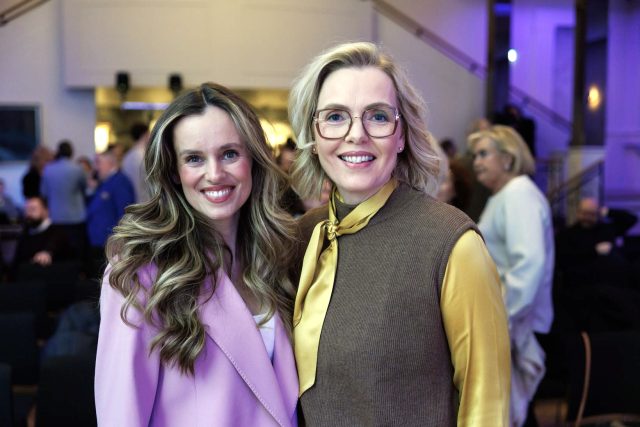
Immigration from the Middle East and North Africa, wokeism and cancel culture have provided opportunities for the Centre Party, originally a splinter party from the (largely agrarian) Progressive Party, but now mainly seeking support from traditional Independence Party voters. Its founder, Sigmundur Davíd Gunnlaugsson, has tried to follow a similar course to that of Davíd Oddsson, blending free-market policies with nationalism and social conservatism. It is, however, not considered odd in Iceland that he is the only male leader of a main political party, standing out among the female leaders of the three government parties, and of two opposition parties, the Independence Party’s Gudrún Hafsteinsdóttir (depicted above with the party leader in Reykjavík, Hildur Bjornsdóttir), and the Progressive Party’s Lilja Alfredsdóttir. It remains to be seen who will become the leader of the hard left, which is now trying to regroup after a 2024 debacle, but which has traditionally received around 10–15 per cent of the vote.
What Happens in the EU Referendum?
The intriguing question is what this swing to the right will mean for the referendum scheduled for 29 August 2026 on Iceland’s renewal of its 2009 application for EU membership and the restart of the adjustment process, halted in 2013. The Social Democrats and the Reform Party are the only parties in favour of EU membership. All the other parties are adamantly against it, and so are most trade-union and business leaders, and not least the fishing community: it fears that the huge Spanish fishing fleet is waiting for an opportunity to gain access to Iceland’s fertile fishing grounds. If anything, the outcome of the municipal elections suggests that Icelanders will vote no on EU membership in August. But a week is a long time in politics, and so are three months.
(Photo: Håkon Lund.)