





 Subscribe


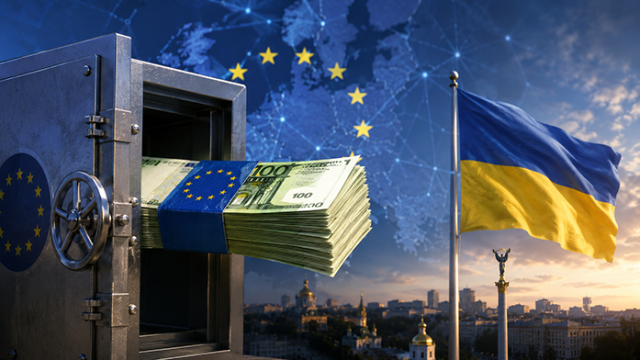
Brussels prepares the first payment of a €90 billion loan program, highlighting the EU’s growing role in supporting Ukraine and strengthening European solidarity.
The European Union is preparing to take another significant step in its support for Ukraine. According to the European Commission, the first payment from a €90 billion common loan package designed to assist the country is expected to be released before the end of June.
While discussions about European budgets and financial instruments can often seem distant and highly technical, this initiative reflects a broader and more important reality: the European Union is increasingly acting as a unified political and economic force when responding to major international challenges.
The first instalment of the program will amount to €9.1 billion. Of this total, €5.9 billion will be allocated to Ukraine’s defence needs, while €3.2 billion will help support the functioning of the Ukrainian state and its public services.
European Commission spokesperson Balazs Ujvari explained that the final technical details are currently being completed and that the first transfers should become possible within the coming weeks.
Although the announcement focuses on financial figures, the significance of the initiative goes far beyond money. The loan package represents one of the largest examples of collective European action since the beginning of the conflict in Ukraine. Rather than leaving individual member states to act separately, the European Union has chosen to mobilize resources together, demonstrating a common approach to a challenge that affects the continent as a whole.
For European leaders, supporting Ukraine is not only about helping a neighbouring country. It is also about defending stability, security, and the international principles upon which modern Europe is built. Many policymakers argue that the consequences of the war extend well beyond Ukraine’s borders, influencing energy markets, economic growth, security policies, and geopolitical relations across Europe.
The decision to provide funding through a common European loan is also noteworthy because it reflects a growing willingness among EU countries to cooperate financially when facing extraordinary circumstances. In recent years, the Union has increasingly relied on joint financial mechanisms to address major crises, from the pandemic recovery effort to energy security challenges and now support for Ukraine.
This evolution highlights how the European project continues to adapt to a changing world. While the EU was originally created primarily as an economic community, it has gradually expanded its role in areas such as foreign policy, security, crisis management, and strategic investment.
The funds allocated to Ukraine are intended to serve two essential purposes. The first is strengthening the country’s ability to defend itself. The second is ensuring that the Ukrainian government can continue providing basic public services, maintaining institutions, and supporting citizens during a period of extraordinary pressure.
Keeping schools, hospitals, transportation networks, and public administration functioning is often just as important as military assistance. For this reason, the package combines support for defense with support for the state budget, aiming to help preserve both security and social stability.
The initiative also sends a broader message about European unity. Despite differences in political priorities and national interests among the EU’s 27 member states, the bloc has repeatedly demonstrated its ability to reach common decisions when confronted with issues considered strategically important.
Challenges remain. The implementation of such a large financial package requires coordination, oversight, and continued political commitment. Economic pressures within Europe, budgetary constraints, and changing political dynamics will continue to shape discussions about future support.
Nevertheless, the upcoming payment represents a concrete example of the European Union translating political commitments into action. It shows how the bloc is attempting to use its collective economic strength to respond to a major international crisis while reinforcing its role on the global stage.
As Europe faces an increasingly complex geopolitical environment, initiatives such as this €90 billion loan program illustrate a broader trend: the European Union is becoming not only a large economic market, but also a more influential political actor capable of mobilizing resources and acting collectively when faced with common challenges.
Alessandro Fiorentino