





 Subscribe


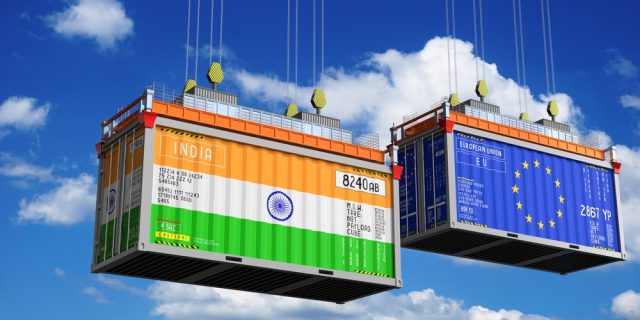
For a decade Europe has argued with itself in the wrong vocabulary. The quarrel has been conducted in the grammar of poles and superpowers — whether the Union might rise into a “third pole” beside Washington and Beijing, a civilisational bloc with a weight and a will entirely its own. It is a flattering vocabulary, and a paralysing one, for it sets a standard Europe cannot presently meet and then reads every shortfall as humiliation. There is a humbler word, and a more honest one, which describes both what Europe is and what it might realistically become: a middle power. Not a hegemon and not a satellite, but a state of the second rank possessed of genuine agency, whose art is coalition rather than command, connection rather than conquest, the patient leverage of the broker rather than the crude mass of the giant. The question worth asking is therefore not whether Europe can become a pole. It is whether Europe can learn to conduct itself as the middle power it already, latently, is.
Few arenas pose that question more sharply than the long road now being contemplated between the Mediterranean and the Indian Ocean. The India–Middle East–Europe Economic Corridor — the IMEC — was unveiled in New Delhi in September 2023, at the G20, by India, Saudi Arabia, the Emirates, the European Union and three of its largest states, alongside the United States. Barely three weeks later the seventh of October arrived, and the elegant arc through Israel and the Gulf that the scheme presupposed seemed to dissolve into war. That the project survived at all is instructive; that it keeps reviving is more instructive still. This June, at the G7 in France, the President of the European Council and India’s prime minister agreed once more to press the corridor forward. And Washington now intends to use its own presidency of the G20 — which culminates in a leaders’ summit at Miami in December — to build the coordinating architecture the scheme has so far conspicuously lacked. The road keeps redrawing itself because the logic beneath it will not go away.
A Road Drawn in Another Capital
We should be honest about paternity. The IMEC is, in its conception, an American instrument before it is a European one. It was designed in Washington as the connective tissue of the Abraham Accords — a wager that Israeli–Saudi normalisation, underwritten by the United States, could stitch a southern arc binding the Gulf to the Mediterranean and, beyond it, to India. Its declared strategic purpose was to set before the world a visible alternative to China’s Belt and Road, a rival grammar of connectivity in which the sponsors were democracies and Gulf monarchies rather than Beijing.
For a middle power, this is not a disqualification. It is a test. The whole art of second-rank statecraft consists in turning the initiatives of the great to one’s own account — in being neither the author of the grand design nor its passive beneficiary, but the shrewd participant who bends a borrowed instrument toward native ends. The danger is only that Europe forgets this and accepts the role that a superpower’s map assigns it: the prosperous, pacific terminus, the market at the end of someone else’s road, grateful for the traffic and indifferent to who sets the tolls. Belt and Road taught China that whoever lays the rails writes the rules that travel along them — the standards, the currencies of settlement, the arbitration clauses. To receive a corridor passively is to receive its politics. A middle power does not refuse the road; it insists on holding a share of the pen.
There is a further reason Europe should not entrust the corridor’s fate to its principal sponsor: that sponsor’s attention is itself a variable. The coordinating structure Washington hopes to erect is to be blessed at a G20 it will host in December, at the President’s own Florida resort — but between now and then stand the November midterm elections, and with them the question of how much political capital the administration will have left to spend abroad. A president who emerges from November weakened will discover, as weakened presidents always do, that grand schemes of intercontinental connectivity are precisely the sort of long-horizon project that yields first when domestic priorities crowd in. A corridor whose momentum depends on the fortunes of one leader in one election is not a European strategy; it is a wager on another country’s politics. The middle power’s instinct runs the other way: to build what does not hang on any single patron’s continued enthusiasm, and to hold enough of the design that the enterprise can survive its sponsor’s distraction.
The Indian Mirror
And at the far end of that road stands the one great state that has made a vocation of the very independence Europe is struggling to learn. India buys Russian oil and American arms; it courts Washington and will not break with Moscow; it sits in the Quad and in the BRICS without a flicker of embarrassment. Delhi calls this strategic autonomy, and it is the purest working example we possess of how a power navigates among giants without being enrolled by any of them. India’s scale may be that of a future great power, but its method is precisely the method a middle power must master: multi-alignment, the refusal of bloc discipline, the cultivation of leverage in several directions at once. India is thus both the natural partner for a Europe seeking agency and its most instructive teacher.
The genuine achievement of the past year lies here, and not in the corridor’s uncertain masonry. On the twenty-seventh of January this year, in New Delhi, the European Union and India concluded a free-trade agreement two decades in the making, binding together some two billion people and roughly a quarter of world output, with the avowed aim of doubling European exports across the coming decade. Von der Leyen, with her instinct for the resonant line, called it the mother of all deals. More telling than the tariff schedules was the security and defence partnership announced beside them — maritime security, cyber, critical technologies, semiconductors, artificial intelligence. This is the vocabulary not of a market but of coalition, and coalition is the middle power’s native tongue. A state that cannot dictate to the world can still assemble, patiently, the partners with whom it need not face the world alone.
What Hormuz (Should’ve) Taught Us
If anyone still doubted that connectivity is a strategic and not merely a commercial matter, this summer’s war between Israel, the United States and Iran should have settled it. When the Strait of Hormuz flickered toward closure, the continent glimpsed once more the narrowness of the arteries through which its prosperity flows — the same lesson the Red Sea had lately taught and the Bosphorus before it. An overland spine from the Gulf to the Mediterranean is, in this light, not an ornament of ambition but an insurance policy against chokepoints, an alternative channel through which fertiliser and phosphate and semiconductors might move when the sea lanes are held hostage. Hedging of exactly this kind — the deliberate multiplication of routes, suppliers and partners so that no single rupture can bring you to your knees — is the quiet, unglamorous signature of middle-power statecraft. It is what a state does instead of dominating: it makes itself difficult to coerce.
Honesty requires the second edge. The very war that vindicates the corridor’s logic corrodes its foundations. The IMEC rests on a degree of Gulf cordiality — among Saudis, Emiratis, Israelis, Jordanians — that the wars in Gaza and against Iran have badly strained; its original precondition, Saudi–Israeli normalisation, has slipped behind the more urgent business of containing Tehran. There are still no binding sums committed and no agreed timetable for the corridor proper; the works that have begun — a Saudi rail line here, an Emirati port there — advance for reasons of their own. A road that depends on the reconciliation of neighbours presently estranged is built on the least reliable ground there is. Europe should invest in it with open eyes, which is again the middle power’s discipline: to pursue the possible without mistaking a communiqué for a completed bridge.
The Vocation of the Middle
Here is the deeper matter, the one that outlasts any particular corridor. The world is consolidating into a handful of great aggregates — the American, the Chinese, the Indian rising to join them — each with its own gravitational pull, its standards, its currency of settlement. Europe has spent years asking whether it might become a fourth such colossus, and the asking has mostly produced despair, because the honest answer, for now, is no. But the great powers are not the only ones with agency in such a world. In an order of contending giants, it is often the skilful middle powers — the states that connect, balance, broker and hedge — who enjoy the widest room for manoeuvre, courted by all and owned by none. That is the vocation on offer. It is not a consolation prize. It is a discipline, and a form of self-respect: the refusal, at once, of the federalist fantasy of instant empire and of the quieter fantasy that vassalage is safety.
The corridor is a mirror held up to that vocation. If Europe treats the IMEC as a gift from Washington, to be received gratefully and administered passively, it will confirm that we remain an object of other powers’ strategies rather than an agent of our own. If instead Europe grasps the corridor and the Indian partnership together as instruments of a deliberate, adult statecraft — diversifying away from dependence on Beijing without sliding into simple dependence on Washington, aligning with a power that shares our aversion to being anyone’s satellite — then the road becomes something more than a trade route. It becomes the schoolroom in which a middle power learns its trade.
Between the reaffirmation at the G7 this June and the coordinating summit promised for Miami in December lies an American election that could redraw Washington’s priorities overnight. A middle power does not wait upon another nation’s ballot to learn whether it has a policy. The rails will be laid regardless; the only question is whether Europe helps to guide the hand that lays them. A civilisation does not recover its agency by proclaiming itself a pole. It recovers agency by practising it — in coalitions built, in routes secured, in partners chosen, in the daily unglamorous labour of making oneself useful and hard to coerce. Europe has been offered, in a single season, a road toward India and a partnership with her. Whether we take them as favours accepted or as the first exercises of a power learning at last to act will tell us, more honestly than any summit declaration, what kind of thing Europe still intends to be.