





 Subscribe


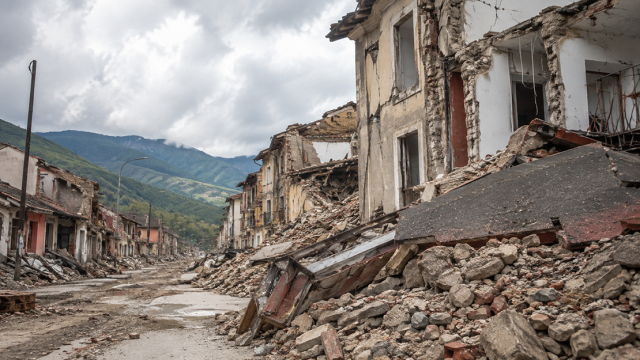
Brussels activates its emergency mapping capabilities and consular crisis mechanism after the devastating 7.4-magnitude earthquake, while Ursula von der Leyen says Europe stands ready to provide further assistance
The European Union has mobilised its Copernicus satellite emergency service to support rescue and relief operations in Colombia following the devastating earthquake that struck the country on Monday, 10 August, leaving more than a hundred people dead and hundreds injured.
Brussels responded rapidly to the disaster, activating European instruments designed to provide authorities and emergency services with satellite-based information on the areas affected by major natural catastrophes.
EU High Representative for Foreign Affairs and Security Policy Kaja Kallas announced the activation of Copernicus after speaking with Colombian Foreign Minister Omar Bula to express condolences and European solidarity with the country.
The European Union “has mobilised Copernicus, our satellite service, to support relief and assistance operations”, Kallas said, adding that Brussels is also providing funding for the emergency response, including assistance channelled through the Red Cross.
European Commission President Ursula von der Leyen had already announced the mobilisation of the satellite system on Monday, shortly after news of the scale of the disaster emerged.
“We have mobilised our satellite service to contribute to relief operations and stand ready to provide further support,” von der Leyen said, signalling that additional European assistance could follow depending on Colombia’s needs as rescue operations continue.
A powerful earthquake felt across Colombia
The earthquake struck at 7:34 a.m. local time on Monday — 2:34 p.m. in Italy — with a magnitude of 7.4. Its epicentre was located near San José del Palmar, in the department of Chocó in north-western Colombia, at a depth of approximately 82 kilometres.
Despite the depth of the earthquake, the tremor was felt across an extraordinarily wide area. Reports indicated that it was perceived in all 32 Colombian departmental capitals, including major cities such as Bogotá, Cali, Manizales and Armenia. The human cost has been severe.
According to Asocapitales, the non-profit organisation founded in 2012 that represents the mayors of Colombia’s departmental capitals, at least 132 people have died and more than 570 have been injured.
The situation may prove even more serious as emergency teams reach affected communities and search through damaged buildings. Colombian President Abelardo De La Espriella reported around 700 injured people and 188 missing in Valle del Cauca alone, while search-and-rescue operations remain underway.
The earthquake has also caused extensive structural damage. Buildings have collapsed completely in some areas, while sections of hospitals have reportedly been severely damaged or destroyed, creating additional difficulties for authorities attempting to treat the injured.
Copernicus provides a view from space
The activation of the Copernicus Emergency Management Service, or CEMS, represents one of the most significant elements of the European response. The EU programme provides authorities and emergency organisations with rapid geospatial information and satellite maps free of charge during natural disasters and other major emergencies.
Following an earthquake, Copernicus can process both optical and radar satellite imagery, comparing images captured before and after the disaster.
This allows specialists to identify and assess damage to buildings, roads, bridges and other critical infrastructure. The resulting maps can help emergency teams understand which areas have suffered the greatest destruction, identify potentially inaccessible zones and determine where resources may be most urgently required. Such information becomes particularly important after a powerful earthquake, when damaged roads and telecommunications networks can make conventional assessments difficult.
The system can therefore provide rescue coordinators with a broader picture of the disaster while teams continue their work on the ground. Copernicus has already been deployed repeatedly in response to emergencies around the world and was activated as recently as June to assist with an emergency in neighbouring Venezuela.
EU activates support for European citizens
Brussels has also activated another mechanism designed specifically to assist European citizens caught up in the Colombian disaster. Kallas confirmed that the EU’s consular crisis assistance mechanism has been triggered to support European nationals affected by the earthquake.
Managed through coordination between the European External Action Service and EU member states, the mechanism is intended to provide a rapid and coordinated response when European citizens face serious emergencies abroad. Depending on circumstances, it can facilitate evacuations and provide joint logistical, medical and consular assistance, allowing EU countries to pool their capabilities rather than responding exclusively through individual national diplomatic networks.
The decision reflects the potentially wide-ranging consequences of a disaster felt across virtually the entire Colombian territory. As Colombian authorities continue to search for survivors and assess the scale of the destruction, Europe has indicated that its initial intervention may be expanded if further assistance is requested.
“The European Union stands with Colombia and its people in this difficult moment,” Kallas said.
“Our thoughts are with the victims, their families, the injured and all those affected.”
With hundreds still reported missing and emergency operations continuing in some of the hardest-hit areas, the final scale of the disaster remains uncertain. For now, the mobilisation of Copernicus gives Colombian rescuers an additional technological resource from above — while Brussels has made clear that Europe is prepared to provide further support on the ground should it be needed.
Alessandro Fiorentino