





 Subscribe


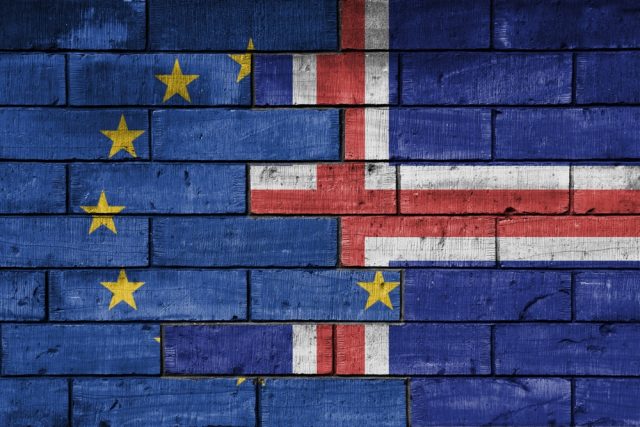
By rejecting the reopening of EU accession talks, Icelanders defended control over their resources and endorsed a form of European cooperation that leaves democratic authority closer to home.
Brussels had allowed itself to hope that Iceland might become the European Union’s easiest enlargement success. The country is wealthy, democratic and already woven into much of Europe’s commercial and legal order. Yet on 29 August, Icelanders declined even to reopen the accession negotiations abandoned more than a decade ago. The final result was 52.8 per cent for No and 47.2 per cent for Yes, on turnout of 82.5 per cent. That unusually high participation gives the decision a democratic weight which the narrow margin does not diminish.
The wording matters. Iceland did not vote on a completed membership treaty, and it did not vote to sever its ties with the continent. The consultative question asked whether the government should resume accession talks. A Yes would merely have opened negotiations, with another referendum promised before membership could take effect. The electorate rejected even that preliminary mandate. This was not a vote against Europe; it was a refusal to accept that closer European cooperation must lead, sooner or later, to political membership of the Union.
The centre-left government had tried to make the case in unusually favourable circumstances. The breakdown of old trading assumptions, tensions in the Arctic and President Donald Trump’s repeated interest in acquiring neighbouring Greenland were presented as reasons for seeking shelter in a larger political bloc. Supporters also argued that eventual entry into the euro could ease Iceland’s high interest rates and cost-of-living pressures. For a time, polling suggested that a cautious Yes to negotiations might prevail. Instead, voters separated the real problems facing their country from the institutional answer proposed by the government.
The map of the vote tells part of the story. Only the two central Reykjavík constituencies supported renewed talks; the capital’s suburbs and the rest of the country voted No. That divide should not be reduced to the old metropolitan habit of treating rural caution as ignorance. Outside the capital, the costs of transferring authority over land, food production and marine resources are less theoretical. Communities built around those sectors know exactly which decisions would be exposed to bargaining in Brussels and which national safeguards could become temporary exceptions.
Fishing was decisive because it is neither a museum piece nor a campaign symbol. The sector contributes about 15 per cent of Icelandic output when direct and indirect activity is included, and roughly 40 per cent of export earnings. Control of fishing grounds was won through hard political conflict during the Cod Wars and remains bound up with the country’s understanding of independence. The European Union’s Common Fisheries Policy may be capable of negotiated flexibility, as its defenders insisted. Icelanders were entitled to ask what would happen after that flexibility met a future qualified majority, a new Commission or competing claims from larger member states.
Opposition leader Guðrún Hafsteinsdóttir put the economic argument with useful directness during the campaign: Iceland’s domestic problems are for Icelandic politicians to solve, not tasks to be outsourced to Brussels. That was more than a slogan. Membership can alter the framework in which governments act, but it cannot relieve national leaders of responsibility for housing, inflation, productivity or public spending. The promise that the euro would discipline Icelandic policy was also an admission that the country would give up the exchange rate and monetary tools with which it responded to previous shocks. Voters were offered a trade-off, not a cost-free upgrade.
Iceland could make this choice because it already has a workable, if imperfect, European settlement. Through the European Economic Area, in force since 1994, Iceland participates in the single market alongside Norway and Liechtenstein. Goods, services, capital and people move under common rules. Iceland is also inside Schengen and remains a member of the European Free Trade Association. The EEA does not cover the EU’s common agriculture and fisheries policies, the customs union, the common trade policy or economic and monetary union. Those exclusions preserve room for national choice precisely where Icelandic voters consider it most valuable.
The arrangement has a genuine weakness. Iceland adopts a large body of single-market law without seats or votes in the European Parliament and the Council of the European Union. EEA states can help shape proposals at an early stage, but they do not take part in the Union’s formal final decisions. Pro-membership campaigners were right to raise that democratic deficit. Yet the answer depends on what a country values more: a vote inside institutions exercising wider powers, or the ability to keep certain powers outside those institutions altogether. On Saturday, a majority preferred the second balance. Prime Minister Kristrún Frostadóttir acknowledged the message, saying that a major lesson was that people are satisfied with the EEA.
Some federalists will answer that the EEA allows Iceland to enjoy market access while avoiding the responsibilities of membership. That criticism has force only if every benefit of economic cooperation must be purchased with political integration. Iceland pays into relevant programmes, accepts supervision by EFTA institutions and incorporates a substantial volume of single-market law. Its arrangement is not cost-free, and it is not sovereign isolation. It is a negotiated division of responsibilities. The fact that the Union accepts such an agreement shows that Europe already possesses more than one constitutional architecture. The referendum asked whether Icelanders wished to exchange theirs for another. They did not.
Security did not overturn that calculation. Iceland is a founding member of NATO, has no standing army and relies heavily on its defence relationship with the United States. Its location has become more important as the North Atlantic and Arctic return to the centre of great-power competition. These facts demand more serious investment in national resilience, ports, surveillance and allied access. They do not establish that EU membership would provide a substitute security guarantee. The government asked voters to treat geopolitical anxiety as an argument for accession talks; the electorate declined to collapse two separate questions into one.
For Brussels, the result is more than a missed public-relations opportunity. Iceland would have required none of the institutional reconstruction demanded of many current candidates. Its entry could have been advertised as proof that enlargement still attracts prosperous, established democracies after Brexit. But enlargement cannot be vindicated by the administrative readiness of a candidate alone. It also requires durable consent from the people expected to transfer powers. If that consent is absent even in a close partner, the proper response is not to pathologise the voters but to ask why the Union’s offer did not exceed the value of the status quo.
The first response from the EU was appropriately restrained. European Council President António Costa told Frostadóttir that the Union fully respected the democratic choice, while a spokesperson described Iceland as one of its closest and most trusted partners. That language should become policy. A mature European order must be able to sustain strong relations with countries that choose different degrees of integration. Partnership should not be treated as a waiting room in which every successful European democracy is expected eventually to apply for full membership.
There is a conservative European idea behind the Icelandic decision. The Reykjavík Declaration speaks of a Europe of independent nations working together for mutual gain while retaining their identity and integrity. It also affirms the equality of European democracies regardless of the international associations they join, and favours the exercise of power at the lowest practicable level. Those principles do not require hostility to the EU. They require the Union to remain a means of cooperation, subject to democratic consent, rather than the sole measure of a country’s European legitimacy.
Iceland’s present arrangement will continue to be argued over, as it should. The EEA imposes rules as well as opening markets, and the monetary debate will not disappear. Nor should a 52.8 per cent majority be mistaken for a permanent settlement in a divided country. It has nevertheless settled one question for this government’s term: cooperation with Europe does not create a duty to join the Union. Brussels would be wise to accept that distinction. A Europe confident enough to accommodate several forms of belonging will be stronger than one that recognises accession as the only respectable destination.