


 Subscribe


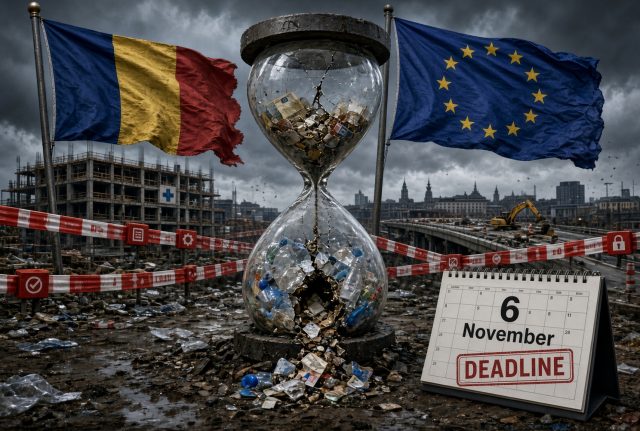
Romania has two weeks to fix its PNRR backlog. It also keeps paying for plastic it doesn’t recycle, and the EU is arguing over its next budget. AUR says these three things show why Brussels’ conditions should not be trusted.
On 26 October, the new Minister of Investments and European Projects, Mihai Alexandru Ghigiu, said that everything that has stalled in recent months must be solved in two weeks. The deadline is 6 November, and the aim is to draw in as much PNRR money as possible before the end of 2026. The date is an administrative target, not the end of the program. The minister did not say how much money is at risk, and he did not say if it would be lost automatically if the date passes. Ghigiu plans to move staff around inside the ministry and add people to the teams working on the backlog. He said there is no time for a slow start. He has already met Development Minister Alexandru Stoica and plans to meet the other ministers whose areas receive PNRR funding.
The difficulty is how the program works. Payments depend on milestones and targets that Romania agreed with the European Commission. If one reform is late or one procedure is unfinished, the whole payment schedule can be delayed. This is what critics mean when they call the conditions excessive. A hospital can wait on a step that has nothing to do with the hospital.
Since 1 January 2021, EU member states pay €0.80 for every kilogram of plastic packaging waste that is not recycled.
According to the Finance Ministry, Romania paid:
• 568 million lei in 2021
• about 968 million lei in 2022
• about 1.08 billion lei in 2023
• about 1.32 billion lei in 2024
• about 1.13 billion lei from 1 January to 1 October 2025
That adds up to 5.055 billion lei, close to €1 billion, and the yearly amount has mostly increased. Deloitte experts point out that this payment builds nothing in Romania. It does not improve collection or traceability. Placing a bin in a street is not enough if collection is irregular or the waste is mixed later. The fine reflects a recycling system that does not work well enough.
The EU is also negotiating its 2028–2034 budget. The Commission proposed almost €2 trillion, with priorities on competitiveness, security and defense.
Austrian Chancellor Christian Stocker is the first EU leader to threaten a national veto. He told Die Welt that Austria has a red line and that he will not give his consent if it is crossed. He wants cuts of several billion euros from the Commission’s proposal.
The frugal states have rejected the Irish presidency’s compromise, which totals €1.83 trillion, about €160 billion less than the Commission’s figure. A group of 17 countries, the “Friends of Cohesion”, opposes any cut to the overall budget and wants to protect agriculture and cohesion funding. Stocker admitted that positions are still far apart.
This matters to Romania because it relies heavily on cohesion and agricultural money. The result will affect roads, hospitals and farms. On 12 October, AUR issued a press release asking the Government to reject new conditions on 2028–2034 funds. The party does not want a repeat of the PNRR model, where access to money depends on milestones negotiated with European institutions.
Its concern is that projects such as highways, hospitals and water networks could be blocked because of unrelated reforms. The party argues that a community should not lose a hospital or a sewage network because of a separate government decision.
AUR asks the Government to:
• Publish its negotiating mandate for the 2028–2034 budget, including its position on conditionalities.
• Say which reforms could become mandatory and what mechanisms could suspend payments.
• Clarify whether payments will depend on national milestones, and whether projects that meet all technical and financial requirements could still be blocked.
• Keep shared management and the role of regional authorities in choosing investments.
• Protect cohesion and agriculture funding and simplify national procedures for accessing funds.
• Using Romania’s veto over the Multiannual Financial Framework if the conditions are against national interests.
The party summarizes its position in three points. EU funds should not be tied to new PNRR-style milestones. Local investments should not be blocked by political decisions. Romania should not accept obligations negotiated without transparency in Brussels. It adds that Romanians should know not only how much money the country receives, but also what commitments the Government makes in return.