


 Subscribe


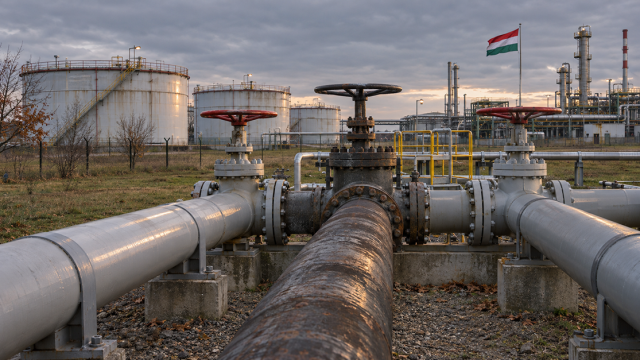
MOL says it expects to be technically ready to phase out Russian crude by the end of 2027. Its Hungary chief warns that higher energy costs could fuel political instability in Hungary and Slovakia.
Hungarian oil and gas group MOL says it expects to be technically ready to phase out Russian crude imports by the end of 2027. The company is seeking European Union funding to expand alternative supply routes, while MOL Hungary chief executive György Bacsa warns that higher energy costs could provoke protests and destabilise Hungary and Slovakia. Both countries still rely heavily on Russian oil delivered through the Soviet-era Druzhba pipeline.
In an interview with Euronews, Bacsa, who is also MOL’s group chief strategic officer, said a rise in energy costs could slow both economies and trigger a political crisis with repercussions elsewhere in Europe. Petrol and diesel prices have already risen sharply this year in Hungary, drawing criticism from opposition parties. A 2025 International Monetary Fund study estimated that a complete halt to Russian energy supplies could raise Hungary’s energy expenditure by about 15% by 2030. That scenario covers Russian energy supplies as a whole.
The price of crude helps explain MOL’s concern. Urals, Russia’s main export grade, was reported to be trading at around $60 a barrel, roughly 34% below Brent. Bacsa declined to give details of what MOL pays for Russian oil. He said the company complies with EU rules and sanctions and remains committed to diversifying supplies for its refineries. In his view, the cost of switching sources has become a significant economic issue at a time when fuel prices are already under scrutiny.
The European Commission says Russia’s share of EU oil imports has fallen from 27% in 2021 to 2%. Hungary and Slovakia are the only EU members still receiving significant volumes of Russian crude through Druzhba. Under the new government in Budapest, MOL plans to seek EU funding for energy diversification for the first time. The move marks a departure from the Viktor Orbán era, when Hungary maintained its reliance on Russian crude and stayed outside some EU energy initiatives.
Bacsa said restrictions on funding for fossil fuel projects have prevented MOL from accessing EU money to expand the pipeline network it needs. He argued that Central and Eastern Europe has fewer pipeline connections than Western Europe and called for a targeted EU programme covering links for gas, electricity, crude oil and petroleum products. European Commission spokesperson Anna-Kaisa Itkonen left open the possibility of discussing fossil fuel infrastructure but gave no indication that funding would be available. She said the Commission’s priority was to diversify supplies and end imports of Russian oil, gas and liquefied natural gas.
The Adria pipeline from Croatia to Hungary is central to MOL’s plans. It could provide an alternative to Druzhba, but MOL and Croatia’s state-owned pipeline operator JANAF have long disagreed over transport capacity, transit fees and the shipment of Russian crude to Hungary and Slovakia. MOL has asked the Commission to mediate a dispute over capacity tests on the Croatian section. The results matter because they will help determine how much crude the route can reliably carry if MOL reduces its reliance on Druzhba.
Even if the tests establish sufficient capacity, Bacsa wants access to several supply routes. MOL is interested in connecting Hungary to the Transalpine Pipeline, which runs from Trieste to Germany. It would also welcome the resumption of operations on the Ukrainian pipeline link between Brody and Odesa. Earlier this year, Druzhba became unusable, heightening tensions between Kyiv and Budapest. For MOL, that disruption illustrates the risk of relying heavily on a single route.
The end of 2027 is MOL’s target for technical readiness. The pace of the switch will also depend on how much crude alternative routes can carry, what operators charge to transport it and whether Brussels agrees to help finance new connections. Those questions will determine the cost of replacing Russian supplies. They also frame the political dispute over who should pay for infrastructure that MOL says is needed to carry out a transition the EU already considers a priority.
Alessandro Fiorentino