


 Subscribe


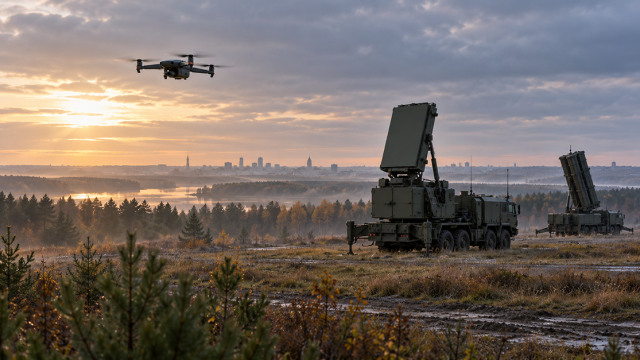
As drones reshape warfare, the European Union must turn innovation, industrial capacity and collective resolve into credible deterrence.
When ECR participants gather in Vilnius from 23 to 25 October 2026, the setting will give Panel III particular urgency. Lithuania stands on the European Union’s eastern frontier, where defence is an immediate responsibility. “Deterring Tomorrow’s War: Drones, Air Defence and the Innovation Race” addresses a central question: can Europe adapt quickly enough to prevent the next conflict, rather than simply prepare to fight it?
Russia’s war against Ukraine has exposed how rapidly warfare can change. Drones support reconnaissance, targeting and attacks, while electronic warfare continually challenges their effectiveness. Expensive platforms remain essential, but relatively inexpensive systems can impose disproportionate costs. For the EU, the lesson is clear: credible deterrence requires both sophisticated capabilities and the capacity to produce, deploy and replace equipment at scale.
Air defence sits at the heart of this challenge. Protecting European territory demands more than purchasing additional missiles. It requires connected sensors, reliable communications, shared situational awareness and layered responses against different threats. A small drone, a cruise missile and a ballistic missile present distinct problems. Europe must match each threat with an effective response while preserving scarce interceptors for the missions that require them.
This is also an economic contest. A defender cannot indefinitely rely on costly weapons to defeat large numbers of cheap attacking systems. Electronic countermeasures, interceptor drones and other emerging technologies can help improve that balance, although no single solution offers universal protection. The objective should be a resilient combination of capabilities that keeps functioning when communications are disrupted, individual systems fail or adversaries change tactics.
The EU has begun translating these needs into a broader framework. Its Defence Readiness Roadmap 2030 identifies the European Drone Defence Initiative, Eastern Flank Watch and European Air Shield among its flagship projects. In September 2026, the Council identified the first five European Defence Projects of Common Interest, covering capabilities including drones, air and missile defence, and protection of the eastern flank. The challenge now is delivery.
For the Union, delivery means overcoming fragmentation. Different national requirements, procurement calendars and technical standards can prevent European investment from generating collective strength. Joint purchasing should aggregate demand, give manufacturers predictable orders and support interoperable equipment. National governments retain responsibility for their armed forces, but EU coordination can help ensure that separate decisions contribute to a coherent European defence effort, consistent with NATO planning.
Innovation must also move faster from workshop to operational use. Europe needs procurement pathways that allow smaller companies to demonstrate technologies, obtain contracts and improve products through feedback from military users. Established manufacturers remain indispensable for integration and production. The strongest industrial ecosystem will connect their experience with the speed of emerging firms, supported by testing environments and clear requirements that reward useful performance.
Supply chains deserve equal attention. Dependence on external suppliers for critical components can turn industrial ambition into strategic vulnerability. Expanding production inside Europe, securing essential inputs and training skilled workers should therefore accompany investment in new designs and software.
Ukraine should be central to this process. Its experience demonstrates the importance of adapting continuously under operational pressure. Cooperation should connect Ukrainian expertise with European research, manufacturing and investment, while supporting Ukraine’s immediate defence needs. Learning together can strengthen Europe’s capacity to respond to changing threats and help ensure that technological development reflects battlefield realities rather than assumptions that have already become outdated.
Ultimately, deterrence depends on political credibility as much as technological promise. Citizens need confidence that increased defence spending produces protection, preparedness and accountable results. The Vilnius discussion should therefore ask what Europe can field, how quickly it can sustain it and how effectively allies can operate together. For the European Union, winning the innovation race means making aggression less likely by demonstrating that its societies, infrastructure and territory can be defended.
Alessandro Fiorentino