





 Subscribe


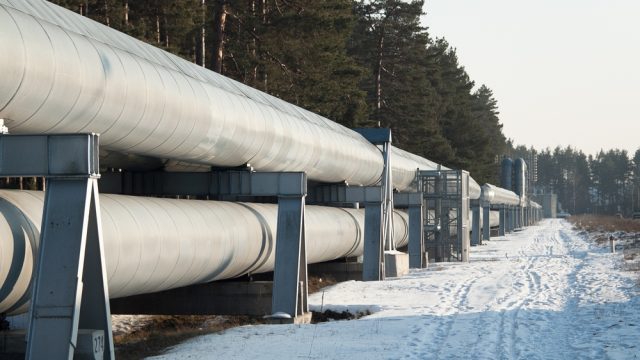
Rome’s steady investment in infrastructure and diversification is strengthening national energy security while much of Europe struggles to rebuild reserves
Italy is emerging as one of Europe’s strongest performers in the race to rebuild strategic gas reserves, confirming the effectiveness of the country’s long-term energy diversification strategy and reinforcing its role as a key energy hub for the continent. According to the latest data from Gas Infrastructure Europe, Italian gas storage facilities have already reached 54.52% capacity, significantly outperforming the European average of just over 36%.
The numbers reveal an increasingly important reality: while many European countries are still struggling to replenish reserves after years of geopolitical instability and volatile energy markets, Italy has managed to accelerate injections at a remarkable pace. Just over a month after the reopening of seasonal storage operations, Italian reserves already amount to approximately 111.14 terawatt hours, placing the country among the continent’s most prepared economies ahead of future energy demand peaks.
By contrast, the European Union as a whole remains at 36.33% capacity, equivalent to 411.17 terawatt hours. The gap between Italy and the European average is substantial and symbolically important. European monitoring systems currently classify Italy’s position with a reassuring “green” status, while the broader continental situation remains marked in orange, highlighting a more cautious outlook.
Italy’s performance becomes even more striking when compared to some of Europe’s largest industrial powers. Germany, traditionally considered the backbone of European manufacturing and energy consumption, currently stands at just 28.23% storage capacity, or roughly 69.93 terawatt hours. The figure underscores the different trajectories taken by Rome and Berlin in recent years regarding energy diversification and supply security.
The Italian strategy has focused heavily on reducing dependence on single suppliers while expanding import routes and strengthening regasification infrastructure. Since the outbreak of the energy crisis triggered by geopolitical tensions in Eastern Europe, successive Italian governments have accelerated agreements with North African producers and invested in liquefied natural gas terminals capable of receiving supplies from multiple global partners.
This pragmatic approach is now delivering measurable results. Italy’s stronger storage levels not only improve national resilience against possible supply shocks but also enhance the country’s geopolitical weight inside the European Union. Nations capable of guaranteeing energy stability inevitably gain greater influence during discussions on industrial policy, sanctions, energy pricing, and collective European procurement mechanisms.
Another factor contributing to Italy’s positive position is the structure of its storage network. The country possesses one of the most extensive underground gas storage systems in Europe, allowing operators to inject supplies rapidly during favorable market conditions. This infrastructure advantage, combined with relatively efficient coordination between public institutions and energy companies, has enabled Italy to move faster than many of its European partners.
Elsewhere in Europe, the picture remains mixed. Portugal continues to lead the continent with extraordinary reserve levels above 91%, although its overall storage volume is naturally smaller at 3.25 terawatt hours. Spain has also posted strong numbers, climbing to 66.51% capacity with reserves reaching 23.83 terawatt hours. Southern European countries, therefore, are increasingly demonstrating that diversification and flexible import strategies can offer a competitive advantage in today’s energy environment.
Meanwhile, energy markets continue to show signs of nervousness. After an initial spike during trading sessions in Amsterdam, European gas prices stabilized around 50 euros per megawatt hour, with contracts rising modestly by 0.39% to approximately 50.36 euros. While prices remain far below the dramatic peaks recorded during the height of the energy crisis, volatility continues to remind governments and industries alike that energy security cannot be taken for granted.
For Italy, however, the current figures represent more than just a temporary success. They reflect the gradual emergence of a broader strategic transformation. Over the last few years, Rome has increasingly positioned itself as a Mediterranean energy bridge connecting Europe to African and global suppliers. Investments in pipelines, LNG infrastructure, and renewable energy projects are slowly reshaping the country’s role within the European energy system.
The challenge now will be maintaining this momentum while balancing environmental goals, industrial competitiveness, and affordability for households. Yet the latest storage data clearly indicate that Italy has entered this new phase of Europe’s energy transition from a position of relative strength.
At a moment when many European economies remain exposed to uncertainty, Italy’s rapid progress on gas reserves sends an important signal: strategic planning, infrastructure investment, and diversified partnerships can still deliver concrete results in an increasingly unstable global energy market.
Alessandro Fiorentino