





 Subscribe


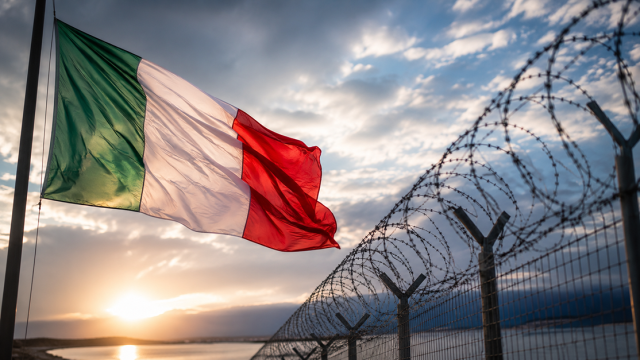
Austria joins Germany and Switzerland in resuming migrant transfers, but Rome is using the new EU Migration Pact to demand greater solidarity, stronger external borders and a fairer distribution of responsibilities
Italy is entering a decisive phase in the European migration debate as the implementation of the new EU Migration Pact begins to reshape relations between frontline Mediterranean countries and their northern partners. Austria has become the latest country, after Germany and Switzerland, to resume transfers of asylum seekers to Italy under European responsibility rules. Since June 12, four migrants have been returned from Austria, travelling with train or bus tickets provided by Austrian authorities.
The numbers remain extremely small, but the development has reopened a much broader political question: how Europe should balance the responsibility of countries of first entry with genuine solidarity towards states such as Italy, which remain among the Union’s main gateways for irregular migration. Rome’s position is considerably stronger than it was under the old Dublin system. Rather than simply accepting a mechanism that placed disproportionate pressure on Mediterranean countries, Giorgia Meloni’s government is seeking to use the new European framework to obtain concrete concessions from its partners.
Between December 2022 and the end of 2025, around 80,000 requests for Italy to take responsibility for migrants were accumulated, while actual transfers virtually stopped following Interior Minister Matteo Piantedosi’s decision to suspend returns. More than 17,000 people had been transferred back to Italy during the previous five years. According to Eurostat figures, more than 24,000 people could theoretically be concerned by current requests. Yet only 85 have actually returned so far.
The Italian government is drawing a clear distinction between old and new cases. Requests predating June 12 are considered part of a previous phase that Rome regards as effectively closed, while subsequent cases will be negotiated under the new rules. This approach has already produced tensions with Berlin after Italy rejected three older German transfer requests. But rather than signalling diplomatic isolation, the dispute illustrates Rome’s determination to ensure that the transition to the new European system does not simply revive the disadvantages of Dublin under another name.
From burden-sharing to European responsibility
The crucial difference is that the new framework offers Italy additional instruments. European solidarity can take different forms, including relocations or financial contributions calculated at around €20,000 per person.
For Rome, this creates an opportunity to place the entire migration equation on the negotiating table. Italy can point not only to asylum transfers from northern Europe, but also to Mediterranean arrivals, NGO rescue operations and the responsibility of other member states. The government is simultaneously building cooperation with other countries on Europe’s southern frontier. Piantedosi is seeking greater coordination with Greece, Malta and Cyprus, creating a Mediterranean bloc capable of demanding that migration policy focus increasingly on protecting Europe’s external borders rather than redistributing migrants only after they have entered the Union.
Italy can also rely on broader political partnerships. Meloni has developed a close relationship with Danish Prime Minister Mette Frederiksen, while 22 European countries have recently emphasised the importance of stronger external-border protection. This represents an important evolution in a debate in which Italy spent years warning that migration could not remain primarily the responsibility of countries geographically exposed to Mediterranean routes.
Rome and Berlin keep talking
Despite disagreements over transfers, Italy is maintaining an open channel with Germany.
Foreign Minister Antonio Tajani spoke with his German counterpart Johann Wadephul, stressing the friendly relationship between the two countries and their shared concerns over migration pressures. According to Tajani, Rome and Berlin agree on the need for stronger protection of Europe’s external borders, coordinated action against human traffickers and a reinforced external dimension of EU migration policy.
The Italian strategy therefore appears to combine firmness with negotiation: accepting that common European rules entail responsibilities while insisting that those responsibilities must operate in both directions. Opposition parties have portrayed the renewed transfers as evidence that the Migration Pact supported by Meloni has backfired. The government and its allies reject that interpretation, arguing that the new system should instead be judged by its overall balance. For Italy, the real objective is no longer simply stopping individual transfers. It is changing the European approach that produced them.
If Rome succeeds in linking responsibility for asylum applications to stronger external borders, financial solidarity, cooperation against traffickers and recognition of the pressure faced by Mediterranean states, Italy could transform an apparent vulnerability into negotiating leverage. The four migrants returned from Austria may therefore represent less a defeat for Rome than the beginning of a much larger test: whether Europe can finally turn migration from an overwhelmingly Italian geographical burden into a genuinely shared European responsibility.
Alessandro Fiorentino