





 Subscribe


Numbers just don’t add up
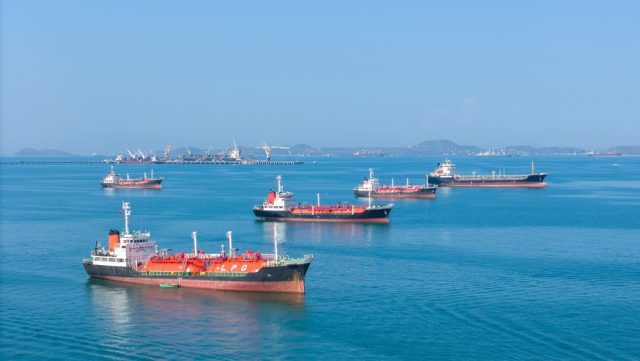
Since the American and Israeli operations against Iran began in late February, the world has lost something in the order of nine and a half million barrels a day of oil supply relative to pre-war levels. Gulf exports, including volumes routed around the Strait of Hormuz rather than through it, ran at just over sixteen million barrels a day in June against a pre-war average of twenty-four. Iraq shut in roughly half its crude output for want of storage. The Caspian Pipeline Consortium suspended loadings after tanker attacks, disrupting some eighty per cent of Kazakhstan’s exports. The Houthis declared a maritime embargo on Saudi Arabia, closing the Red Sea route that was meant to be the alternative to Hormuz. The International Energy Agency has compared the situation to both oil shocks of the 1970s arriving at once.
And yet, Brent closed last week around ninety-seven dollars.
In 1974, a disruption a fraction of this magnitude quadrupled the oil price and ended the postwar boom. In 2026 we have removed close to a tenth of global liquids supply, contested the waterway carrying a fifth of the world’s oil and a fifth of its liquefied natural gas, and the benchmark trades some forty per cent above where it began the year. In early July it briefly touched sixty-eight dollars — two dollars below its pre-war level, with the war running and the strait closed to normal traffic.
This is not resilience. And we now have a reasonably good idea of what it is instead.
The forty-dollar gap
The decisive evidence is not in the price. It is in the divergence between two prices. Reporting in Foreign Policy notes that in April, while screen prices sat far lower, the IEA observed physical crude trading near a hundred and fifty dollars a barrel. Cargoes — actual oil, actually delivered — were clearing at a level the futures market declined to acknowledge. The explanation offered is uncomfortable and entirely plausible: through the spring, traders priced in the assumption that a president facing midterm elections and a jittery equity market would fold before tolerating a prolonged shortage. They hedged with options rather than accumulating contracts. Screen prices remained contained not because oil was available but because the market was betting on the political tolerance of one man.
That is a market which has stopped pricing scarcity and has, thus, become fake. A ghost energy market.
Managing the number instead of the supply
What makes this more than a curiosity is that the strategy appears to have been recognised, and pursued, from the other side.
In March, Interior Secretary Doug Burgum acknowledged publicly that the Trump Administration had discussed intervening in crude futures markets to bring prices down. There had been conversations, he said; there were a great many capable people in the administration and in the energy trading world; moving the market by direct intervention would require enormous sums. He declined to say whether anything had been done. The head of the exchange group overseeing West Texas Intermediate futures observed that a federal government trading derivatives to suppress the crude price would constitute a disaster of biblical proportions.
By June, however, subtlety had been abandoned. The chief of staff was pressing advisers for anything that would bring pump prices down; advisers were, in the words of one energy executive, being shouted at to produce good news; the same executive described colleagues scrambling for announcements and messaging to counter the narrative. The press secretary dismissed the account as unverified gossip and insisted nobody was panicking.
Note the object of the exercise. Not to increase supply — there was no supply to increase, which is the whole problem. The object was to manage the number, and the instrument was language. Alongside it came the largest emergency reserve release in American history, draining strategic stocks to their lowest in decades; a vice president wishing aloud that global inventories be replenished during a ceasefire that lasted three weeks; and a president announcing that rising prices were good because America makes a lot of money, that he loves the inflation, and that oil would fall like a rock the moment the war ended.
Through it all the price swung twenty and thirty dollars on sentences. Brent rose nearly ten per cent in a session and four per cent the next when hostilities resumed. It fell four per cent on reports that Pakistan, with Chinese backing, was attempting to restart talks. It eased when an Iranian spokesman remarked that negotiations could be pursued on terms favourable to Tehran. European gas dropped five per cent in April on nothing more than a presidential suggestion that the war might end in two or three weeks. The tankers did not move. The strait did not open. Iranian production did not recover. Only the language changed.
Two channels of transmission
How does communication become price? Through two channels, and the second is new.
The first is familiar. Traders, executives and investors read political statements, form judgements about probable outcomes, and adjust positions. A credible signal that settlement is near reduces the perceived probability of prolonged disruption, and the curve flattens. This has always been true and is not in itself a pathology; political intentions are information about the future, and markets are supposed to price the future.
The second channel is machine learning, or rather parroting. Automated sentiment analysis has processed news feeds for two decades, but the reading has changed in kind rather than degree. Where earlier systems matched keywords against dictionaries, language models interpret context, register, hedging and irony — the difference between we do not rule out talks and talks are being prepared. The extraction of sentiment signals from unstructured text for quantitative strategies is now among the most commercially significant applications of generative artificial intelligence in finance, with a substantial academic literature and expanding commercial deployment behind it. Systems scrape headlines, transcripts, posts and wire copy continuously, score them, and feed the scores into execution.
And these systems do not advise. They trade.
This is the point that most commentary on the subject misses. The machine-readable news feeds sold by the major financial data houses exist for precisely one purpose: to be consumed by software rather than read by people. A statement crosses the wire, is parsed, is scored, and becomes an executed order in microseconds. No human authorises it. No human sees it until it appears in the blotter. The architecture was built this way deliberately, because the entire competitive advantage lies in removing the human, and it has operated at scale for the better part of two decades. What has changed is not the automation but the comprehension: dictionary matching could only recognise words, whereas a language model can weigh a diplomatic register, detect a hedge, and assign a probability to an intention. The machines have gone from reading vocabulary to reading meaning, and they are still the ones pressing the button.
Beneath that sits a softer tier with the same logic. Research notes are drafted with model assistance; terminal summaries are generated rather than written; retail investors, in numbers that are not small, ask a chatbot what to make of the news before they act — and a growing share of them now hold accounts wired to tools that can act for them. At every level, from the institutional bid to the private portfolio, the interpretation of political language is increasingly performed by systems that ingest that language as data and convert it directly into positions.
The consequence deserves to be stated plainly. A president’s sentence can move billions of dollars of exposure across oil, gas, equities and currencies before a single human being has finished reading it.
The existence of this channel is documented; its weight in any particular episode is an inference, and should be labelled as one. But the direction of the incentive is not in doubt. If a rising share of the marginal bid consists of machines taking political statements at face value — machines that cannot visit a port, cannot count tankers, and cannot distinguish a memorandum that will hold from one revoked three weeks later — then the returns to producing the right statement rise accordingly. Words enter the system as data; they leave as prices; the prices become the inflation print; the print becomes the political reality that justified the words.
And what, then, of Europe?
In his first term, this president made opposition to Nord Stream 2 a signature of transatlantic policy. He sanctioned the project, pressed Berlin to abandon it, marketed American liquefied gas across Europe under the banner of freedom, and later boasted that he had killed it. Whatever one thought of the methods, the strategic logic was coherent and it was, on the substance, correct: a pipeline delivering Russian gas directly to Germany while bypassing Poland, Slovakia and Ukraine was an instrument of leverage dressed as a commercial venture, and Europe was foolish to want it.
That position has now been reversed and there are backchannel negotiations to revive the pipeline as part of a settlement with Moscow: Richard Grenell, the president’s envoy for special missions and his former ambassador to Berlin, making repeated trips to the operating companies’ headquarters in the Swiss canton of Zug; the financier Stephen Lynch seeking a Treasury licence to acquire a stake; Matthias Warnig, a former East German intelligence officer and Putin confidant, brokering. Grenell has denied involvement. No deal has been concluded, Germany continues to refuse, and EU sanctions remain in force. One of the two strands is still intact and still full of gas.
But consider the shape of it. The same administration that is presently the largest supplier of gas to the European Union — American cargoes now account for around thirty per cent of the Union’s total gas imports — has an envoy in Switzerland negotiating the reintroduction of the Russian alternative, as a bargaining chip in a war Europe is financing and on a continent whose governments are not party to the conversation. Europe’s energy future is being traded in a Swiss canton by an American emissary and a Russian intermediary. Whether the deal happens is almost beside the point. That it is being negotiated at all tells Europeans everything they need to know about their standing.
Here the argument turns, and it must turn honestly, because the temptation to make this a story about American misconduct is exactly the reflex that produced the vulnerability in the first place.
The numbers are stark. When Iranian drones struck Qatari facilities in early March, QatarEnergy suspended production at Ras Laffan and Mesaieed — roughly a fifth of global LNG supply, and around fifteen per cent of the European Union’s LNG imports. Dutch TTF futures rose thirty-five per cent in a session and seventy-six per cent across the week, reaching fifty-six euros per megawatt-hour, a three-year high. March closed with European gas up close to sixty per cent, the largest monthly rise since September 2021. The World Bank’s gas index rose twenty-four per cent in the month: the Asian benchmark by ninety-four per cent, the European by fifty-nine, as Asian buyers outbid Europe for marginal cargoes.
The position entering the refill season is worse than the headlines suggest. European storage sits barely above fifty per cent, historically low for late July. Wood Mackenzie’s assessment is that even on the best case — Qatar restoring full capacity by the end of September, excluding two damaged trains — European storage would reach only seventy-five per cent by 1 November, against a five-year average of ninety. Asian demand has recovered to 2025 levels. Little new LNG arrives for another nine to twelve months. Low inventories, in their phrase, all but guarantee elevated prices through this winter and into 2027.
Structurally: a quarter of Europe’s gas arrives as LNG. A fifth of global LNG passes through a strait Europe cannot defend and does not police. Thirty per cent of the Union’s gas imports come from the United States. Europe’s energy costs are set by an Iranian drone operator, an Asian spot bidder and an American press conference, in roughly that order, and it has influence over none of the three.
Now the honest part. None of this was done to us. We did it to ourselves. The vulnerability long predates the current administration in Washington and owes nothing to it. Germany closed functioning nuclear plants in the middle of a decade in which it was deepening its dependence on Russian pipeline gas, and called the combination a strategy. The continent conducted energy policy as a regulatory exercise — targets, taxonomies, disclosure regimes, inventories — rather than a strategic one concerned with hulls, terminals, reactors, storage and long-term contracts. It congratulated itself on falling territorial emissions while relocating the industry that produced them: more than half of Britain’s emissions footprint is now embedded in imports, against roughly a third in 1990; Norway’s consumption-based emissions exceed sixteen tonnes per capita against a global average below eight. The achievement was real in the national inventories and largely fictional in the atmosphere, and it was purchased with precisely the industrial capacity a crisis of this kind demands.
A continent that spends twenty years making itself a price-taker cannot then complain that others are setting the price. So, what will Europe do? It cannot talk its price down; nobody is listening and it has nothing to threaten with. It cannot outbid Asia indefinitely, because its industry cannot absorb the cost and has already shown what happens when it tries. It cannot rely on American supply while treating American narrative management, and American backchannels in Zug, as exogenous facts rather than strategic exposures. What remains is unglamorous and material: firm long-term contracts rather than spot exposure; storage mandates enforced ahead of the season rather than debated during it; nuclear capacity treated as a strategic asset rather than a political embarrassment; grid and interconnection built at the pace of a security programme; naval presence commensurate with the fact that a fifth of the continent’s gas depends on freedom of navigation currently provided by somebody else.
That is the agenda of a serious middle power: not the ambition to set the price, which Europe will not have in this generation, but the capacity to survive prices it does not set.
Road to perdition
There is nothing inherently illegitimate about managing expectations. Every central bank does it; forward guidance is the doctrine that words can substitute for actions. But a central bank manages expectations about a variable it ultimately controls. By contrasts, nobody controls the Strait of Hormuz by announcement.
The gap between the screen and the cargo is a debt, financed by credibility — by the market’s willingness to believe that settlement is always three weeks away, because it has been told so, repeatedly, by people with an interest in its being believed, and increasingly by systems that cannot tell a statement from a fact. Credibility is finite, and it is spent faster than it accumulates. When it runs out, the paper price will not converge gradually on the physical one. It will jump… and the world’s economy will collapse.