





 Subscribe


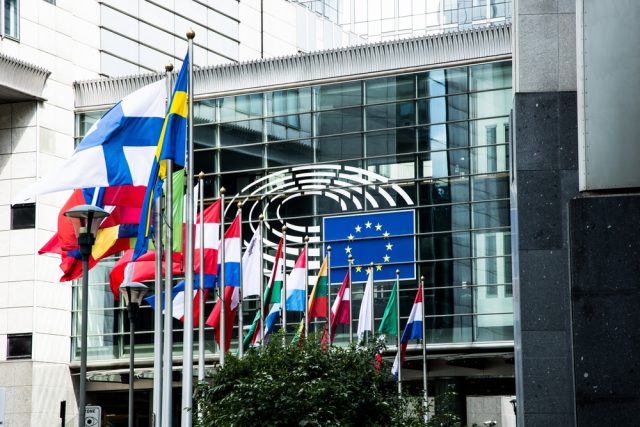
Brussels: EU Parliament approves Ukraine support loan
On Wednesday, February 11, the European Parliament overwhelmingly approved three legislative acts making available a €90 billion support loan for Ukraine for the period 2026–2027. This will help the nation to meet its economic needs as the conflict with Russia, now in its fifth year, continues. This financial support is particularly urgent, considering that, according to the International Monetary Fund projections, Kiev’s state coffers risk running dry by April. The three legislative acts were adopted under Parliament’s urgent procedure to ensure the fastest possible delivery of financial aid to Ukraine. The loan proposal was approved with 458 votes in favor, 140 against, and 44 abstentions; the proposal to amend the Ukraine Facility received 473 votes in favor, 140 against, and 32 abstentions. Finally, the proposal to amend the EU’s long-term budget for 2021-2027 (MFF) was approved by 490 votes in favor, 130 against, and 32 abstentions. The support loan will be financed by EU member states excluding the Czech Republic, Hungary, and Slovakia. Given their opposition, the decision was made through the enhanced cooperation procedure with the participation of 24 member states. The funding will therefore be divided as follows:
One third (€30 billion) will be provided in macroeconomic support to Ukraine, through macrofinancial assistance (MFA) or the Ukraine Facility, the specific EU instrument created to ensure economic stability, finance reforms and public and private investments, and support the Ukrainian budget in its efforts to rebuild and modernize the nation. The government in Kyiv will be required to develop a strategy for the use of this funding, which will need to be approved by the Member states. The loan will also be subject to strict conditions, such as a commitment to democratic governance, respect for the rule of law, the protection of human rights, including minority rights, and the fight against corruption.
The remaining two-thirds of the loan (€60 billion) will be used for defense investments, to support defense industries, and to purchase military equipment. The funding will ensure Ukraine’s access to defense products during the conflict with Russia. EU Parliament confirmed the line defined by the Member States which provides that weapons and military equipment “in principle” must be purchased only from companies belonging to the EU, Ukraine itself or EEA-EFTA countries (i.e. Iceland, Liechtenstein and Norway).
Exceptions will be possible only if military equipment is not available in sufficient quantities in those countries to meet their needs or if delivery times are such that they cannot guarantee a response to Ukraine’s urgent and immediate operational needs.
In such cases, Ukraine will also be able to purchase the military equipment it needs from those countries that have entered into a bilateral agreement with the EU on access to SAFE, the €150 billion instrument for defense investment loans, and from countries that have established a security and defense partnership with the EU and are providing significant financial and military support to Ukraine.
The “mega-loan” will be financed by the issuance of common EU debt on the capital markets and secured by the so-called “headroom” of the EU’s long-term budget, with debt servicing costs covered by the EU’s annual budgets. These costs have been estimated at around €1 billion for 2027 and around €3 billion annually from 2028 onwards.
The next step involves the formal adoption of the package by the Council, so that the Commission can release the first payment in early second quarter of 2026.
The Government of Kiev will be required to repay the loan principal only after the end of hostilities, once it has received war reparations from Russia.
Laura Perreca