





 Subscribe


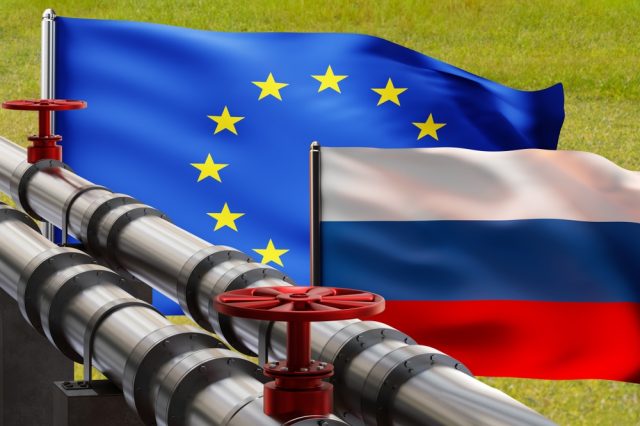
The war between the Russian Federation and Ukraine, which began four years ago, has turned energy and raw materials such as gas and oil into major geopolitical weapons, and the countries of the European Union in Central Europe have become some of the main targets of this indirect confrontation. For two landlocked EU member states such as Hungary and Slovakia, Russian oil and gas are not only economic resources but also pillars of social, industrial, and budgetary stability. Tensions between Budapest, Bratislava, and Kiev escalated rapidly when oil flows through the Druzhba pipeline were interrupted, showing us once again how vulnerable the regional energy balance is. Beyond political statements, European-level lawsuits, and diplomatic disputes, the real issue remains the security of supply in a European Union that is trying, on the one hand, to redefine its relationship with Moscow and, on the other, to allow Ukraine and Moldova to join the bloc as soon as possible.
The Druzhba pipeline, Central Europe’s lifeline
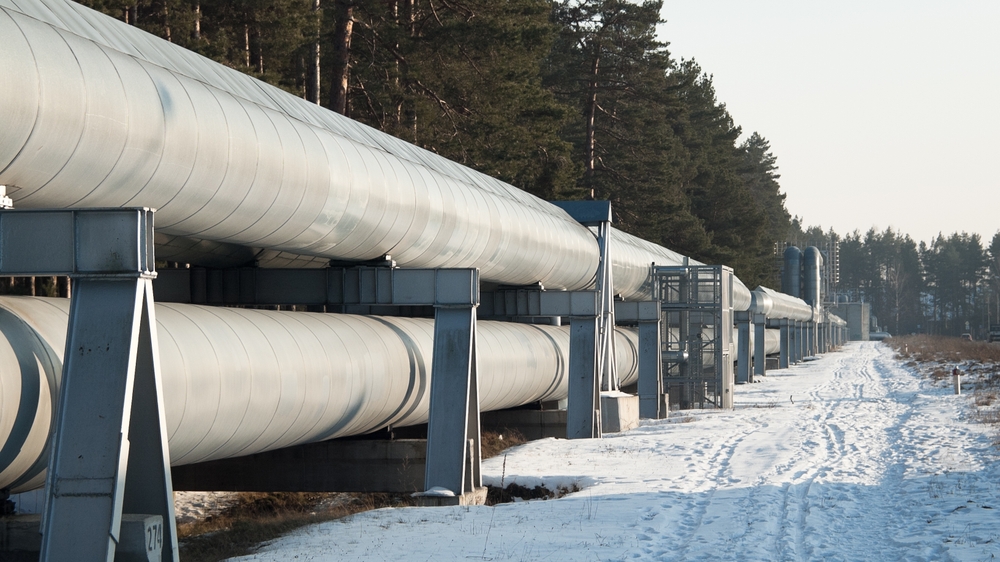
The Druzhba pipeline, which connects Russian oil fields to refineries in Central and Eastern Europe, is one of the most extensive oil networks built during the Soviet era. The southern branch of the Druzhba pipeline crosses Ukraine before reaching and supplying Hungary and Slovakia, making Kiev a key player in the supply chain of the two EU member states. For decades, this system has operated almost automatically and has been perceived as a stable infrastructure, regardless of political changes in the region.
Citing the halt in the flow through the Druzhba pipeline, Slovak Prime Minister Robert Fico announced a state of emergency in the oil supply sector in the middle of this month, and in order to prevent imbalances in the domestic market and sharp price increases, the government in Bratislava decided to release approximately 250,000 tons of oil from strategic reserves. Following these measures, Robert Fico stated that if the blockade continues, Slovakia will consider proportionate response measures, including reassessing forms of energy cooperation with Ukraine, particularly in the field of electricity supply, as it is well known that Ukraine is experiencing an acute shortage of electricity due to Russian attacks on Ukrainian energy infrastructure.
In the other Central European capital, Budapest, Prime Minister Viktor Orbán argued that the explanations for the technical failures that occurred at the end of January as a result of damage to the Druzhba pipeline following missile attacks by the Russian Federation were not entirely convincing and suggested that Kiev’s decision to keep the pipeline closed had political implications. Hungarian officials claim that the information they have received indicates that the repair work has been completed, but transit has not yet resumed. On the other hand, the Ukrainian authorities have indicated that the oil transport infrastructure to Slovakia and Hungary has been affected by Russian attacks and that the resumption of flow depends on security conditions and independent technical assessments. In response to this blockade, Hungary has decided to temporarily suspend diesel deliveries to Ukraine. The Orbán government’s move had a strong symbolic significance, as much of the fuel used by Kiev came from Hungarian refineries. For its part, Slovakia, in order to ensure the continuity of domestic supply, limited its exports to foreign markets and redirected oil from strategic reserves to the Slovnaft company, controlled by the MOL group. Both Slovakia and Hungary have emphasized that they currently have sufficient stocks for approximately another 90 days, in accordance with European standards, but have warned that a prolonged crisis could have serious economic consequences for the population.
Energy and demographic profile, structural realities of dependence on Russian oil
Currently, Hungary, which has a population of approximately 9.6 million and an industrialized economy that consumes significant amounts of energy, has limited domestic oil and gas resources. This lack of national oil and gas resources has fostered a close energy relationship with the Russian Federation over the decades. Natural gas occupies a central place in Hungary’s energy mix, being used both for electricity generation and for heating the population and powering the chemical and metallurgical industries, with most of the imported gas coming from the Russian Federation, including via the TurkStream route and regional interconnections. The oil used in the refineries operated by MOL is mostly of Russian origin, and the refining facilities are optimized for the type of crude oil delivered through the Druzhba pipeline. Adapting to other types of oil involves technical investments and additional costs, which is why Budapest has consistently supported maintaining traditional flows. At the same time, Hungary benefits from a significant nuclear sector through the Paks power plant, which last year generated most of Hungary’s electricity production (16,016.6 GWh of electricity, almost half of domestic production). The Orbán government considers the expansion of nuclear capacity to be a guarantee of Hungary’s long-term energy security. As for solar energy, this energy source has developed rapidly in Hungary in recent years, but it remains dependent on weather conditions and substantial investments in storage facilities. Nationwide, coal and hydropower play a secondary role compared to gas and nuclear energy.
With a population of around 5.4 million, Slovakia has a different energy profile but is just as sensitive to external disruptions as Hungary. Nuclear energy is the backbone of electricity production, with the Mochovce and Bohunice nuclear power plants currently providing most of the domestic demand. This structure, with its two nuclear power plants, has allowed Bratislava to reduce pressure on electricity imports but not on fossil fuel imports. Natural gas, a significant portion of which traditionally comes from the Russian Federation, is essential for household heating and industry. Although Slovakia has developed interconnections with Western European countries to diversify its fossil fuel supply, existing infrastructure and contracts have maintained considerable dependence on oil and gas from Eastern Europe. The oil used in Slovakia is delivered almost exclusively through the Druzhba pipeline and refined at Slovnaft. Hydropower, supported by infrastructure on the Danube, contributes to the Slovak energy mix, while renewable sources are growing but insufficient to completely replace imported fuels. These structural realities explain why the governments in Budapest and Bratislava treat the issue of oil and gas flows as a matter of national security, not just compliance with European political decisions and directives from Brussels.
The Adria pipeline alternative and the limits of regional solidarity
In an attempt to compensate for the blockage that occurred at the end of January on the Druzhba pipeline, Hungary and Slovakia asked Croatia to allow Russian crude oil to be transported through the Adria pipeline. The Adria pipeline starts at the Omišalj terminal on the Adriatic Sea and, from a technical point of view, its infrastructure could handle additional volumes of oil, but the problem is not exclusively a logistical one. In response to requests from Hungary and Slovakia, authorities in Zagreb have said they are willing to facilitate oil deliveries from alternative sources that are compatible with the European Union’s sanctions regime against Russia, but do not wish to support continued Russian imports. Croatian officials have emphasized that, beyond economic considerations, there is a political dimension linked to the financial impact of Russian oil purchases on the war in Ukraine. The cost of transporting oil through the Adria pipeline is higher than the cost of transporting it through the Druzhba pipeline, and the maximum capacity of the Adria pipeline has not been tested under conditions of simultaneous demand from two dependent states such as Slovakia and Hungary. This situation highlights the limits of regional solidarity when energy interests and moral considerations conflict. Although all the countries involved are members of the European Union, their strategic priorities do not always have the same common denominator.
Russian gas and the legal confrontation at European level
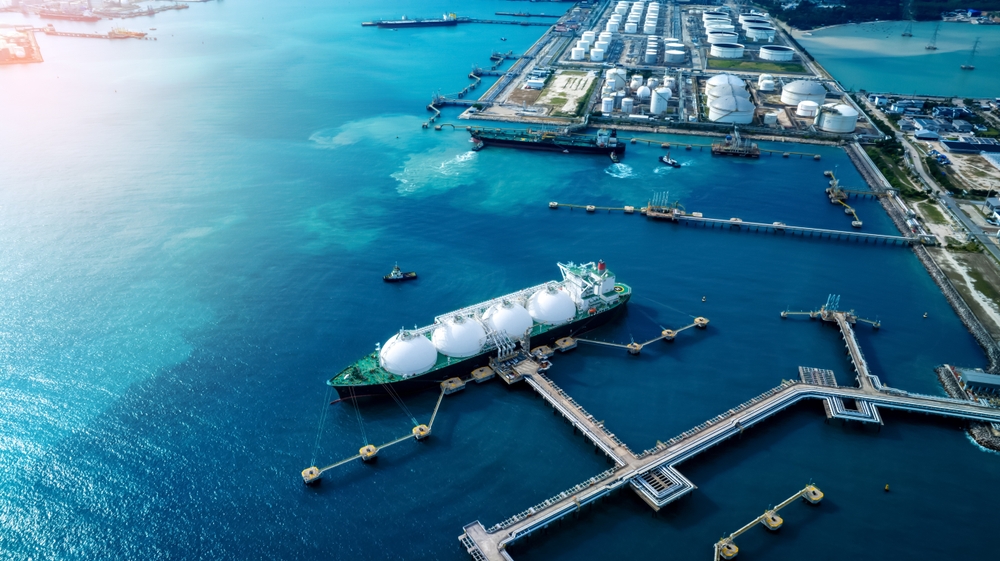
In addition to the dispute over oil, another battle is unfolding over natural gas from the Russian Federation. The European Union recently adopted a regulation providing for a complete halt to Russian gas imports by the end of 2027, although Hungary and Slovakia voted against this measure, arguing that the deadline is too short and that the economic impact would be severe. The Hungarian government has referred the matter to the Court of Justice of the European Union, arguing that the ban is an economic sanction and should have been adopted unanimously. Budapest invokes the right of member states to determine their own energy mix and considers that the decision disproportionately affects Hungary’s national energy security. The European Commission, for its part, argues that the measure is part of the common commercial policy and aims at a structural change designed to permanently reduce dependence on Russian gas. Even if a court ruling may not come for several years, the process itself reflects tensions within the Union. At the same time, the infrastructure transformation is already underway, and a return to the old energy model is becoming increasingly unlikely as member states invest in LNG terminals, interconnections, and contracts with alternative suppliers in Norway, Azerbaijan, the Middle East, and even the United States.
The Black Sea and the risks of maritime transfers
While land disputes attract public attention, the Black Sea has become the scene of intense ship-to-ship oil transfer operations. These offshore oil transfers, in other words in international waters, allow cargo to be transferred between ships without them having to enter ports, where controls are much stricter. This practice is legal in itself, but it can be used to reduce the traceability of the oil’s origin. Since the beginning of the Russian-Ukrainian war, Romanian authorities have reported the presence of thousands of oil tankers involved in such ship-to-ship oil transfer operations. Energy Minister Bogdan Ivan himself has admitted that comprehensive monitoring of these activities is difficult and that there are risks to critical infrastructure. For his part, security expert George Scutaru drew attention to the geopolitical implications of concessions in Romania’s exclusive economic zone, where the Russian company Lukoil, in partnership with Romgaz, holds rights to the Trident perimeter. Even if the Trident perimeter is not currently being exploited, the regional context shows how quickly these commercial arrangements can become sensitive. Energy, infrastructure, and national security are now more interconnected than ever.
Central Europe, a region between pragmatism and transformation
The crisis caused by the Druzhba pipeline blockade and the dispute over Russian gas shows that energy has become a strategic power tool, and for Hungary and Slovakia, maintaining access to resources at decent and affordable prices is a major domestic priority. For Ukraine and most EU member states, reducing dependence on oil and gas from the Russian Federation is essential for long-term energy security. We must admit that Central Europe is currently undergoing a period of profound transformation. Investments in nuclear energy, renewables, and alternative infrastructure will redefine the regional balance in the coming years. At stake are not only oil and gas flows, but also the ability of states to defend their national interests in a volatile geopolitical context. Russian oil, once a common commodity in Europe’s pipelines, has now become a symbol of a changing era, in which every barrel and every cubic meter of gas carries a political weight that is difficult to ignore.