





 Subscribe


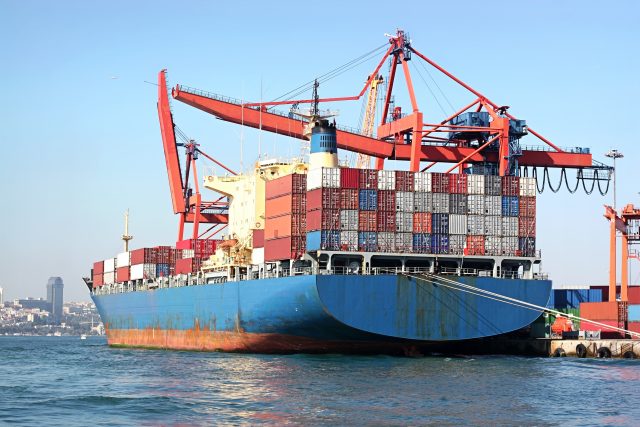
In his 1944 review of Friedrich von Hayek’s Road to Serfdom, George Orwell commented that the trouble with competitions was that somebody won them. He was referring to what he believed to be an inherent tendency of competitions to turn into monopolies, presumably because large companies were more efficient than small ones. He did not realise that companies were large because they were efficient, not efficient because they were large. Also, he ignored the fact that a monopoly can usually be maintained only if the government protects it and limits market entry. Moreover, world history since 1944 has reinforced Hayek’s arguments for the competitive economy. Two factors were crucial in bringing about globalisation: new technology for transporting goods and transmitting information, including aeroplanes, shipping containers, and the internet; and the gradual lowering of tariffs and other government restrictions on the movement of goods, services, and capital across borders. This has resulted in a dramatic improvement in the global standard of living. But recently, protectionism has been on the rise. Therefore, a new anthology of essays, Free Trade in the Twenty-First Century, published by Springer and edited by Lord Daniel Hannan and Max Rangeley, is quite timely.
Absolute and Comparative Advantages
The case for free trade seems obvious. Why are governments building roads between cities and constructing ports, lighthouses, airports, and canals if they then significantly restrict their use? Recalling the French blockade of the British Isles in 1806–1814 and the British blockade of Germany in 1914–1919, why are governments doing the same in peacetime through tariffs as the French and the British did in war against their enemies? As David Hume pointed out, by granting humankind vastly different resources and abilities, our Creator must have wanted us to trade with one another. You are better at singing than I, and I am better at sewing than you, and let you therefore sing, while I sew. Poland is better suited than Portugal for growing corn, whereas Portugal is better suited than Poland for making wine. But what about countries with negligible resources? First, some of them are affluent, such as Denmark and Hong Kong, because they have accumulated substantial human capital through ingenuity and hard work. Secondly, the examples mentioned here of singing and sewing, and of Poland and Portugal, were intended to illustrate the absolute advantages of the division of labour. But there are also comparative advantages. Even if I may be much better at writing than my maid and only slightly better at cooking, it is best that I do the writing and leave the cooking to her. Even if a country has scant natural resources and little human capital, it could have a comparative advantage, for example, in cheap labour.
Examples of Successes and Failures
Two examples of effective free trade areas are the United States and the European Union. The member states of the US, first 13, now 50, have always been able to trade freely with one another. This internal market was, and is, large enough that most of the benefits from the division of labour could be enjoyed. Needless to say, the history of the US is the greatest economic success story of all time. The 27 member states of the European Union trade freely with one another, and indeed also with the three member states of the European Economic Area, Norway, Iceland, and Liechtenstein (and in effect also with Switzerland). These 31 states comprise the European Internal Market which has promoted competition for the benefit of consumers. The four Asian Tigers, Singapore, Hong Kong, Taiwan, and South Korea, are countries making the most of the opportunities that globalisation offers. In contrast, many Latin American countries in the post-war years pursued import substitution. The per capita income of Latin America was, in the early 1960s, double that of the Four Tigers. Now Latin America lags far behind them. Incidentally, Cuba refutes the Leninist claim that international trade implies the exploitation of poor countries by the rich ones. If this was correct, the best thing to happen to Cuba was the US ban on trade with her. But of course, Lenin was wrong.