





 Subscribe


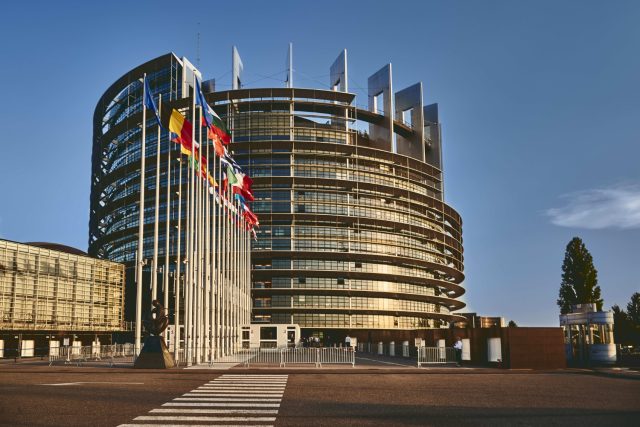
The European Parliament’s approval of an amendment to the Asylum Procedure Regulation marks a significant step in the evolution of the Union’s migration policy. The reform introduces a substantial change in the rules governing the transfer of applicants for international protection to third countries, particularly impacting the concept of “safe third country.” With a favorable vote by the Assembly, Member States acquire the ability to declare asylum applications submitted in the Union inadmissible and transfer applicants to states with which they have no prior personal ties, provided that certain conditions are met and specific legal guarantees are respected. This legislative intervention is part of a broader European strategy aimed at outsourcing part of the management of applications for international protection through structured cooperation with third countries. This long-debated and politically divisive decision reflects the tension between the need for administrative efficiency in the control of migration flows, and the protection of fundamental rights.
TRANSFORMING THE CONCEPT OF “SAFE THIRD COUNTRY”
The core of the reform is the redefinition of the concept of “safe third country” within the Asylum Procedure Regulation. Previously, the possibility of transferring an asylum seeker to a non-EU country presupposed the existence of a significant link between the applicant and the destination country. With the approved amendment, such a link is no longer a necessary condition. Member States will be able to apply the concept of safe third country even to persons who are not citizens of that country and who have never resided there. Consequently, an application for international protection filed at the EU level may be declared inadmissible if the applicant is directed to a third country deemed safe according to the criteria established by European law. The new regulation, however, requires at least one of three alternative conditions to be met: the first concerns the existence of a link between the applicant and the third country, such as the presence of family members, a previous residence, or linguistic and cultural ties; the second concerns the applicant’s transit through a state where he or she could have requested effective protection before reaching the Union; the third, and more innovative, involves the existence of an agreement or understanding, concluded bilaterally, multilaterally, or directly by the European Union, for the admission of asylum seekers, excluding unaccompanied minors.
LEGAL GUARANTEES AND OBLIGATIONS OF THIRD COUNTRIES
For transfers to comply with European and international law, agreements with third countries must contain a binding clause requiring the destination country to examine the merits of any application for effective protection submitted by the transferred persons. In other words, the third country must guarantee a functioning asylum system that complies with international standards. The regulation establishes that transfers may only take place to states considered “safe,” meaning countries that guarantee protection against persecution and serious harm, respect for the principle of non-refoulement, and the possibility of obtaining protection under the Geneva Convention on Refugees. Residence rights and other prerogatives, such as access to education and employment, must also be guaranteed. A significant exception concerns unaccompanied minors, whose asylum applications will continue to be assessed by European countries or by states with which they have a connection or through which they have transited. This provision responds to the need to strengthen the protection of a particularly vulnerable group.
THE FIRST EUROPEAN LIST OF “SAFE COUNTRIES OF ORIGIN”
In parallel with the reform of the concept of safe third countries, the European Parliament approved the Union’s first common list of “safe countries of origin.” This list includes Bangladesh, Colombia, Egypt, India, Kosovo, Morocco, and Tunisia, as well as all the countries applying for accession to the European Union, with the exception of Ukraine. The concept of safe country of origin, distinct from that of safe third countries, aims to expedite the processing of asylum applications submitted by citizens of states generally considered to respect fundamental rights. In these cases, procedures will be processed expeditiously, while retaining the right for the applicant to demonstrate the existence of an individual risk.
THE PARLIAMENTARY DEBATE AND THE POLITICAL DIVISION
The legislative amendment was approved with 396 votes in favor, 226 against, and 30 abstentions. The result was made possible by the alliance between the European People’s Party, the European Conservatives and Reformists, the Patriots for Europe, and the Europe of Sovereign Nations group. In contrast, the Socialists and Democrats and Renew Europe groups voted overwhelmingly against, albeit with some defections. The vote highlighted a fracture in the parliamentary alliance supporting the Commission led by Ursula von der Leyen, a dynamic that had already emerged in other migration dossiers during the legislative session. Some left-wing and liberal MEPs presented a minority position, calling the new concept of a safe third country particularly problematic and raising concerns about the risk of exploitation by third countries.
ITALY’S ROLE AND THE PRECEDENT OF HUBS IN ALBANIA
The reform paves the way for agreements between EU member states and third-country governments willing to accept asylum seekers from Europe, including in exchange for financial compensation. This model recalls the experience of the previous United Kingdom government, which had signed an agreement with Rwanda for the transfer of irregular migrants. That project was subsequently blocked by the British Supreme Court and abandoned by the current government. In the European debate on the outsourcing of asylum procedures, Italy has taken a pioneering position in recent years, promoting the creation of centers to process the applications for international protection in Albania. These initiatives, initially greeted with skepticism and sometimes open criticism within Europe, were based on the idea of strengthening cooperation with third countries to ease the pressure on national reception systems. The Italian perspective, oriented toward external and shared management of migration flows, has long been considered marginal within the EU context. However, regulatory developments, culminating in the recent amendment to the Asylum Procedure Regulation, highlight a progressive convergence toward solutions that promote structured agreements with third countries, provided they are accompanied by adequate legal guarantees. In this sense, the experience of the hubs in Albania can be seen as a political precedent that has helped steer the European debate toward more effective models of external cooperation. The EU’s decision to formalize, through a common regulatory framework, the possibility of transferring asylum seekers to countries with which they have no personal connection represents a step that, despite operational differences, fits within the same logic of shared and decentralized management of protection applications.
BETWEEN EFFICIENCY AND PROTECTION OF RIGHTS
The reform approved by the European Parliament represents a significant turning point in asylum law, expanding the tools available to Member States to manage requests for international protection. The elimination of the requirement of personal ties to the third country broadens the scope of national authorities’ maneuvering and consolidates the external dimension of European migration policy. At the same time, criticisms raised in parliament highlight the challenges this approach poses in terms of the protection of fundamental rights and the effectiveness of procedural guarantees. The balance between flow control, international cooperation, and the protection of vulnerable persons remains the central issue in a policy that continues to spark deep divisions. In this context, Italy’s role in promoting innovative cooperation solutions with third countries now appears to be part of a broader trajectory, in which the European Union appears oriented toward permanently integrating externalization tools into its regulatory architecture. It remains to be seen, in light of the concrete implementation of the reform, whether these tools will be able to combine administrative effectiveness with full compliance with international protection standards.