





 Subscribe


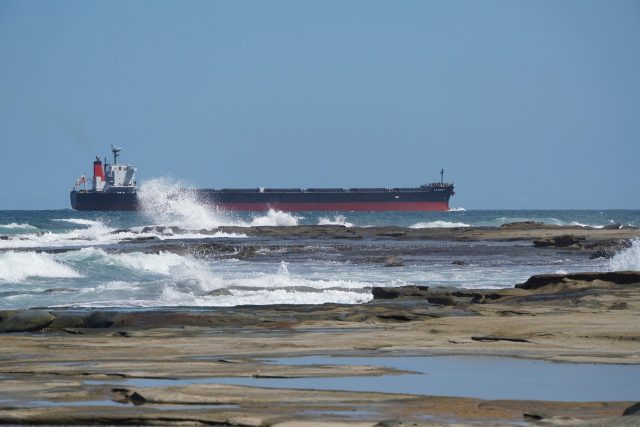
The intensification of joint military operations conducted by the United States and Israel against Iran, dubbed “Operation Epic Fury” by the Pentagon, has rekindled a complex debate in Europe, intertwining strategic, legal, and economic considerations. The prospect of the conflict widening into the Middle East not only raises questions about the regional military balance, but also broader issues regarding the stability of the international order, the legitimacy of the use of force, and the compatibility of operations with the regulatory framework of international law. In this scenario, the European Union finds itself confronted with a crisis that directly impacts its vital interests, requiring a reflection that transcends the strictly political-military level and significantly impacts the dimensions of energy and commercial security. European institutions and national governments have therefore adopted differing positions, reflecting political sensitivities and strategic priorities that are not always consistent, but are united by a strong concern for regional stability and the prevention of a spiral of escalation. Of particular importance in this context is the protection of the main maritime energy supply routes, especially the Strait of Hormuz, which is a key hub for global oil and natural gas trade. The possibility of prolonged disruptions or restrictions to freedom of navigation in this area would pose not only an international security issue, but also a concrete threat to the Union’s economic resilience, given Europe’s persistent dependence on hydrocarbon imports and the centrality of maritime supply chains to the functioning of the internal market.
REACTIONS FROM MAJOR EUROPEAN GOVERNMENTS
Different political sentiments are emerging within the Union. In Germany, Chancellor Friedrich Merz stated that the federal government understands the Iranian people’s relief at the prospect of a weakening of the Tehran regime, while acknowledging the complex legal implications of the attacks conducted by Western allies. This position reflects a balance between normative considerations of international law and political considerations of Iran’s internal situation. The stance adopted by Spain and Slovenia appears different, and more cautious: Spanish Foreign Minister José Manuel Albares forcefully emphasized the need to prevent violence from becoming a standard instrument for resolving international disputes, emphasizing the importance of respecting international law and a return to diplomacy; a similar position was expressed by Slovenian Foreign Minister Tanja Fajon, who openly called for de-escalation and the resumption of dialogue. France, through its President Emmanuel Macron, highlighted the serious consequences such operations could have for international peace and security. The head of the Élysée also urged the Iranian regime to engage in good faith negotiations to end its nuclear and ballistic missile programs, which are considered crucial to the stability of the entire Middle East. From Italy, Foreign Minister Antonio Tajani adopted a cautious approach, calling for de-escalation. Germany, France, and the United Kingdom also issued a joint statement clarifying that they did not participate in the US strikes, while maintaining close contact with Washington, Tel Aviv, and other regional partners. This clarification signals Europe’s desire to preserve diplomatic autonomy over its allies’ military decisions.
THE POSITION OF THE EUROPEAN UNION INSTITUTIONS
At the supranational level, the Union’s response has been multi-layered. European Commission President Ursula von der Leyen and European Council President Antonio Costa described developments in Iran as highly concerning, reaffirming the Union’s commitment to regional security and stability. Their joint statement emphasized the call on all parties to exercise utmost restraint, protect civilians, and fully respect international law, as well as to avoid actions that could undermine the global non-proliferation framework. High Representative for Foreign Affairs Kaja Kallas adopted a more explicit tone, describing the situation as dangerous and emphasizing the Iranian regime’s responsibilities in relation to its missile and nuclear programs and its support for armed groups considered a threat to global security. However, she also reiterated the priority of protecting civilians and international humanitarian law. This includes reference to the European naval force “Aspides,” deployed in the Red Sea and maintained on high alert to contribute to the security of the maritime corridor. Protecting freedom of navigation thus emerges as one of the cornerstones of the European strategy. European Parliament President Roberta Metsola has also expressed fears of a potential escalation spiral that could involve not only the Middle East, but also Europe and other regions of the world.
THE STRAIT OF HORMUZ AS A STRATEGIC CHOKE POINT
The central issue of European concerns, however, the disruption of traffic through the Strait of Hormuz, a necessary passage between Iran and Oman that represents one of the most significant energy bottlenecks globally. It is estimated that approximately one-fifth of the world’s daily oil consumption passes through this strait, as well as significant volumes of liquefied natural gas, particularly from Qatar. A blockage, even temporary, would have immediate effects on energy markets, resulting in increases in crude oil prices, maritime freight rates, and insurance premiums for ships transiting high-risk areas. Europe’s vulnerability is accentuated by the growing reliance on LNG to offset the reduction in pipeline supplies.
LIMITATIONS ON ALTERNATIVE ROUTES
Bypass infrastructure exists that can mitigate, but not eliminate, the risk associated with a closure of Hormuz: these include the Saudi Arabian East-West Pipeline to the Red Sea, as well as pipelines connected to the Fujairah terminals in the United Arab Emirates. These solutions, however, have limited capacity, on the order of a few million barrels per day, compared to an estimated total flow of between 17 and 20 million barrels per day passing through the Strait.
MACROECONOMIC AND SECTORAL IMPACTS FOR EUROPE
A potential blockade of Hormuz would affect at least three main channels. The first is energy, with a direct increase in supply costs for European refineries: The second concerns maritime logistics: the need to redesign routes would result in longer travel times and higher fuel consumption, with an increase in operating costs. The third channel is related to insurance, as premiums for transit in high-risk areas tend to rise rapidly during periods of geopolitical tension. The combined effect of these factors would translate into inflationary pressures and a potential slowdown in growth. Sectors such as petrochemicals, fertilizers, and transportation are particularly exposed to an energy shock. For net energy-importing economies like Europe, a prolonged increase in prices would lead to a deterioration in trade balances and a burden on the balance of payments.
MEDIUM-TERM OUTLOOK AND DIVERSIFICATION STRATEGIES
In the medium term, the possibility of a prolonged crisis in the Strait of Hormuz could act as a catalyst for accelerating European strategies to diversify energy sources and supply routes. Such a dynamic would push the Union and its Member States to further strengthen the resilience tools already implemented in recent years, particularly by increasing strategic storage capacity, concluding long-term contracts for the import of liquefied natural gas, and promoting structural investments in renewable energy and next-generation nuclear power. At the same time, it would be necessary to strengthen regasification infrastructure and interconnections within the European energy market to optimize the distribution of available resources and mitigate imbalances between Member States. However, these measures require multi-year implementation times, significant financial investments, and political coordination that is not always easy; consequently, they are unable to compensate in the short term for a significant and sudden interruption of energy flows from the Persian Gulf. More generally, the Iranian crisis highlights the profound interdependence between international security and economic stability, showing how geopolitical tensions can quickly translate into systemic shocks for advanced economies. The positions of European Union Member States oscillate between firm condemnation of the strategic threats attributed to the Iranian regime, particularly in relation to its nuclear and missile programs, and a strong call for moderation, respect for international law, and the need to preserve space for diplomatic dialogue. Economically, Europe’s vulnerability to a prolonged traffic blockade in the Strait of Hormuz constitutes a systemic risk factor, potentially impacting energy prices, inflation, industrial competitiveness, and the trade balance. This requires constant monitoring of regional developments and a coordinated response at the EU level, capable of integrating foreign, energy, and trade policy instruments. From this perspective, Hormuz takes on a value that transcends its geographical dimension, serving as a sensitive and immediate indicator of the economic cost of geopolitical tensions in the contemporary Middle East and of Europe’s ability to address them with coherent and shared tools.