





 Subscribe


Iceland extended her fisheries limit from three to 200 miles in four stages between 1952 and 1975, each time engaging in a ‘Cod War’ against the United Kingdom, whose fishermen had harvested several species of fish in Icelandic waters since the early fifteenth century. The Royal Navy was dispatched three times to Icelandic waters to protect British trawlers from the Icelandic Coast Guard. Under pressure from the United States, given Iceland’s strategic importance in the Cold War, the British finally, and reluctantly, recognised the 200-mile limit. Since then, disputes have arisen over two marine animals in Icelandic waters: whales with the United States and mackerel with the European Union. Perhaps economic analysis, particularly that of Nobel Laureate Ronald H. Coase (1910–2013), one of the twentieth century’s most profound economists, can shed light on these disputes.
Harmful Transactions?
Traditional economic theory holds that transactions occur when both parties benefit. But what about transactions that harm third parties? Examples abound. A factory selling soap to satisfied customers discharges industrial waste into a nearby lake, harming its freshwater fishery. Hunters from an African village kill elephants to sell the ivory to sculptors, depleting the region’s elephant stock. Coase himself offers a vivid example: a locomotive sheds sparks that ignite nearby haystacks on farms. His main answer to the question of harmful effects on third parties is that such effects can usually be resolved through transactions if transaction costs are not too high, and that these costs can be reduced by defining property rights over resources or by assigning clear responsibility to economic agents for their actions. If the lake were private property, its owners would not allow the soap factory to discharge waste into it. Elephant stocks in Africa are depleted because nobody owns them, so nobody protects them. When sparks ignite haystacks, either the locomotive owner can compensate the farmers, or the farmers can move their haystacks out of the way, depending on the relevant rules.
Icelanders Feeding Whales for American Conservationists
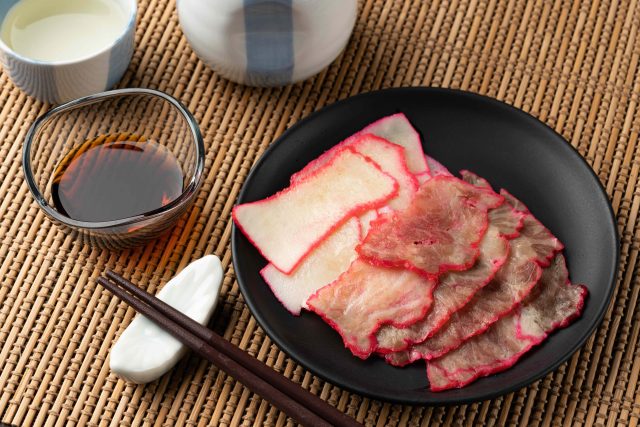
Property is usually defined and protected by fencing and branding. The farmer fences off his field and brands his animals. It is a clear breach of property-rights rules for a farmer to allow his livestock to graze in his neighbour’s field. He is harming his neighbour; he is crossing the fence. But this is precisely what happens in the disputes over whales and mackerel in Icelandic waters. Conservationists in the US want the whales to roam the sea rather than be killed by whalers. The Icelanders harvest only a fraction of the two plentiful whale stocks in Icelandic waters: marine biologists estimate that there are about 44,000 minke whales and 26,000 fin whales there. Whale sashimi (in the photo above) is delicious, but available only in Iceland, Norway, the Faroe Islands, and Japan. Marine biologists also estimate that the whales consume about 6 million tonnes of small fish, krill, and plankton, while the Icelanders harvest around one million tonnes. There is no doubt that an excessive number of whales harms fish stocks, both by the whales eating some fish and by depriving other fish of their natural feed, thus reducing the catch available to the Icelanders. In other words: American conservationists demand that the Icelanders feed ‘their’ animals. They are like the impudent farmer who wants his livestock to graze on other farmers’ fields but refuses to provide any benefits in return.
Icelanders Feeding Mackerel for EU Fishermen
Mackerel is a pelagic fish species, meaning it roams near the sea’s surface in large schools. It tastes quite good. Some decades ago, there was almost no mackerel in Icelandic waters, but as the waters warmed, it migrated from the south, and much of it can now be harvested within the 200-mile limit. However, the European Union was adamant that Icelanders should not receive a share of the total mackerel quota. The Icelanders responded by setting their own mackerel quota. The issue remains unresolved, although Iceland, the United Kingdom, Norway, and the Faroe Islands have negotiated their own quotas. The EU expects the Icelanders to feed the mackerel that it nonetheless reserves the right to harvest. Yet again, the impudent farmer turns up, whereas good fences make good neighbours.