





 Subscribe


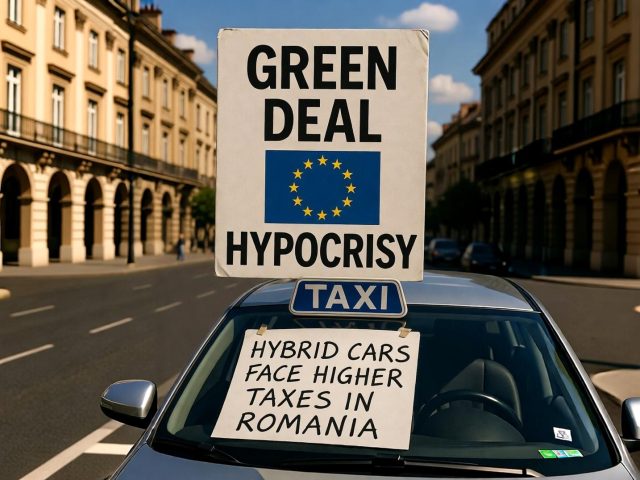
The perfect explanation for the hybrid tax is this: You’ve scrimped and saved to purchase a hybrid car, telling yourself you’re doing your part for the planet and your wallet, but you’re still not spending much on fuel. But by 2026, the Romanian government hits you with a tax bill that has risen up to 13 times your annual payment. All of a sudden, your eco-friendly ride will cost you as much in tax as the equivalent gas-guzzling petrol car. Sounds absurd, right? That’s the reality being felt by Romanian drivers at the moment, and it’s provoking outrage from experts who consider it a backward step in the battle against climate change.
Let’s break it down. For decades, hybrids got a sweet deal in Romania, paying much lower annual vehicle taxes, frequently with formula adjustments to account for lower emissions. But the rules, in other words, are reversed, starting January 1, 2026. Hybrid taxes from a new system come much closer to those of petrol and diesel cars, being essentially calculated from engine capacity, with mitigation for emissions. For low-emission plug-in hybrids (polluting 50g CO₂/km or less) there’s a small decrease by as much as 30%.
But for most full or mild hybrids (ones most people can afford), the hikes are insane. Consider a well-known hybrid SUV, an example of a very popular 2.5-liter hybrid SUV with a 2.5-liter engine. Owners of vehicles in 2025 might have paid only 70 lei (or about €14) a year. Fast-forward to 2026, and that is a stunning 992 lei (about €200) up. That’s a 13-fold jump that’ll make it neck-and-neck alongside similar petrol models.
Or think about a conventional 2.5-liter Euro 6 vehicle: A pure petrol car incurs 1,467 lei in tax today, whereas a full hybrid pays 1,438 lei little difference despite the hybrid’s better fuel efficiency and carbon footprint.
Even small hybrids are not immune: a 1.5-liter Euro 6 hybrid would face 130 lei taxation, with larger 3.0-liter hybrids nearing 2,200 lei in some cities.
These aren’t just isolated cases. They’re the new normal, impacting thousands of drivers who believed hybrids would be smart, responsible, and economical. Experts are in a rage, accusing the changes of being shortsighted and counterproductive. The Automobile Manufacturers and Importers Association (APIA), a major industry voice, has also taken exception to the new taxation standards on the grounds that it does not adequately punish the use of older, more polluting vehicles.
Rather than incentivizing green tech, the system is combining efficient hybrids with dirtier petrol cars, and could discourage sales of lower-emission alternatives. “Our requirement is a framework or a system in which modernization is actually encouraged,” a spokesperson for the APIA said in a recent appeal to the prime minister, noting the hikes could hamper Romania’s move from old fleets. Ciprian Gavriliu, tax expert at Taxhouse, echoed this frustration, slamming the government’s sweeping push for fiscal changes. In an incisive interview, he warned that “the state cannot simply add taxes (and other costs) without examining whether those taxes are fair, disproportionate or heavy.” Gavriliu says these hikes occur in the context of broader economic stresses, such as soaring fuel excises making driving more expensive.
They’re not just a burden on average families, he says, but are also a blow to emission reductions, as people may skip the hybrids in favour of less expensive-to-tax old petrol vehicles that they know everyone loves. Even Prime Minister Ilie Bolojan himself has faced criticism over the size of the increases, although he says “the increase is necessary in order to balance the national budget.”
And here’s where the overall situation becomes even more maddening: the fundamental hypocrisy in the EU’s climate aspirations. The European Union prides itself on its ambitious 2050 plans to generate net-zero emissions, including incentivizing member states, like Romania, to reduce CO₂ through greener transport. And yet in a remarkable twist, the EU has relaxed its own 2035 ban on sales of new internal combustion engines, giving e-fuels and hybrids some wiggle room to rise again, despite pushback from the industry.
It’s a textbook example of what might be described as balancing tough talk on climate with an ear to economic necessity, sort of like Romania’s tax policy, which promotes pollution-based tax and crushes hybrids bridging the chasm to full electrification. Look at it: the EU struck a badly negotiated deal at COP30, yet it ultimately pulls no punches in its own rules.
Meanwhile, Romania, a country under pressure from the EU to decarbonize, makes changes that make hybrids less attractive. Tools such as targeted carbon taxes, as the IMF says in reports on Romania’s net-zero transition, could assist, but pitfalls such as this one are likely to slow the progress.
It’s hypocritical: Brussels calls for large cuts, but at the end of the day both the EU and the national governments prefer quick fixes to genuine green incentives. This tax fiasco isn’t just a headache for drivers; it’s the culmination of deeper confusion in policy. New vehicle registrations reported battery-electrics as accounting for only 17.4% of the market share across Europe in 2025, but hybrids continue to play an essential role as a transitioning technology.
By cranking up their prices, Romania would be locking emissions higher for longer, while the EU pats itself on the back for “flexible” targets. The road to net-zero is paved with a great deal of hypocrisy.