





 Subscribe


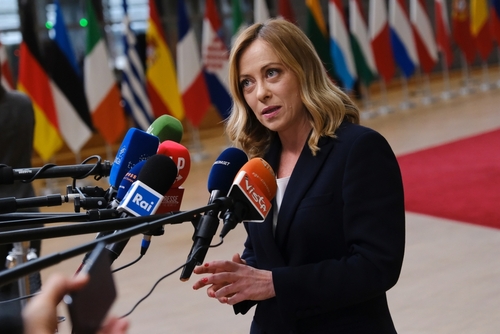
Foreign Minister Tajani Defends Participation in U.S.-Led Gaza Initiative Amid Domestic and European Criticism
Italy will participate as an observer in the first meeting of the “Board of Peace,” the initiative promoted by former U.S. President Donald Trump aimed at addressing the crisis in Gaza. The announcement was made before the Chamber of Deputies by Foreign Minister Antonio Tajani, who firmly defended the government’s decision, calling Italy’s presence both politically necessary and constitutionally coherent.
Opening his address, Tajani stressed that foreign policy should not become a battlefield for partisan divisions but rather an arena for “serious, continuous and transparent dialogue,” ideally grounded in convergence and shared responsibility. The Gaza crisis, he argued, is not a distant conflict but one with direct implications for Italy’s national interests.
According to Tajani, the situation in Gaza affects regional balances, the stability of the broader Mediterranean, and the security of commercial routes crucial to Italy’s export-driven economy. Forty percent of Italian exports transit through the Red Sea, a corridor increasingly exposed to instability. Beyond economic concerns, however, Tajani described Gaza as “an open wound” and a humanitarian tragedy that has shaken global consciences. He underlined that Italy has been on the front lines since the beginning of the crisis, working to save lives, alleviate civilian suffering, and promote a ceasefire.
The minister argued that Gaza is central to Italy’s national security, particularly in combating terrorism and irregular migration flows. For this reason, the government accepted the U.S. invitation to attend the inaugural Board meeting in Washington as an observer.
“If anyone believes there are concrete and viable alternatives today to this Plan,” Tajani said, referring to the American peace initiative, “they fail to reckon with reality.” He added that, in the presence of a clear mandate from the United Nations, fueling uncertainty would only prolong the suffering of the Palestinian people.
Tajani also framed Italy’s participation as consistent with Article 11 of the Constitution, which repudiates war as a means of resolving international disputes. “Italy’s absence from a table where peace in the Mediterranean is being discussed would be not only politically incomprehensible,” he declared, “but contrary to the letter and spirit of our Constitution.” Participation as an observer, he argued, represents a balanced solution that respects constitutional constraints while preserving Italy’s diplomatic role.
The minister emphasized that the European Union has confirmed its own participation in the meeting, represented by the rotating Presidency of the Council and a Commission delegate. Key regional actors—including Egypt, Jordan, Saudi Arabia, Qatar, and Indonesia—are also expected to attend. “How could Italy not be present,” Tajani asked rhetorically, “where peace in the Middle East is being discussed and constructed?”
Italy’s objective, he reiterated, is clear: to create the conditions for two states capable of coexisting in peace and security. Rome maintains ongoing dialogue with Israel, the Palestinian Authority, and major regional partners. Tajani pointed to Italy’s humanitarian efforts, including the “Food for Gaza” initiative, as evidence of concrete engagement.
He also condemned violence in the Holy Land, including attacks by extremist settlers against Christian communities. The Italian government has strongly opposed any hypothesis of Israeli annexation of the West Bank, warning that such moves would undermine prospects for a two-state solution.
Italy’s commitment extends beyond diplomacy. The country is involved in training Palestinian security forces and maintains personnel within the civil-military coordination center supporting humanitarian operations in Gaza. Italian Carabinieri, already active in the West Bank through the bilateral MIADIT mission, will soon begin training 50 Palestinian security officials in Jordan for deployment in Gaza.
Moreover, Italy participates in European Union missions such as European Union Police Mission for the Palestinian Territories and European Union Border Assistance Mission Rafah, where eight Carabinieri are currently stationed. The latter has played a key role in facilitating the reopening of the Rafah crossing, and Italy plans to strengthen its presence in the coming weeks.
Despite the government’s defense, the decision has sparked unified opposition criticism. The Democratic Party’s Peppe Provenzano accused Tajani of misrepresenting the European Commission’s position. Opposition forces—including the Democratic Party, Five Star Movement, and other centrist and left-wing groups—are preparing a joint resolution urging the government not to participate “in any form” and not to provide financial contributions. They argue that the Board of Peace does not conform to the principles of Article 11 of the Constitution or to international law and risks undermining the central role of the United Nations.
At the European level, the Socialists and Democrats group in the European Parliament has also expressed concerns. The group called on the European Commission to clarify the political mandate and scope of its participation, warning that the initiative could conflict with established international norms and UN-led processes.
Tajani, however, remains firm. For Italy, engagement—even as an observer—is preferable to absence. In his view, staying at the table is essential not only to defend national interests but to advance the ultimate goal: a negotiated peace that ensures security, dignity, and statehood for both Israelis and Palestinians.
Alessandro Fiorentino