





 Subscribe


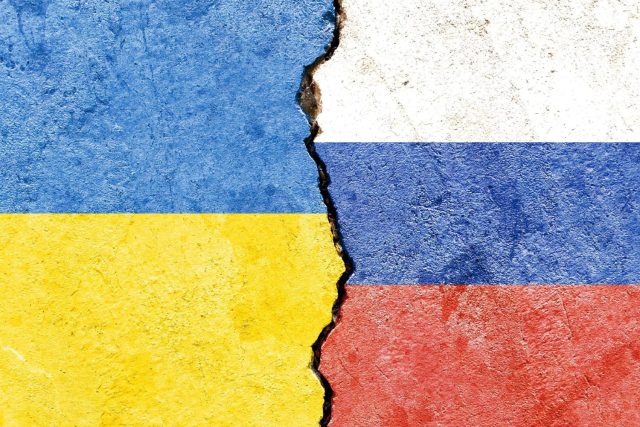
February 24 marks the fourth anniversary of the start of the Russian Federation’s large-scale invasion of Ukraine. Forty-eight months after the start of military operations, the conflict is not only unresolved, but continues to produce systematic destruction and regional instability. Moscow had conceived the Russian offensive as a rapid move aimed at conquering Kiev, overthrowing the government led by Volodymyr Zelensky, and establishing a pro-Russian government modeled on the Belarusian experience. However, these objectives were derailed by Ukrainian resistance and the political, economic, and military support provided by numerous Western countries. The expectation of a short war was thus shattered by the reality of a protracted conflict, characterized by high intensity and progressive attrition. Over the past four years, attempts at mediation, negotiations, ultimatums, and declarations of principle have repeatedly fueled expectations of a cessation of hostilities. Yet, every prospect of a solution has been systematically rejected, giving way to a spiral of violence that seems to recur cyclically without significant diplomatic progress.
MILITARY DYNAMICS AND NEGOTIATION ASYMMETRIES
The conflict today appears trapped in a dynamic stalemate: on the one hand, Ukraine has repeatedly expressed its willingness to explore negotiated solutions, despite being aware of the harshness of the potential concessions required; on the other, the Russian leadership, led by Vladimir Putin, has maintained a stance geared toward continuing military operations until maximalist objectives are achieved, rejecting proposals that do not contemplate Kiev’s substantial capitulation. Russian rhetoric has also evoked scenarios of global escalation, despite recognizing the structural limitations of such an option. Operationally, attacks against Ukrainian territory continue at an intense pace. Attack drones and missiles of various types, including ballistic missiles, continuously strike the capital and numerous regions of the country, including Dnipro, Kirovohrad, Mykolaiv, Odessa, Poltava, and Sumy. These attacks also cause civilian casualties and numerous injuries. Particularly significant have been the attacks on energy infrastructure, which are part of a strategy aimed at undermining the population’s resilience. Hundreds of thousands of people have been left without electricity and heating for weeks, in particularly harsh winter conditions, with temperatures well below freezing. The humanitarian impact of these operations accentuates the systemic nature of the war, which is not limited to clashes between armed forces, but directly affects the civilian fabric.
INTERMITTENT DIPLOMACY AND UNSUCCESSFUL SUMMITS
Over the past four years, numerous diplomatic attempts have taken place in key international forums. Each of these meetings has raised expectations of a breakthrough, but has ended without concrete results. The possibility of a direct confrontation between Zelensky and Putin has been raised several times, but has never materialized into an actual bilateral summit. A new trilateral meeting promoted by the United States is currently being considered, as part of a strategy aimed at fostering dialogue, which, however, appears extremely complex. The US administration has hinted that a face-to-face meeting between the two leaders would only occur if guarantees were given regarding the possibility of achieving tangible results. In this context, Donald Trump is perceived by some observers as potentially crucial in accelerating the negotiation process, should a strong and decisive external intervention emerge. However, at present, no evidence is emerging that suggests a precise or imminent solution, despite the proliferation of summits and promises of further meetings.
THE CONFLICT IN THE FRAMEWORK OF EURO-ATLANTIC TENSIONS
The war between Russia and Ukraine is not an isolated event, but is part of a broader and more complex geopolitical landscape that encompasses the entire Euro-Atlantic space. In particular, the United States appears to be oriented toward reducing its direct involvement in European affairs, including with a view to reviewing its role within NATO. This trend is linked to a more general recalibration of American strategic priorities, with growing attention to other global theaters.
This evolution forces the European Union and its member states to rethink their defense and security doctrines. The prospect of a reduced US commitment requires a reflection on their autonomous deterrent capacity and a redefinition of transatlantic relations, including with a view to containing Russia. The Ukrainian conflict, therefore, is acting as a catalyst for structural transformations in Western economic balances, calling for a strengthening of common defense policies and greater strategic cohesion.
A WAR WITHOUT A SOLUTION ON THE HORIZON
Four years after the outbreak of hostilities, the conflict between Russia and Ukraine continues to produce devastating human, material, and geopolitical effects. Despite intensified diplomatic initiatives and the announcement of new summits, no definitive solution is in sight. Military operations continue vigorously, while the civilian population bears the brunt of targeted attacks on essential infrastructure. At the same time, uncertainty about the future of US engagement in Europe accentuates the complexity of the scenario, requiring a review of Euro-Atlantic strategies. Without a decisive and shared intervention, the conflict risks perpetuating itself, consolidating a phase of instability destined to have a long-lasting impact on international affairs.