





 Subscribe


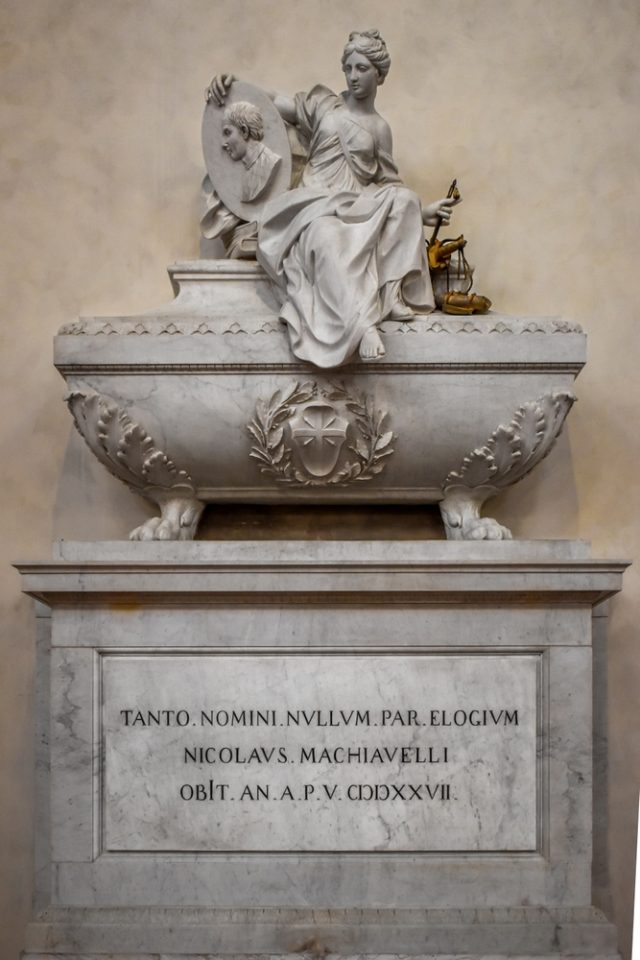
Quite often lately, I’ve been revisiting passages from Niccolò Machiavelli’s seminal work, “The Prince”, whose teachings have endured for more than five hundred years. Whenever I’m looking for an answer or an explanation regarding the motives behind a decision or the causes of human behavior, I turn to this book. And this happens on a regular basis. When I first read “The Prince” many years ago, I did not realize how accurate and timeless it is. Now, I have no doubt.
Today’s world is no different from the one that the former secretary of the Florentine Republic had known and had so lucidly observed. Feelings, impulses, and ambitions are no different today than they were five centuries ago. Human nature has always been the same, and the desire to seize power or achieve greatness is as strong today as it has ever been.
One of the great dilemmas facing leaders throughout history finds its answer in these pages. Is it better to be loved than feared, or rather to be feared than loved? It is a fundamental question that has echoed for millennia, long before Machiavelli devoted an entire chapter to it in his book. No matter how much we might wish the answer were different, we will always arrive at the same conclusion as Machiavelli: “It is better to be feared than loved,” if you cannot be both.
The first example the author gives is that of Cesare Borgia, the son of Pope Alexander VI, the formidable duke who had established order and unity in the cities he conquered—a ruler who was feared and respected for his exceptional actions and achievements. It will always be preferable to have a reputation as a cruel man rather than as an indulgent one, when it can bring peace and prevent chaos, Machiavelli argues. The legendary general Hannibal enjoyed precisely this reputation, and his cruelty ensured that his vast armies did not fall prey to anarchy.
The Duke of Romagna enjoyed the same notoriety at the end of the 15th century and the beginning of the 16th, when Italian cities fell at his feet and the ideal of a unified Italy took root in the mind of the Florentine ambassador who was briefly at his court. And the Carthaginian commander, in the 2nd and 3rd centuries B.C., and the Roman commander, seventeen centuries later, inspired fear and great admiration. But Machiavelli does not speak only of being feared or loved.
In the 16th century, today, and at any time in history, a prince must act with wisdom, moderation, and prudence, even with indulgence when the situation demands it. These are traits with which idealists would certainly agree. And when he cannot count on the love of those he leads, he must at all costs avoid being hated or despised by them.
This would, in Machiavelli’s view, be the situation closest to the ideal: to be feared and not hated, when one cannot be both loved and feared. For history has shown, more than once, that only such virtues can restore order where it is lacking, and bring harmony where there is turmoil.
More than five centuries have passed since that “small gift” was presented by the former Florentine secretary to the young Lorenzo di Piero de’ Medici—a short treatise that was intended to educate him in the art of governing and preserving power. It is less relevant that this Medici ruled for only a short time, too brief to master the skill of being feared. From the time of its writing to the present day, “The Prince” has been the guide for countless leaders—political, economic, or military. Anyone who wants to understand any of what is happening would do well to read its chapters. Machiavelli was right about everything.