





 Subscribe


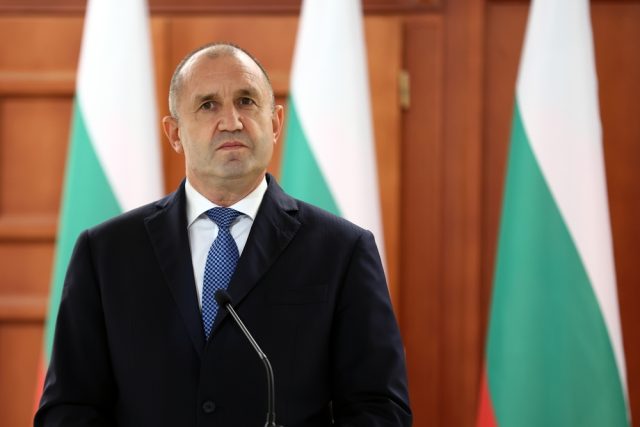
After five years of turmoil, uncertainty, and political instability, it seems that there is light at the end of the tunnel in Bulgaria. At least, in terms of what we generally refer to as political stability. A new political force, led by one of the most prominent figures in the political establishment, will form the new government in Sofia.
On April 19, 2026, a newly formed coalition of three left-wing populist parties, which had formally become the Progressive Bulgaria Party just two days before election day—won the Bulgarian snap general election by a landslide, securing 44% of the popular vote.
This electoral triumph, which secured 131 seats (out of a total of 240) in the National Assembly, came as a surprise given its extent, with the outcome exceeding sociologists’ predictions and analysts’ expectations. Far behind Progressive Bulgaria, the GERB-SDS coalition of former Prime Minister Boyko Borisov, We Continue the Change – Democratic Bulgaria (PP-DB), the Movement for Rights and Freedoms (DPS), and Revival were left to share the remaining 109 seats in the unicameral Parliament in Sofia.
So what is the explanation for this spectacular rise and huge victory of a newly founded party? There is only one answer: Rumen Radev and his winning strategy. It is undeniable: the personal factor played a crucial role, with the success of Progressive Bulgaria being, in fact, the success of a single man, the party’s leader.
Exactly three months after his January 19 speech, in which he announced he would be stepping down from the presidency he had held since 2017, Rumen Radev, a former Air Force officer and one of the leading figures on Bulgaria’s political scene in recent years, crushed his opponents in the elections and turned the entire political landscape in Sofia upside down at a time when there was no end in sight to the crisis. Perhaps yet another proof that political life constantly takes on the most complex and unpredictable forms.
In early March, Radev announced that he intended to run at the helm of a new coalition in the upcoming parliamentary election—the eighth in the last five years. His plan to remain at the forefront of Bulgarian politics had become clearer as early as January, when the announcement of his resignation from the presidency—mostly ceremonial role in the Bulgarian political system—coincided with another message regarding the efforts he will make to “change Bulgaria, defend democracy, reaffirm the rule of law, and accelerate economic growth.”
Radev’s strategy was flawless; in just a few weeks, he went from being a resigning president to the leader of the strongest parliamentary party and future prime minister. In record time, he transformed his electoral vehicle into a true catch-all party, which secured a comfortable parliamentary majority on its own, at a time when such an outcome seemed nearly impossible.
Some have attributed Radev’s victory to his powerful anti-corruption message (a highly sensitive issue in Bulgaria), while others credit his brilliant political game. What is certain is that he roused Bulgarian society from its “apathy,” with voter turnout reaching nearly 50%—11 percentage points higher than in the previous election in October 2024. His strategy proved all the more effective as he managed to attract voters from across the political spectrum—from left to right, practically everywhere—convincing not only the traditional left-wing electorate, with the Socialist Party failing to pass the electoral threshold—an unprecedented situation—as well as conservative and moderate-conservative voters, namely GERB-SDS and Revival, who lost no less 48 seats in the new parliament.
Rumen Radev has shown that after nine years at the helm of the state, he is far from having had his final say in top-level Bulgarian politics. As he promised back in January, “the wave cannot be stopped.”
In the past twenty-five years, no other Bulgarian party has won a general election with such a strong result. The last time a political party won with more than 40% of the vote was in June 2021. At that time, the National Movement for Stability and Progress (NDSV), founded just three months before the election, won nearly 43% of the vote. Following this election, Simeon of Saxe-Coburg-Gotha became Prime Minister of Bulgaria, a position he held for four years.
Twenty-five years after the resounding victory of the National Movement Simeon II, Progressive Bulgaria has secured another decisive win. Will there be four years with Radev at the helm of the government? Everything seems to point in that direction.