





 Subscribe


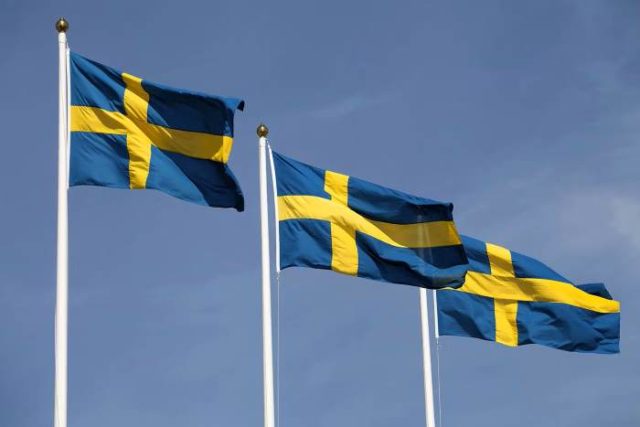
For the past ten years, conservatism has been on the rise again in Sweden. For a long time the country in the north was one of Europe’s most progressive nations. The Swedish Social Democrats ruled the country continuously between 1946 and 1976. Over the past 40 years, the left and the right have alternated in power. But when the right has ruled, it has never seriously challenged the Swedish social democracy for power over either politics or ideology.
But now something has happened. Since 2022, Sweden has had a government with a clear right-wing agenda. Three parties from the old traditional center-right have been in government and a new right-wing party has been involved in supporting the government and shaping the government’s policy, even though the party has formally been outside the government.
And it is not just a liberal right that is ruling Sweden this time, but also a conservative and nationalist one. This autumn, Swedes will be able to vote again. It is far from certain that the right will remain in power. The left-wing opposition is leading in the opinion polls.
But even if the left were to win, most agree that the united left will not tear up all the policies that the current right-wing government has put in place. The winds have simply turned in Swedish society. More people are realizing that the time when Sweden could allow itself unregulated immigration is over. The time when Sweden, somewhat self-absorbed, could believe that it would lead the global effort against climate change by having the world’s highest fuel prices is also over. Sweden has simply become somewhat more conservative.
In the purely political sphere, it is the Sweden Democrats party that has driven the conservative wave. From the 1990s onwards, the established right-wing parties had completely embraced neoliberalism. The right-wing government that governed Sweden between 2006 and 2014 did indeed lower taxes for most workers, but it also pushed – in collaboration with the small Green Party – for the liberalization of immigration. And it was not just about well-regulated labor immigration, but about borderless immigration whose scope was never really questioned.
But now, in 2026, much has changed. All major Swedish parties, including the Social Democrats, agree that immigration must be controlled and limited. They also agree that climate and emissions policy must be pursued in a way that does not make life unbearably expensive for ordinary citizens. The parties also agree that Sweden needs a significantly tougher legal policy. Penalties are now being increased, the police are being given new tools and criminals from other countries are being deported significantly faster than before.
It would be presumptuous to say that conservatism has won. But that it has currently had a decisive impact on important social issues is indisputable.
Therefore, it is also valuable that the history of contemporary Swedish conservatism has already begun to be written.
It is the writer Carl Eos who, in an easy-to-read and very comprehensive and informative book – “The Lost Paradise – the return of conservatism in Sweden” – recounts how conservatism became relevant again after the previously dominant left failed with its utopian-tinged social projects (and the last was perhaps the overambitious climate policy). He also describes how the Sweden Democrats party went from being a more purely immigration-critical protest party to taking the form of a broader social conservative party for which not only issues of immigration and national unity were relevant but also issues such as law and order, views on culture, architecture, history, the family, education, civil society and much more.
Carl Eos also believes that a decisive step was taken when the party chose to embrace an Anglo-Saxon conservatism with pronounced roots in the Judeo-Christian tradition and with a positive view of NATO and Israel. This made it less complicated for the traditional right-wing parties to cooperate with the Sweden Democrats and make the party part of the Swedish social establishment. Of course, these ideological choices have created a certain amount of resistance among some old sympathizers who were involved when the party was a small protest party on the fringe. But despite its reorientation, the party has not declined in the opinion polls even when it has been involved and taken responsibility for the government’s policy.
And even if the right were to lose the election in September, the new conservative right under the leadership of the Sweden Democrats has shifted the debate and laid the foundation for even more significant advocacy work later on. The advantage of democracy is, as we know, that there is always an election coming up soon.