





 Subscribe


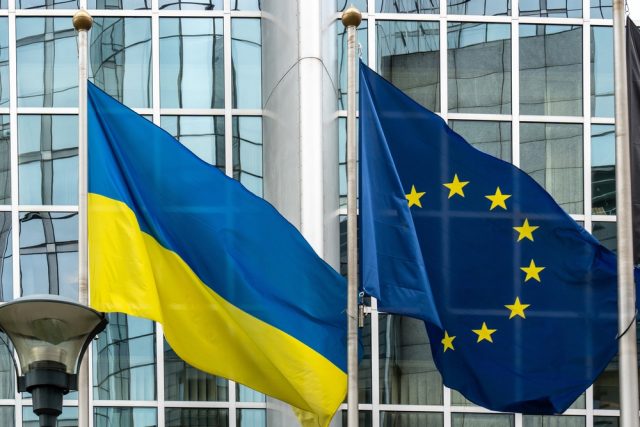
Brussels advances its 20th sanctions package and unlocks €90 billion for Ukraine, reinforcing unity and energy independence
The European Union has taken a decisive step in its response to Russia’s war in Ukraine, approving a new and far-reaching sanctions package while simultaneously unlocking a €90 billion financial support mechanism for Kyiv. The twin decisions, reached in Brussels after weeks of political deadlock, mark a significant moment for the EU—one that underscores its determination to act collectively, strengthen its geopolitical role, and accelerate its path toward energy independence.
At the heart of this development lies the work of the Coreper, the committee of permanent representatives that prepares the decisions of the EU Council. It was here that the final breakthrough occurred, after Hungary lifted its veto, which had previously stalled both the sanctions package and the financial aid over disputes linked to the Druzhba oil pipeline. With the impasse resolved, the measures are set to be formally adopted through a written procedure, signaling broad consensus among member states.
The newly approved sanctions—now the twentieth package since the start of the conflict—aim to intensify pressure on Moscow across multiple fronts. Energy remains a central focus. The EU is introducing additional restrictions on oil and gas, alongside targeted measures against the so-called “shadow fleet” of tankers used to bypass existing sanctions. These vessels, often operating under opaque ownership structures, have allowed Russian exports to continue flowing despite earlier restrictions. By tightening access to European ports and limiting maritime services tied to Russian crude, Brussels is seeking to close these loopholes and reinforce the effectiveness of its sanctions regime.
Financial and technological sectors are also under scrutiny. The package expands sanctions on banks and financial services, including new constraints on cryptocurrency-related activities that could be used to evade controls. At the same time, the EU is strengthening its anti-circumvention mechanisms, extending oversight to third countries and intermediaries that might facilitate indirect trade with Russia. This broader scope reflects a more sophisticated approach—one that acknowledges the complexity of global supply chains and aims to address vulnerabilities in enforcement.
On the industrial front, the EU is widening its restrictions on strategic goods, including metals, chemicals, and advanced components linked to military production. Particular attention is being paid to Russia’s defense-industrial base, with measures targeting the production of drones and other technologies critical to the war effort. In parallel, the list of sanctioned individuals and entities has been expanded, introducing additional asset freezes and travel bans designed to isolate key actors within Russia’s political and economic system.
Beyond sanctions, the approval of a €90 billion loan facility for Ukraine represents a powerful demonstration of European solidarity. This financial support is intended to sustain Kyiv’s economy, ensure the functioning of essential public services, and reinforce the country’s resilience in the face of ongoing aggression. It also signals the EU’s long-term commitment to Ukraine’s stability and its broader integration into the European framework.
Energy policy remains a cornerstone of the EU’s strategic response. As Dan Jorgensen has made clear, the objective is unequivocal: to eliminate dependence on Russian energy altogether. “We will not import a single molecule of Russian energy in the future,” he stated, emphasizing that Moscow’s use of energy as a geopolitical tool has fundamentally altered Europe’s approach. This commitment is backed by legislation already in force and by coordinated efforts among member states to diversify supply, build strategic reserves, and invest in alternative energy sources.
The reference to the broader geopolitical context—particularly the instability linked to tensions in the Gulf—further highlights the EU’s awareness of global energy risks. In response, Brussels is prioritizing coordination and preparedness, ensuring that member states can withstand potential supply disruptions while maintaining economic stability.
What emerges from these developments is a picture of a European Union that, despite internal differences, is increasingly capable of acting with unity and purpose. The resolution of Hungary’s veto demonstrates the strength of institutional mechanisms like Coreper, which enable compromise and progress even in complex political environments. More importantly, it reinforces the credibility of the EU as a geopolitical actor—one that can combine economic power, regulatory influence, and political will to address major international challenges.
In conclusion, the approval of the 20th sanctions package and the €90 billion loan to Ukraine marks a new phase in the EU’s response to the crisis. It is a phase defined not only by pressure on Russia, but also by resilience, coordination, and strategic vision. As the Union continues to reduce its energy dependence and strengthen its internal cohesion, it is positioning itself as a more autonomous and influential force on the global stage.
Alessandro Fiorentino