





 Subscribe


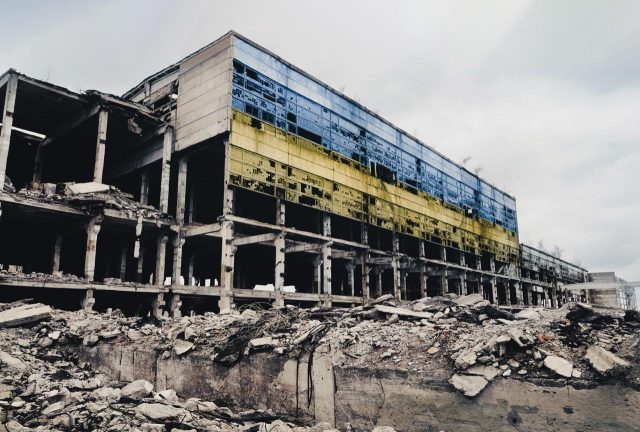
For decades, Europe believed it had escaped history. The European project that emerged after 1945 — and accelerated after the fall of the Berlin Wall — was built on a profoundly optimistic assumption: that economics could replace geopolitics, that interdependence would make conflict obsolete, and that prosperity alone could guarantee peace. The European Union itself became the institutional embodiment of this vision: a post-national order founded less on power than on law, regulation, trade, and consensus. But history has returned to Europe with extraordinary violence. On April 23, the European Union officially approved a €90 billion loan package for Ukraine alongside its twentieth sanctions package against Russia. At first glance, it may appear to be yet another technical decision made in Brussels. In reality, it represents something much deeper: a sign that Europe is changing its political nature.
To understand the significance of this decision, one must look beyond the number itself. The €90 billion plan is one of the largest financial programs ever approved by the EU in the context of an ongoing war. This is not merely economic assistance. It is geopolitical infrastructure. Brussels will directly finance Ukraine’s economic and military survival for the 2026–2027 period through common European debt issued on international markets. The very structure of the package reveals Europe’s transformation.
Roughly €30 billion will be allocated to macroeconomic support for the Ukrainian state: public salaries, essential services, financial stability, and the functioning of government institutions. But the most significant component concerns defense: approximately €60 billion will strengthen Ukraine’s military and industrial capacity, including the production and procurement of weapons systems. This is where the true historical shift emerges. For decades, the European Union imagined itself primarily as a “normative power” — an actor capable of shaping the world through regulations, trade, legal standards, and multilateral diplomacy. Military force belonged to others: to the United States through NATO or to individual nation-states. Brussels spoke the language of markets; geopolitics seemed like a relic of the past. Not anymore.
With this package, the EU is not simply assisting a neighboring country. It is financing a continental war. It is planning military production, energy security, industrial resilience, and long-term strategic coordination. In other words, it is beginning to behave like a genuine geopolitical power. The scale of this transformation is enormous because it strikes at the very core of Europe’s postwar identity. After 1989, many Europeans convinced themselves that the continent had entered a “post-historical” era. Major interstate wars seemed impossible. Borders appeared settled. National sovereignty was gradually being replaced by economic integration, technocratic governance, and globalization.
Europe could afford this illusion because it lived within an exceptionally favorable geopolitical arrangement. Security was guaranteed by the United States. Cheap energy came from Russia. Affordable manufacturing came from China. For thirty years, the continent prospered without truly needing to think in terms of power. Now all three pillars are collapsing simultaneously. The American strategic umbrella is no longer perceived as eternal. Washington’s attention is increasingly shifting toward the Indo-Pacific and competition with Beijing. Russia has transformed from energy partner into existential threat. Dependence on Chinese industrial supply chains is now widely regarded as a strategic vulnerability. The war in Ukraine merely accelerated an awakening that had already begun.
The End of the Peace Dividend
For more than three decades, Europe benefited from what political economists called the “peace dividend.” After the collapse of the Soviet Union, European governments drastically reduced military spending and redirected enormous resources toward welfare systems, infrastructure, consumption, and social programs. The logic seemed rational at the time. If large-scale war in Europe had become impossible, why maintain expensive armies? Why invest in defense industries when globalization appeared capable of guaranteeing prosperity and stability? Across the continent, military budgets shrank. Conscription disappeared in many countries. Strategic industries were neglected or outsourced. European societies became accustomed to the idea that security was permanent and essentially cost-free. In reality, Europe was not transcending power politics. It was simply outsourcing them.
The continent built generous welfare states under the protection of American military power. NATO guaranteed deterrence while European governments increasingly prioritized domestic spending over strategic capability. Defense became psychologically distant from everyday political life. The result was a Europe extraordinarily prosperous but strategically fragile.
This fragility is now becoming visible. The war in Ukraine exposed the limits of Europe’s military stockpiles, the weakness of its defense production chains, and the degree to which many European states had lost the industrial capacity necessary to sustain long-term conflict. The return of war therefore marks not only a geopolitical crisis, but the end of an entire economic and political model. Europe is discovering that the “peace dividend” was historically exceptional, not permanent.
And this realization is reshaping the continent at extraordinary speed. This is why the €90 billion loan matters far beyond Kyiv. The fund will be financed through European debt issued on international markets and backed by the EU budget itself. This means Brussels is now using instruments traditionally associated with sovereign states: common borrowing, strategic planning, industrial coordination, and shared military priorities. It is a historic transition.
For years, the European debate revolved almost exclusively around economic indicators, regulations, and financial governance. Today, European leaders openly speak the language of:
- deterrence,
- strategic autonomy,
- defense industries,
- energy security,
- infrastructure protection,
- geopolitical resilience.
Even Germany — long the symbol of postwar European pacifism — has accepted rearmament as a historical necessity. Poland is building one of the continent’s largest armed forces. Countries that spent years reducing military budgets are now investing heavily in defense once again. Europe is relearning the language of power. And here lies one of the great ironies of contemporary history.
The European Union was created precisely to overcome the logic of power politics that devastated the continent during the twentieth century. Its moral legitimacy rested on the belief that trade, integration, and interdependence could permanently neutralize nationalism and geopolitical rivalry. Yet today, the survival of the European order itself may depend on rediscovering the very concepts it once tried to transcend. This does not mean Europe is returning to the nationalist conflicts of the past. But it does mean Europeans are rediscovering an ancient political truth: peace does not sustain itself.
Stability requires strength. Borders require protection. Economic prosperity depends on security. And civilizations incapable of defending themselves inevitably become dependent on those who can. In many ways, Europe’s conservative movement has understood this transformation faster than much of the traditional liberal establishment.
The new European right no longer speaks only about cultural identity or immigration. Increasingly, conservative language revolves around:
- sovereignty,
- energy independence,
- industrial capacity,
- security,
- demographics,
- strategic autonomy.
This is also why many European conservatives have distanced themselves from the naïveté of hyper-globalization. The belief that markets alone could dissolve geopolitical tensions proved catastrophically false. Trade did not liberalize Russia. Economic interdependence did not moderate China. Open borders did not eliminate social fragmentation. On the contrary, Europe discovered that excessive dependence can itself become a vulnerability.
From Globalization to Strategic Sovereignty
One of the most significant consequences of the war in Ukraine is the transformation of Europe’s economic philosophy itself. For decades, the European model was built around efficiency. Supply chains were organized according to cost reduction, production was outsourced globally, and strategic dependence was considered economically rational. The dominant assumption was that globalization would create mutual interests strong enough to discourage geopolitical conflict. That assumption is collapsing. Today, European governments increasingly speak not about efficiency, but about resilience. The political vocabulary of the continent is changing rapidly:
- reshoring,
- strategic autonomy,
- industrial sovereignty,
- supply-chain security,
- critical infrastructure protection.
The shift is profound because it marks the return of the state into areas of the economy long left to market logic alone. Defense industries are expanding across Europe. Ammunition production is increasing. Governments are coordinating industrial strategies in sectors once considered purely commercial. Energy policy is now discussed in geopolitical rather than environmental terms. Economic interdependence itself is increasingly viewed through the lens of national security. In this sense, the war in Ukraine is accelerating the end of the purely neoliberal phase of European globalization. Europe is moving from the logic of efficiency to the logic of resilience.
This does not mean the continent is abandoning free markets or international trade. But it does mean Europeans are rediscovering something previous generations understood instinctively: economics and geopolitics cannot be separated indefinitely. Industrial capacity is power. Energy independence is power. Technological sovereignty is power.
And power, once again, has become central to European politics. The €90 billion package therefore represents far more than assistance to Ukraine. It symbolizes a continent abandoning the postmodern illusion that history could be replaced by technical administration. For years, many European elites spoke as though politics had become little more than a problem of governance. Strategic thinking atrophied. Questions of identity, sovereignty, and power were treated as remnants of a darker past. War shattered that illusion.
Europeans are once again confronting fundamental questions: what is worth defending? How much dependence on external powers is acceptable? Can a civilization survive without the willingness to protect itself? These are not merely military questions. They are civilizational ones. And this is the central point of Europe’s transformation. The European Union, created to transcend geopolitics, is now being reshaped by geopolitics itself. The continent that once imagined itself as history’s first post-sovereign order is rediscovering the permanent reality of power. History, it turns out, never truly disappeared. Europe simply stopped looking at it.