





 Subscribe


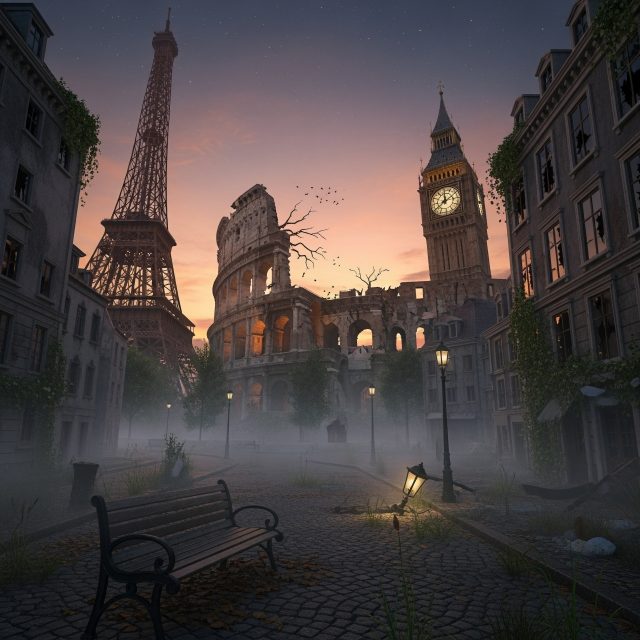
Europe is at a crossroads. Will she become an open market or a closed state? The European Union was established in 1957 for two reasons: the certainty that the member states would benefit from the division of labour and free trade among them, and the hope that they would draw closer to one another over time. The economic integration of Europe, taking place from 1957 to 1993, was a resounding success. But then the European Union decided on another course: to pursue political integration, a euphemism for centralisation. The goal became to turn the customs union into a federal state. Will she continue on that course, or is there a chance she will retreat to a looser union, somewhat like the Nordic Council, where the economic and legal integration of the Nordic countries has been gradual and spontaneous, with a minimal surrender of sovereignty?
Iceland at a Crossroads
Iceland is also at a crossroads now. Should she join the EU or remain, with Norway and Liechtenstein, in the EEA, the European Economic Area? The Icelandic government has unexpectedly called a referendum on this in August this year. (The referendum is formally about whether Iceland should resume the adjustment process for membership, begun in 2009, and halted in 2015, but of course it is really about EU membership.) On behalf of RSE, the Icelandic Centre for Social and Economic Research, and the Austrian Economics Center, I organised a seminar in Reykjavík on these topics, Europe and Iceland, with four foreign experts on 13 May 2026.
The West in Decline?
Max Rangeley, Director of the Cobden Centre in London, wondered whether Western civilisation was in decline. He recalled many past theories of the rise and fall of civilisations, by Ibn Khaldun, Arnold Toynbee, Oswald Spengler and others, and pointed out some similarities and differences between the West over the last 50–100 years and the descriptions of decline in those theories. The only way out of economic stagnation and decline, Rangeley said, was an open economy where the tax system did not discourage innovation.
The EU a Shrinking Ship
Dr. Daniel Mitchell, who has worked as a specialist on taxation at many American think tanks, suggested that Europe’s problem was not only that she was a sinking ship, but also that she was a shrinking ship. His graphs showed that the EU’s share of global output had declined dramatically. Moreover, the EU faced a demographic crisis. More and more people were reaching pension age, while fewer and fewer people were working and creating value. In many member countries, pension obligations were unfunded. It might be sensible for the poor countries of Southeastern Europe to join the EU, Mitchell claimed, but a simple cost-and-benefit analysis for Iceland showed that it had nothing to gain from membership.
Institutions and Policies Matter
Professor Sasa Randjelovic of Belgrade University presented a study of 25 post-socialist economies that had done differently. Why did some grow faster than others? Because of good luck, or good policies? The conclusion was that policies were much more important than luck (such as natural resources or global trends). Among the policies, fiscal policy and institutions proved to be the most important. Randjelovic compared the EU-27, China, and the US to Iceland on four variables: tax revenue, fiscal balance, public debt, and quality of institutions. Iceland performed better than the EU on all four.
Security Concerns
Dr. Anton Bendarzsevszkij, Director of the Oeconomus Research Institute in Budapest, discussed the tension between an open market and security concerns. He pointed out that the international order in which the US undertook to defend the West might be disintegrating. Two or three blocs could be emerging. He himself thought that the most sensible way forward was, nevertheless, to maintain and strengthen NATO, with a greater commitment from Europe.
Many distinguished Icelanders attended the seminar, including former Prime Minister Geir H. Haarde, entrepreneurs Magnús Gunnarsson, Kjartan Gunnarsson, and Frosti Sigurjónsson, and professors emeriti Ragnar Árnason and Thor Whitehead. Economist Erna Bjarnadóttir made a few concluding remarks, after which RSE held a reception.