





 Subscribe


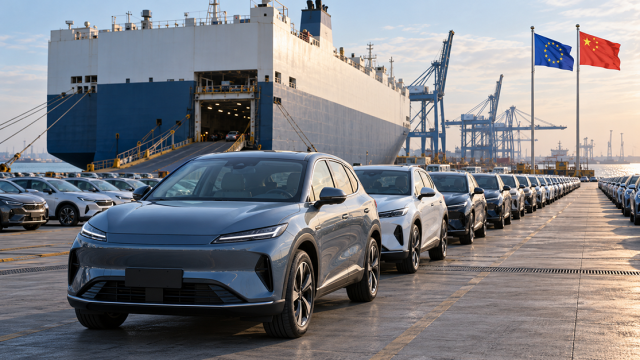
Beijing talks deliver an understanding on hybrids, market access and export licences, with implementation still crucial
Europe and China have moved towards easing a sensitive trade dispute, reaching an understanding that links hybrid vehicle exports with European access to the Chinese market and supplies of rare earths and permanent magnets. Announced after negotiations in Beijing, the package offers a possible route towards a more balanced relationship, although its practical details remain limited.
European Trade Commissioner Maroš Šefčovič presented the outcome following talks with Chinese Commerce Minister Wang Wentao. For Brussels, the priority was to turn consultations into measurable results. The agreement on hybrids, he said, opened the prospect of reducing Chinese exports to the European Union by more than half.
That prospect is significant, but it should not be confused with a reduction already achieved. The information released does not establish a detailed timetable, a public monitoring framework or the precise mechanism through which shipments would fall. The distinction between an announced understanding and its eventual commercial effects will matter to manufacturers and importers alike.
China’s account described the hybrid vehicle understanding as consistent with World Trade Organization rules, without explaining how it would operate. Brussels had sought a voluntary reduction in Chinese hybrid exports. The emphasis on international trade rules therefore accompanies a central unresolved question: how the two sides will translate their political agreement into workable arrangements.
The negotiations took place against a broader backdrop of European concern about trade imbalances and industrial competition. Reporting ahead of the visit highlighted anxiety in Brussels about rising Chinese exports and possible consequences for European employment. The hybrid discussions were consequently part of a wider effort to secure concrete movement in bilateral economic relations. (Associated Press)
For Europe’s automotive industry, the outcome could influence competitive conditions in an important market. However, the announcement alone provides no basis for predicting changes in vehicle prices, consumer demand or individual manufacturers’ sales. Those effects would depend on the agreement’s scope, implementation and the responses of companies operating on both sides.
Market access formed another part of the understanding. This matters because rebalancing trade involves more than managing goods entering Europe: it also requires opportunities for European companies selling into China. The supplied announcement signals progress on that objective, but does not identify which sectors will benefit or what specific barriers will be addressed.
Rare earths and permanent magnets bring a different industrial concern into the same negotiation. Here, the issue is the approval of Chinese export licences for shipments to Europe. Beijing indicated that it was willing to continue facilitating approvals, according to reporting on the Chinese statement. That points towards administrative cooperation, rather than an announced abolition of licensing requirements. (South China Morning Post)
The difference is commercially important. Faster or more predictable approvals could help businesses organise procurement, but a commitment to facilitate licences does not automatically guarantee unrestricted supply. Companies will need to assess what the arrangement delivers in practice, including whether applications move more smoothly and whether deliveries become easier to plan.
By bringing vehicles, market access and export approvals into one diplomatic package, the talks addressed several sources of friction at once. Yet the public information does not establish that concessions in one area were formally conditional on measures in another. Treating the understanding as a detailed, fully disclosed bargain would go beyond what has been announced.
Šefčovič characterised the outcome as a beginning, welcoming Wang’s commitment to work with the EU on balancing trade relations. That assessment captures both the opportunity and the limits of the Beijing talks: political willingness has produced an initial result, while substantial work remains.
The next test will be implementation. Lower hybrid shipments, clearer opportunities in China and more reliable licensing would give substance to the announcement. Until then, the agreement represents an opening for sustained cooperation whose value will ultimately be measured through actual trade flows.
Alessandro Fiorentino