


 Subscribe


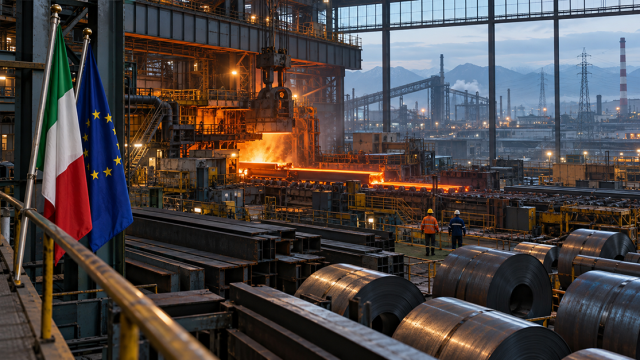
Addressing business leaders in Milan, Italy’s prime minister calls for changes to carbon trading, greater fiscal flexibility and tax support for cloud software investment.
Italy’s industrial future depends on decisions made far beyond its factory gates. That was the central argument Giorgia Meloni brought to business leaders in Milan, where she linked energy prices, European budget rules and artificial intelligence to a broader demand: economic policy must give companies room to compete.
Addressing Assolombarda’s assembly, the prime minister presented Italy as a committed European partner prepared to challenge policies it considers damaging. As a founding member of the European project, she argued, Italy has both the standing and the responsibility to speak up when the system fails to deliver.
Her sharpest criticism concerned the EU Emissions Trading System, or ETS. Meloni said the scheme increases energy costs, creates disparities among member states and puts European manufacturers at a disadvantage against competitors operating under less demanding environmental requirements.
She illustrated the problem through the example of a steelworks closing in Lombardy. If its output is replaced by imports from countries with lower environmental standards, she argued, Italy loses employment and industrial supply chains while the world gains no reduction in emissions. In her account, that outcome undermines both climate ambitions and economic security.
For Meloni, strategic autonomy therefore requires a physical industrial base: steelworks, foundries and chemical plants. Protecting that capacity means pursuing lasting energy solutions, alongside negotiations in Brussels that she acknowledged would be difficult. Remaining dependent on emergency responses, she warned, would leave businesses exposed to successive shocks.
The same international pressures underpin her call for greater flexibility in European fiscal rules. Meloni cited the crisis in Iran, the closure of the Strait of Hormuz and instability in the Red Sea as forces driving up energy, raw material and transport costs.
According to the prime minister, these developments fuel inflation that national governments cannot control but must nevertheless absorb. Families face higher prices, manufacturers face rising costs, and public finances come under additional strain.
Italy’s budget planning, she said, had assumed inflation of 1.8 percent. With inflation now higher, spending automatically linked to prices by law rises without ministers approving any new policy. Those additional billions still count against European spending limits, reducing the resources available for investment, businesses and growth.
Meloni said Economy Minister Giancarlo Giorgetti had raised the issue at Ecofin and that she would bring it personally to the European Council. She framed the proposed flexibility as a practical response to external shocks.
Her assessment of Italy’s economy combined encouragement with caution. Growth in 2026 could reach 1 percent, she said, matching major European economies and exceeding forecasts. Although expansion remained too weak, she argued that the economy had withstood exceptionally difficult conditions.
She credited companies and their employees for that resilience, describing business initiative as a major source of Italy’s international reputation. The state, in her view, should support industry as a partner, helping firms turn ambition into investment and production.
That approach also shaped her announcement on technology. Meloni said she and Giorgetti were preparing a tax measure for the budget law to encourage investment in software accessed through cloud contracts. She presented it as a further step following the €1 billion in investment made available under Italy’s national AI law for businesses developing artificial intelligence, cybersecurity and enabling technologies.
Alongside support for adoption, she called for urgent global governance of AI, recalling Italy’s decision to make the subject central to its G7 presidency and to involve Pope Francis in the discussion.
Her message on Europe’s next long-term budget followed the same industrial logic. Italy supports funding new priorities, including competitiveness, she said, but opposes financing them through cuts to cohesion or agricultural policy.
Those programmes, she argued, provide foundations for competitiveness rather than competing with it. Food production, in particular, represents an existing source of European autonomy. Across energy, public spending and technology, Meloni’s appeal was consistent: Europe’s ambitions must be matched by policies that sustain the productive capacity needed to achieve them in the years ahead.
Alessandro Fiorentino