





 Subscribe


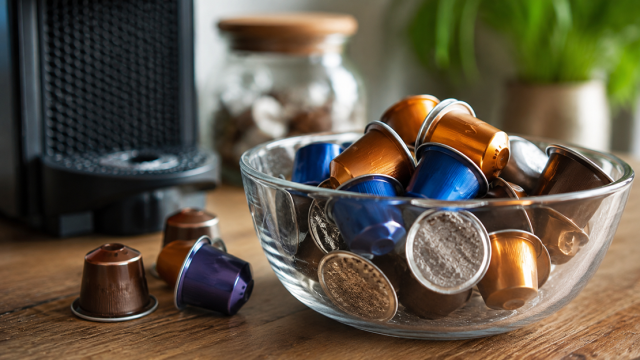
The Packaging and Packaging Waste Regulation introduces common recycling rules across all 27 member states, making disposal simpler for consumers and turning millions of single-dose coffee capsules into potentially valuable resources
BRUSSELS — A small object used every morning in millions of European homes is about to become part of a much bigger transformation in the way the European Union manages waste. From 12 August, single-dose coffee capsules made of aluminium or plastic will officially be considered “packaging” under the EU’s new Packaging and Packaging Waste Regulation.
The change is introduced by Regulation (EU) 2025/40, commonly known as the PPWR, and will establish a common framework across all 27 EU member states.
Although seemingly technical, the new classification has significant practical consequences. Coffee capsules will no longer simply be treated as residual waste when they can instead enter dedicated recycling systems, allowing aluminium, plastic and, in the case of certified compostable products, organic material to be recovered. It is also an example of the European Union operating as a single regulatory community.
Unlike an EU directive, which normally requires national legislation to transpose its provisions, a regulation is directly applicable throughout the Union. The PPWR therefore establishes common rules across the single market without requiring 27 separate national legislative processes.
A simpler rule for consumers
One of the most practical aspects of the new system concerns what consumers should do with a used coffee capsule. Under the new European framework, there is no need to empty the capsule completely before disposing of it through the appropriate recycling stream. Even when coffee residue remains inside, the capsule can be sent directly to the relevant collection system. This could remove one of the obstacles that has traditionally complicated capsule recycling.
Coffee capsules combine different elements: the aluminium or plastic container, filters and organic coffee residue. For many consumers, uncertainty over whether capsules had to be cleaned, opened or separated meant that they frequently ended up in general household waste. The new approach is designed to make the process clearer.
Aluminium and plastic capsules should be placed in the separate collection stream dedicated to plastic and metal packaging, according to the applicable local collection arrangements. Certified compostable coffee pods and capsules, meanwhile, should be disposed of with organic waste. In the latter case, both the compostable packaging and the coffee residue can potentially be processed together, contributing to the production of quality compost.
Traditional coffee grounds from loose ground coffee or coffee beans continue to belong in organic waste, meaning the new rules create a more consistent approach to the disposal of coffee-related waste.
Clearer labels across Europe
Labelling will also play an important role. The EU framework provides for clearer and more transparent information intended to help consumers understand how packaging should be disposed of. For a market in which consumers encounter capsules produced from aluminium, conventional plastics and compostable materials, clearer identification could make a significant difference. The objective is simple: reduce uncertainty at the bin.
If consumers can immediately understand which collection stream a particular product belongs to, the likelihood of recyclable materials ending up in residual waste should fall. That has environmental consequences, but also economic ones.
From disposal cost to recyclable resource
The reclassification of coffee capsules can change how waste-management companies handle the enormous quantity of single-dose products consumed every year. “The transition to ‘packaging’ allows our company to move away from managing capsules as residual waste, which represents a disposal cost, and enter the Conai compensation system,” explained Flavio Frasson, president of Italian waste-management company Etra spa.
The goal from a collection perspective, Frasson said, is to capture a greater proportion of used capsules and reduce the quantity ending up in residual dry waste, while distinguishing between aluminium, plastic and compostable products. This illustrates the broader logic behind the regulation.
An aluminium capsule thrown into general waste is essentially a disposal problem. If correctly collected and processed, however, its material can become a secondary raw material. The same principle applies to recyclable plastics, while certified compostable capsules can contribute to organic recovery together with the coffee residue they contain.
The transition therefore reflects the fundamental principle of the circular economy: materials that were previously treated as waste should, wherever technically possible, be returned to productive use.
Part of a much larger European strategy
Coffee capsules represent only a small part of the PPWR. The regulation forms part of the European Union’s broader attempt to reduce the quantity of packaging waste generated across the continent while increasing recycling, reuse and the efficient recovery of materials. According to the targets associated with the strategy, the EU aims to reduce packaging waste by 5% by 2028, with the reduction eventually reaching 15% by 2040. Achieving those objectives will require action across a vast range of products and industries.
Yet everyday objects such as coffee capsules demonstrate why apparently minor regulatory changes can have a considerable cumulative impact. Millions of Europeans use single-dose coffee machines every day. When multiplied across households, offices, hotels and businesses throughout 27 countries, the number of discarded capsules becomes substantial. Changing their legal classification therefore means potentially redirecting a significant waste stream towards recycling and recovery.
For consumers, the visible change should ultimately be straightforward: clearer information and simpler disposal. For waste-management operators, it creates an opportunity to recover materials that previously risked being lost in residual waste.
And for the European Union, the new rules provide another practical example of how common standards across the single market can transform millions of individual daily habits into a coordinated environmental policy. From 12 August, the humble coffee capsule will no longer be merely something left behind after an espresso. Under European law, it will be packaging — and, if disposed of correctly, a resource ready to be used again.
Alessandro Fiorentino